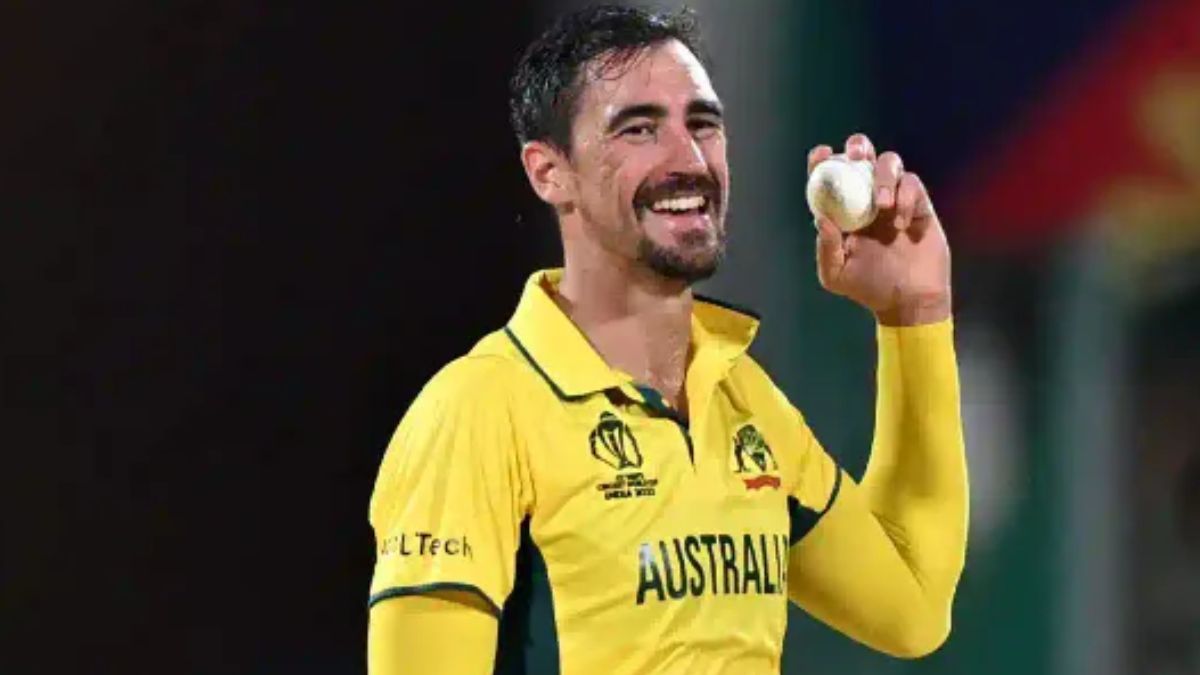
Australian fast bowling stalwart Mitchell Starc has officially stepped away from T20 International cricket at the age of 35, marking the end of a significant chapter in his career. This move, just months ahead of the 2026 T20 World Cup, is part of a calculated effort to prolong his effectiveness in Test and ODI formats, where he aims to continue representing Australia at the highest level.
A Glorious T20I Journey Ends
Starc’s T20I journey began in 2012 against Pakistan, and over the span of 65 matches, he collected 79 wickets at an economy rate of 7.74. This makes him Australia’s second-highest wicket-taker in T20Is, behind only Adam Zampa. His raw pace, deadly yorkers, and match-turning spells were crucial in several campaigns, especially during the 2021 T20 World Cup, where Australia lifted the trophy.
He played in five of the six T20 World Cups since his debut, missing only the 2016 edition due to injury. Known for his aggressive opening spells and ability to close out games with precision, Starc became one of the most feared fast bowlers in the shortest format.
Why He’s Retiring Now
In his retirement statement, Starc emphasised that Test cricket has always been his top priority. With crucial series and events on the horizon—including the India Test tour, the Ashes, and the 2027 ODI World Cup—he has decided to conserve his fitness and manage workload accordingly.
He also acknowledged the physical demands of international cricket, stating that stepping away from the T20 format would allow him to stay fresh, fit, and at his best for more extended formats.
T20I Exit Signals a Generational Shift
Starc’s retirement is part of a broader transition in Australian cricket. He joins a growing list of senior players who have stepped back from one or more formats recently,
- David Warner retired from all international formats in 2024.
- Steve Smith, Glenn Maxwell, and Marcus Stoinis announced ODI retirements earlier this year.
This signals a generational shift as Australia looks to rebuild and invest in younger players ahead of future global tournaments.


 Blanka Vlasic Appointed Global Ambassado...
 Payal Nag Makes History by Becoming Firs...
 IPL Winners List from 2008 to 2026 - New...