
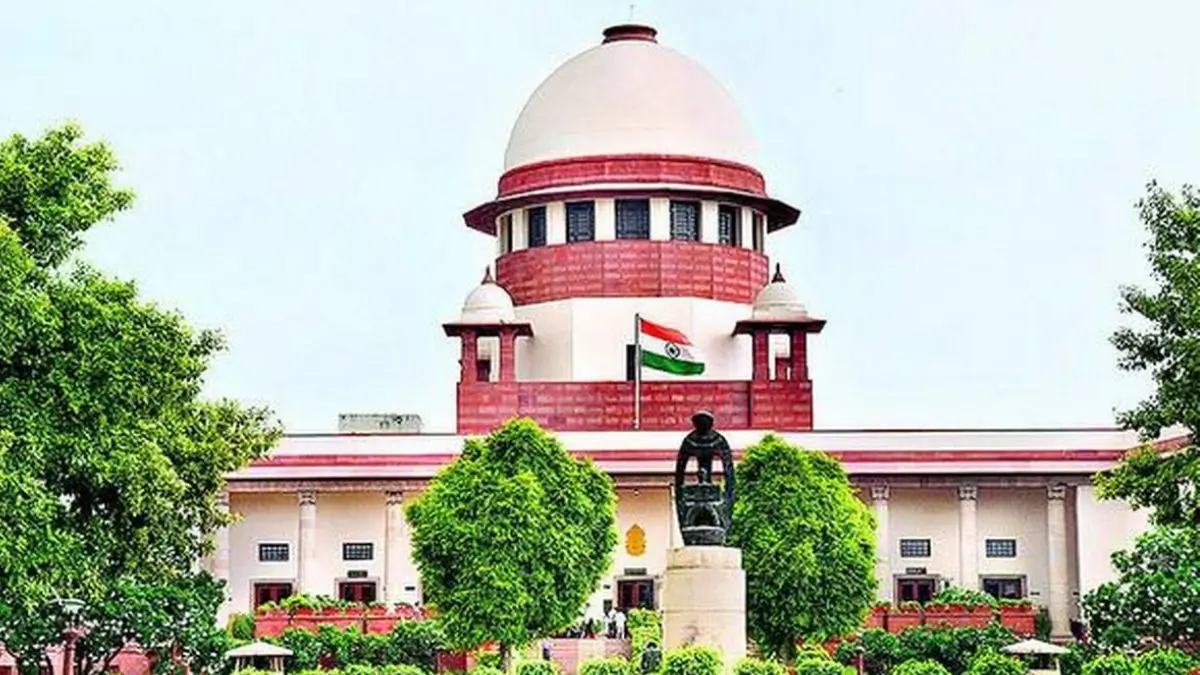
A standing committee for judicial well-being has been formed by the Supreme Court of India to create an institutional mechanism for dealing with the problems that judicial officers face professionally and personally. The Supreme Court of India’s Chief Justice, Surya Kant, has formed this committee, and it will be headed by Supreme Court judge Justice K V Viswanathan. The formation of the committee comes amid World Mental Health Day.
Whom Will Chair the Judicial Well-Being Committee?
The chairman of the standing committee would be Justice K V Viswanathan of the Supreme Court. The committee comprises a blend of the expertise in the areas of the judiciary, psychiatry, psychology, and legal administration.
The committee comprises of the following persons,
- Justice K V Viswanathan: Supreme Court judge and chairperson.
- Dr Savita Malhotra: Ex-dean at the Postgraduate Institute of Medical Education and Research (PGIMER), Chandigarh and a professor of the institute’s Department of Psychiatry.
- Rajat Mitra: Psychologist, Director, and co-founder of Swanchetan Society for Mental Health.
- Mrinal Kanwar: Advocate-on-Record at the Supreme Court.
- Aarti Singh: Registrar (J), Centre for Research and Planning of the Supreme Court.
This diversified makeup of the committee has been done with the intention to adopt a structured way towards judicial well-being.
Why Has the Supreme Court Established the Committee?
Judicial Officers operate in challenging professional settings where they have to deal with high levels of workload, long working hours, difficult decision-making processes, administrative pressure, and emotionally draining cases. Such working conditions may have an impact on the physical and mental well-being of these professionals, as well as their capability to cope with tough jobs.
It is clear that the Supreme Court perceives judicial well-being not only as a matter of personal concern, but also as an institutional issue.
Important Duties of the Committee
The committee will remain a standing forum to discuss the challenges pertaining to judicial well-being that arise or may arise. These duties include,
- To identify areas where there is a need for institutional intervention.
- To facilitate coordination between different stakeholders on welfare issues.
- To develop guidelines for the benefit of judicial officers.
- To review the activities done to improve judicial well-being from time to time.
- To establish a continuous process instead of being limited to mere welfare initiatives.
It can be said that the committee needs to coordinate the process in general terms.








 Aadhaar Name Change Rules Revised: Docum...
 IMC 2026: PM Modi Highlights India’s 5...
 Government Unveils 2026-2030 Strategy to...










