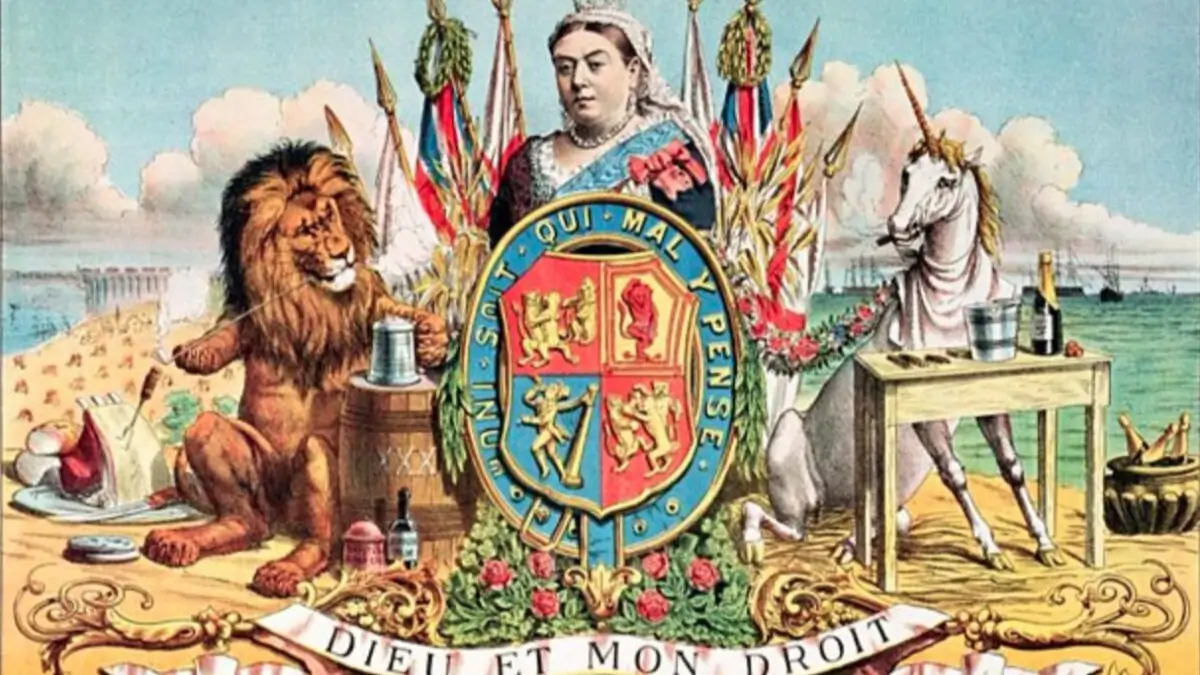
Throughout history, European powers expanded their empires across Asia, Africa, and the Americas, leaving very few nations untouched. However, some countries managed to preserve their independence through strong leadership, smart diplomacy, and natural barriers like mountains or deserts. These nations stood firm against colonial rule and became symbols of resilience and national pride in a world dominated by European colonisation.
The Era of European Colonisation
From the 15th to the 20th century, powerful European nations such as Britain, France, Spain, and Portugal expanded their empires across Asia, Africa, and the Americas.
They conquered, ruled, and exploited vast territories for wealth and resources.
By the late 19th century, European empires controlled nearly 80% of the world. However, a few countries managed to resist colonial rule and remain independent through strong diplomacy, natural protection, and determined leadership.
Let’s explore the 10 remarkable nations that never came under full European colonisation and how they preserved their sovereignty.
Top-10 Countries that Never Came Under European Colonisation
During the age of European imperialism, most parts of the world were brought under colonial rule. However, a few nations managed to stay independent through strong leadership, smart diplomacy, and natural defenses. These countries proudly resisted European control and protected their freedom and identity.
Here are the names of top-10 countries that never came under European colonisation:
- Bhutan
- Iran
- Nepal
- China
- Japan
- Korea
- Afghanistan
- Ethiopia
- Saudi Arabia
- Thailand
Bhutan
Bhutan gained independence in 1634 after breaking away from the Tibetan Empire. Though the British Empire tried to influence it through wars like the Duar War (1865), Bhutan kept its internal freedom.
The Treaty of Punakha (1910) gave Britain control over Bhutan’s foreign affairs, but the country remained self-governing. Later, India took over this diplomatic role after 1947. Bhutan’s isolation and strong monarchy helped protect its sovereignty.
Iran
Although Iran was never colonised, it faced heavy foreign interference from Britain and Russia. Under the Anglo-Persian Agreement (1857), the British gained control over trade and oil.
Public anger led to the Tobacco Protest and later the Persian Constitutional Revolution (1906), which established Iran’s first parliament.
In the 1950s, Prime Minister Mohammad Mossadegh nationalised oil, which led to Western intervention until the Islamic Revolution (1979) restored Iranian sovereignty.
Nepal
Nepal’s rugged Himalayan terrain played a key role in keeping it independent. Although it fought the Anglo-Nepalese War (1814–1816) and lost some territory under the Treaty of Sugauli, Nepal never became a colony.
The British admired Nepal’s fearless Gurkha soldiers, who later became an important part of the British Army, helping maintain friendly relations between the two nations.
China
China faced serious pressure from Western powers during the Opium Wars (1839–1842 and 1856–1860). It had to sign unequal treaties and cede Hong Kong to Britain.
However, despite strong European influence, China was never fully ruled by a foreign power. Its large population, rich culture, and strong identity helped preserve its independence.
Japan
Japan avoided colonisation by isolating itself through the Sakoku Policy (1633–1853), banning most foreign trade and travel.
When Commodore Perry from the U.S. forced Japan to open its ports in 1853, Japan quickly adapted. The Meiji Restoration (1868) led to rapid modernisation in military, industry, and governance, ensuring Japan became a strong empire instead of a colony.
Korea
Korea managed to resist European colonisation, though it later fell under Japanese rule (1910–1945). While it was never a European colony, its independence was lost to Japan for 35 years.
After World War II, Korea regained freedom but was divided into North and South Korea due to political differences between the U.S. and the Soviet Union.
Afghanistan
Known for its fierce warriors and harsh terrain, Afghanistan resisted several invasions. The Anglo-Afghan Wars (1839–1919) were Britain’s failed attempts to control it.
After the Third Anglo-Afghan War, Afghanistan gained full control of its foreign policy in 1919. Later, both the Soviet Union (1979–1989) and the United States (2001–2021) struggled to dominate it.
Afghanistan’s nickname, The Graveyard of Empires, truly reflects its history of resistance.
Ethiopia
Ethiopia is the only African country that was never fully colonised. In the First Italo-Ethiopian War (1895–1896), Emperor Menelik II defeated Italy at the Battle of Adwa, ensuring Ethiopia’s freedom.
Though Italy briefly occupied it during 1936–1941, Ethiopian forces, with Allied support, restored independence. Ethiopia became a symbol of African pride and resistance.
Saudi Arabia
Before becoming Saudi Arabia, the Arabian Peninsula was part of the Ottoman Empire. During World War I, Britain signed the Treaty of Darin (1915) with Abdulaziz Al Saud, making his lands a protectorate, not a colony.
By 1932, Saudi Arabia became a unified and independent kingdom. Its oil wealth and religious significance later made it a major global power.
Thailand
Thailand skillfully avoided colonisation through smart diplomacy and modernisation. Surrounded by British-controlled Burma and French Indochina, Thailand acted as a buffer state.
King Chulalongkorn (Rama V) adopted Western-style reforms in education, law, and administration, impressing European powers. His balanced foreign policy helped Thailand remain the only Southeast Asian nation never colonised by Europe.


 Which State is known as the Green State ...
 How many Nuclear Power Plants in India? ...
 List of Important Days in April 2026, Na...