
The Union Ministry of Jal Shakti is taking big steps under Jal Jeevan Mission (JJM) 2.0 to provide safe drinking water to every rural household in India. With the government extending the mission till December 2028 and increasing the financial outlay, JJM 2.0 focuses on digital reforms, quality infrastructure, community participation, and long-term sustainability.
Key Meeting on Jal Jeevan Mission 2.0
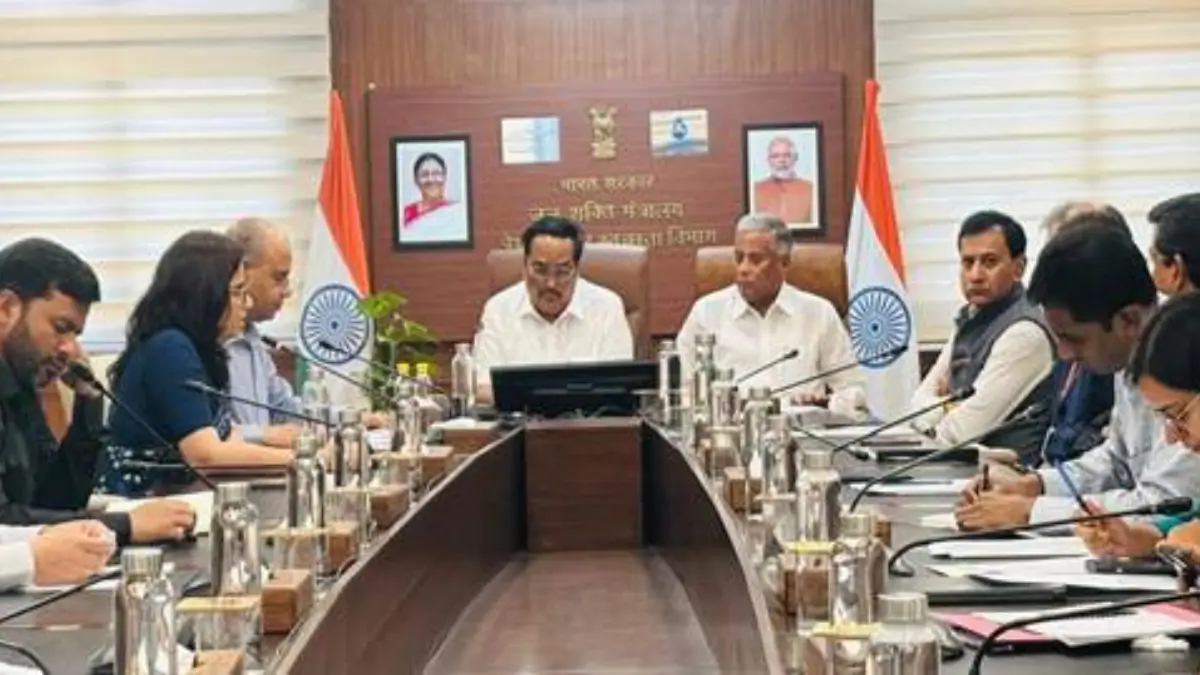
Union Minister Shri C.R. Paatil chaired a meeting with State and UT Ministers from the Public Health Engineering Department (PHED), Rural Water Supply (RWS), and Panchayati Raj Departments. Shri V. Somanna, Minister of State, Ministry of Jal Shakti, also participated.
The meeting discussed the implementation roadmap of JJM 2.0, following the Cabinet approval for its extension with an increased budget and structural reforms.
Launch of Sujal Gaon ID: Digital Mapping of Rural Water
Shri C.R. Paatil launched the Sujal Gaon ID, a unique digital identifier for every rural drinking water scheme in India. This initiative is a first of its kind, bringing all rural water supply systems onto a unified national digital platform.
- 1.64 lakh Sujal Gaon IDs created across 31 States/UTs
- Linked to 67,000 Sujalam Bharat IDs
- Integrates scheme infrastructure ID + service area ID
- Enables real-time monitoring, transparency, and evidence-based decision-making
This digital reform aims to support the vision of a technologically empowered Viksit Bharat @2047.
Focus on Timely Completion and Quality
Shri C.R. Paatil urged States to:
- Complete schemes on time
- Strengthen on-ground monitoring
- Avoid technical shortcomings
- Bear responsibility for any overspending or non-compliant works
He emphasized that quality of work is as important as quality of water. States must adhere to approved technical standards and ensure long-term sustainability of rural water supply systems.
Role of Panchayati Raj and Community Participation
Shri V. Somanna highlighted the importance of:
- Citizen-centric service delivery
- Strengthening source sustainability and operations
- Empowering Panchayati Raj Institutions in asset management
JJM 2.0 will continue to focus on Jan Bhagidari (people’s participation) through programs like Jal Arpan and Jal Utsav, bringing socio-economic benefits such as:
- Reducing women’s drudgery
- Improving public health
- Creating rural employment
- Achieving universal tap water coverage by 2028
Mission Governance and Digital Reforms
Shri Ashok K.K. Meena, Secretary, DDWS, highlighted key governance measures:
- Extension till December 2028 with Gram Panchayat-led governance
- Operation & Maintenance (O&M) systems strengthened
- Implementation through State/UT-specific MoUs
- Sujalam Bharat digital architecture enables source-to-tap mapping
- Jal Seva Aankalan for village-level service assessment
- Meri Panchayat app strengthens citizen oversight
Gram Panchayats will certify ‘Har Ghar Jal’ status only after sustainable O&M arrangements are ensured.
Funding and Financial Reforms
Shri Kamal Kishore Soan, AS&MD, NJJM, shared details about fund release:
1. Total outlay increased from ₹3.60 lakh crore to ₹8.69 lakh crore
2. Central funds released only after meeting four compliance requirements:
- Signing the MoU
- Creation of Sujal Gaon IDs
- Timely financial reconciliation
- Notification of State O&M Policies
Modes of Fund Release
- Upfront Payment Mode: For small and non-PWS systems in quality-affected areas
- Reimbursement Mode: For ongoing medium and bulk water supply schemes
- VGF Mode: For PPP-based bulk water schemes
- No central funding for retrofitting schemes
Key Areas of Focus in JJM 2.0
The MoU for States and UTs emphasizes reforms and responsibilities in:
- Policy, Institutional, and Governance Reforms
- Asset Ownership, Management, and Technical Support
- Planning, Financing, and Programme Implementation
- Digital Systems, Data Governance, and Monitoring
- Skilling and Capacity Building of Rural Water Workforce
- Water Quality Monitoring and Surveillance
- Communication, Community Engagement, and Public Confidence
Community Engagement and Jal Mahotsav
States and districts are encouraged to participate actively in Jal Mahotsav activities:
- Celebrate Jal Arpan and Jal Utsav
- Conduct DWSM meetings and prepare service improvement plans
- Form District Technical Units (DTUs)
- Create Rajya Jal Utsav Calendar
- Organize Lok Jal Utsav at Gram Panchayat level
- DM/CEO Zila Parishad to attend at least 2 Jal Arpan events


 ECINet KYC Feature Explained: How Voters...
 BIRAC-BioNEST Incubation Centre Inaugura...
 Who is known as the Father of Mobile Pho...











