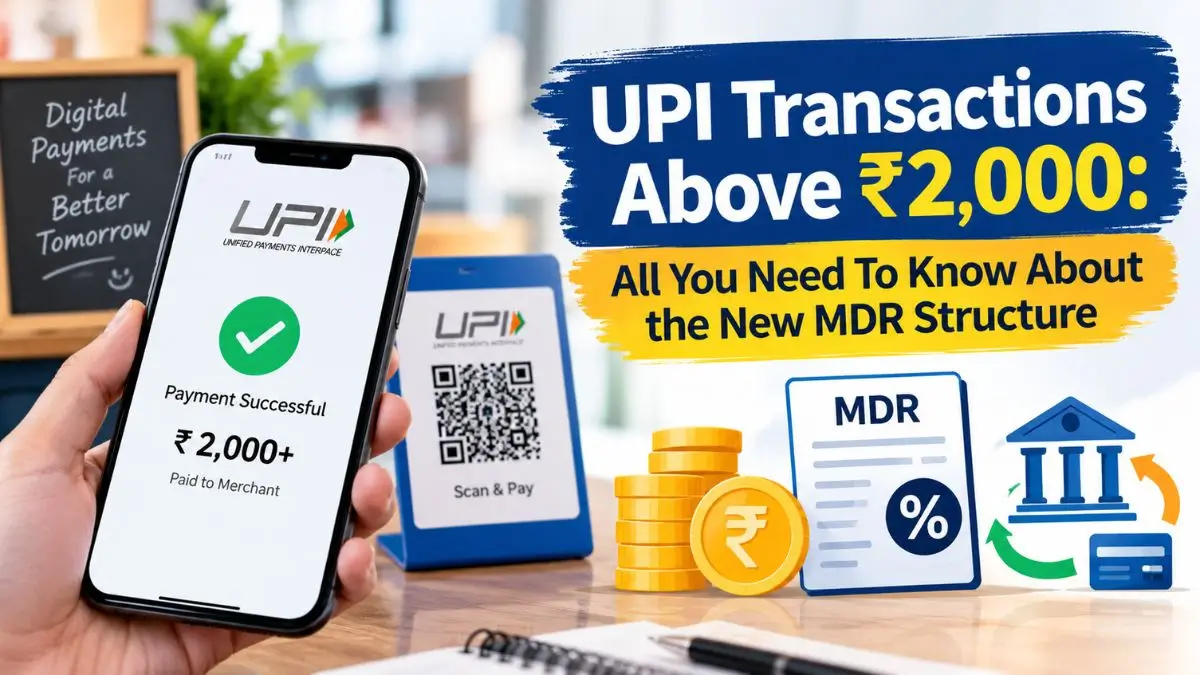
In the newly proposed structure, person-to-person payments will continue to be made without any charges, irrespective of the sum being transferred. Merchant payments up to ₹2,000 will also continue to be made free of cost, whereas transactions above ₹2,000 involving specific merchants will incur a nominal Merchant Discount Rate (MDR). This will facilitate the sustenance of the UPI structure in a cost-free manner for individuals, small merchants and critical services.
What Will Continue to be Free of Charge Under the UPI Scheme?
P2P Transactions Using UPI
All P2P transactions using UPI will continue to be free of charge without any cap on the transfer value. No transaction charges will be applied for transferring money either ways through UPI.
Around 70% of UPI transaction value consists of P2P transactions that fall out of the scope of the MDR scheme.
Payments By customers to Merchants worth ₹2,000
All transactions up to ₹2,000 made by customers to merchants using UPI will continue to be free of MDR.
Receipts of Payments by Small merchants
Merchants who receive payment up to ₹1 lakh per month using UPI QR codes and fall under P2PM category will continue to enjoy zero MDR facility in their transactions.
UPI Transactions Subject To MDR
Transactions involving specified P2M exceeding ₹2,000 shall be subject to a MDR of 0.4%. This shall be shared amongst the participants in the payment ecosystem such as banks and other UPI applications.
Where the value of the transaction is ₹75,000 or above, the MDR will be capped at ₹300 per transaction.
| Transaction type | MDR applicable |
| P2P transactions | MDR Not Applicable |
| P2M transactions up to ₹2,000 | MDR Not Applicable |
| Specified P2M transactions exceeding ₹2,000 | MDR of 0.4% |
| Transactions ₹75,000 or above | MDR capped at ₹300 |
| Essential sectors above ₹2,000 | MDR of ₹5 per transaction |
| Capital market transactions | MDR of 0.02%, |
Essential Sectors
The transactions that are above ₹2,000 in the essential and thin-margin sectors like railways, telecoms, insurance, fuels, and agricultural inputs shall be eligible for the flat MDR of ₹5 per transaction.
Capital Market Transactions
Transactions involving mutual funds, securities, stockbrokers and dealers shall have an MDR of 0.02% subject to a ceiling of ₹300 per transaction.
Will MDR Apply To Customers?
Not really. It is a charge in the merchant payments ecosystem and is not payable by customers.
The customers have been warned by the banks that merchants should not pass on any MDR cost to them. The UPI apps are also not allowed to levy any charges to individuals.
Individually, individuals would continue to enjoy unlimited free use of the UPI without having any monthly transaction ceilings or tiers.
Transaction limits per day imposed by banks and NPCI are security/risk management measures and not a charging ceiling.
About 96% of Merchant Transactions to be Left Unaffected
As per the analysis of data under the framework, MDR will be applicable to only 4% of merchant transactions. About 96% of the P2M transactions will thus be left unaffected since they fall either below ₹2,000 or are under the zero-MDR framework for small merchants.
This framework has distinguished between large merchant transactions and individual/small business payments.
Dedicated Fund for Small Merchants
In addition, there is a provision in the framework for a dedicated fund to promote UPI amongst small merchants. The contribution to the fund will be an amount equal to 5% of total MDR collections.
The fund will enable wider acceptance of UPI, continued use, and increased participation of small merchants in the digital payments ecosystem of India.
Why Was This New Framework for UPI Introduced?
This framework has been introduced based on the provisions in the Payment and Settlement Systems Act, 2007, after discussions of the UPI Steering Committee on MDR rates, operational processes and consumer protection issues.
It has been said that the aim of this new framework is to ensure sustainability in the case of UPI and to keep the cost of individual transactions at nil and protect the small merchants from any extra burden. The income generated through selected merchant transactions will benefit all payment stakeholders.







 Bank of Baroda Becomes Second Public Sec...
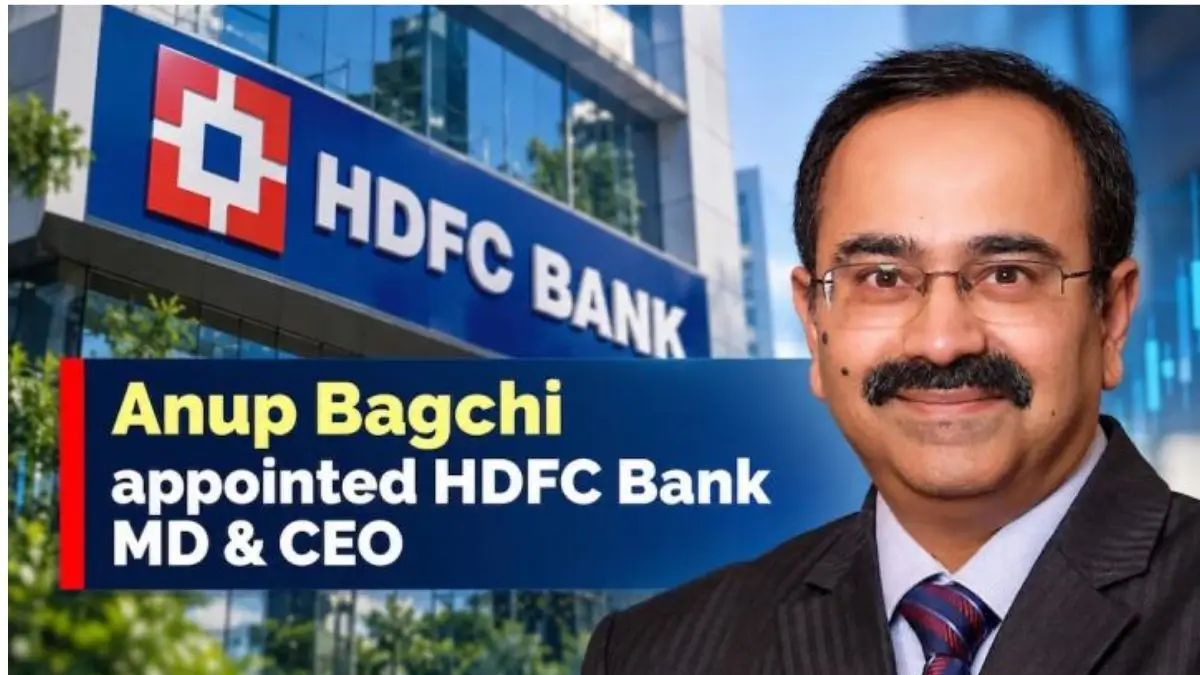 Anup Bagchi Appointed HDFC Bank MD and C...
 Anup Kumar Saha to Become Kotak Mahindra...