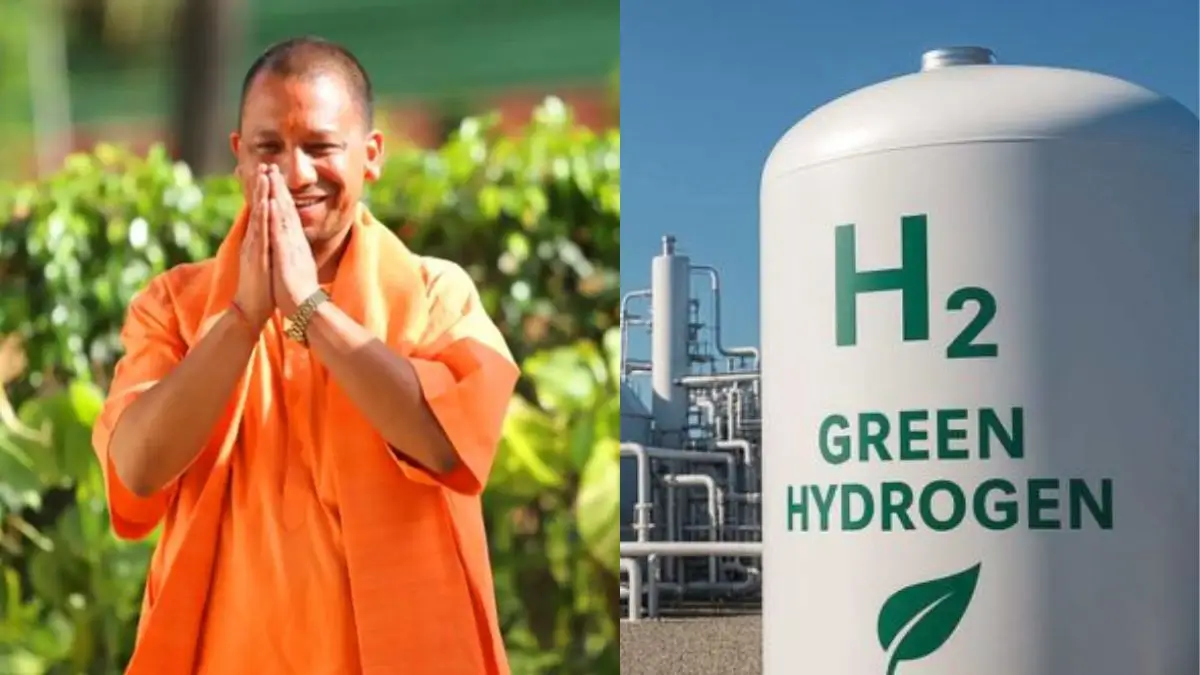
The Uttar Pradesh Green Hydrogen Policy, 2024 is a state level policy, which is intended to develop an eco-system for green hydrogen and green ammonia in Uttar Pradesh. The policy was issued on March 5, 2024, and aims at promoting the production, storage, transport and use of green hydrogen, apart from mobilizing private investments and generating new job opportunities.
The policy follows the vision of the National Green Hydrogen Mission and covers aspects of renewable energy-based hydrogen production, manufacturing, infrastructure development, R&D and skill development. The target of Uttar Pradesh for 2028 is to produce 1 million metric tonnes of annual green hydrogen and green ammonia, along with creation of around 1.2 lakh jobs.
What Is Green Hydrogen?
Green hydrogen is made from hydrogen which is created using renewable electricity sources, primarily through electrolysis, where hydrogen is separated from oxygen.
Its environmental impact will depend on how it has been generated using electricity that adheres to the Green Hydrogen Standard laid down by the Union government.
Green ammonia, on the other hand, involves combining green hydrogen with nitrogen.
What Made Uttar Pradesh Adopt the Policy?
Although there is wide-scale usage of hydrogen in many industries like fertilizer, refineries, and chemicals, hydrogen produced using traditional methods relies mostly on fossil fuels.
The Uttar Pradesh Hydrogen policy aims at utilizing its renewable energy capacity and industrial potential for building a better hydrogen economy.
Some of its key priorities are,
- Less reliance on fossil fuel-powered hydrogen.
- Fossil fuel-free industrialization.
- Promoting investments in renewable energy.
- Production of green hydrogen and green ammonia.
- Industrial applications of hydrogen.
- Infrastructure development for storage, transport, and distribution.
- R&D and skill development.
- Private investment attraction.
Objectives of the Policy
Some of the major objectives of the policy include making available 1 million metric tonnes of annual green hydrogen and green ammonia production capacity by 2028.
Another objective is to develop four Centres of Excellence for research & development along with promoting renewable-energy projects in connection with hydrogen generation.
The government has estimated that this policy would lead to around 1.2 lakh job creation by 2028. This is only an estimated figure and not the current figure of job creation.
Eligibility Criteria for Policy
Some of the activities covered under this policy include,
- Production of green hydrogen.
- Production of green ammonia.
- Generation of renewable energy for hydrogen projects.
- Manufacturing of electrolyser and other related equipment.
- Hydrogen-based products.
- Hydrogen storage and transportation.
- Hydrogen pipeline and distribution network.
- Research, development and testing.
- Common facilities for approved projects.
- Skills development and innovations.
However, it must be noted that the projects have to meet the national standards for definition of green hydrogen. Thus, just being a renewable-energy related activity doesn’t make it eligible for all policy benefits.
Incentives under Uttar Pradesh Green Hydrogen Policy
1. Capital Subsidy
- Eligible projects may be eligible for capital subsidy up to 30%. The first five eligible projects will be eligible for an enhanced capital subsidy of up to 40% as per the terms of investment limit, category of projects, etc.
- The subsidy is based on the eligible capital investment in the project and need not be always equal to the total cost of the project.
2. Concessional Government Land
- Eligible projects will be eligible for getting government or revenue land on lease basis at Rs. 1 per acre per annum, based on the availability of land.
- This doesn’t mean that all applicants will get land automatically. Developers have to follow certain rules for getting land and executing the project.
3. Stamp-Duty Exemption
- There will be 100% stamp duty exemption for the eligible projects.
4. Electricity Duty Exemption
- A project is entitled to a 100% exemption from the electricity duty during the policy-specified eligible period based on certain terms and conditions.
- An exemption from the electricity duty does not mean that the project is being provided electricity free of cost.
5. Transmission and Wheeling Concessions
- The policy offers concessions from specified inter-state transmission, wheeling and cross-subsidy charges for renewable electricity consumed in the process of green hydrogen production.
- The exact benefits will depend on the power sourcing, grid connection and open access system and other relevant electricity regulations.
Research and Centres of Excellence
Research and innovation have an integral part of the policy framework. The government has planned to set up four Centres of Excellence in the following domains among others,
- Technology of hydrogen production
- Electrolysis
- Storage and transport of hydrogen
- Industrial uses of hydrogen
- Safety and testing
- Skill development
- Commercialization of research findings
How Will the Projects Have the Benefits Available to Them?
The Uttar Pradesh New and Renewable Energy Development Agency is the nodal agency connected with this policy.
In general, the project could have to go through the process of,
- Project proposal submission.
- Technology verification.
- Verification of renewable energy source.
- Investment and production capacity assessment.
- Compliance with green hydrogen standards verification.
- Evaluation of incentives.
- Authorization by the concerned authority.
- Statutory approvals like land, power, environmental approvals, and others.
- Construction and production initiation.
- Documentation for incentive submission.
Some of the elements, like renewable energy production, land allocation, open access, and research grants, could each need authorization separately.
Significance to Uttar Pradesh
The policy could facilitate Uttar Pradesh to link up their renewable energy sector to industrial development. There is huge scope for green hydrogen usage in fertilizer, chemical, refinery, heavy haulage, among others sectors where electrification becomes challenging.
Besides, it could create demand for electrolysers, storage systems, engineering solutions, renewable energy sources and technical expertise.
Nationally, the policy is consistent with the National Green Hydrogen Mission and the overall Indian agenda for establishing a green hydrogen eco-system domestically.







 Dussehra 2026: Top 30 Most Important GK ...
 Dussehra and UNESCO: Ramlila, Durga Puja...
 Mysuru Dasara 2026: History, Jamboo Sava...