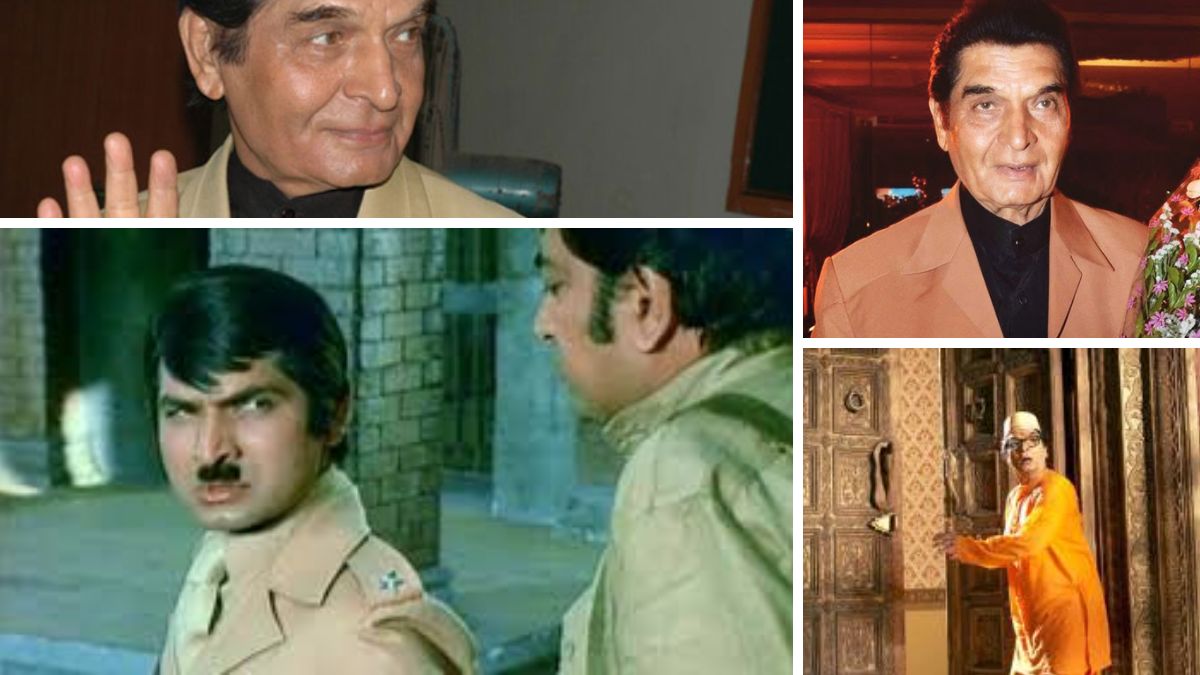
The curtains have fallen on one of Hindi cinema’s most enduring performers. Govardhan Asrani, fondly remembered for his iconic comic roles, passed away at the age of 84 on October 20, 2025, after a prolonged illness. With a filmography spanning over 350 films, Asrani’s career was a testament to both longevity and adaptability in Indian cinema.
Though he played countless characters over the decades, it was a short but unforgettable appearance in ‘Sholay’ (1975) that etched his name permanently into Bollywood history. His portrayal of the eccentric “British-era jailer”, modeled on Adolf Hitler, was a satirical masterstroke. That one scene – with the line “Hum angrezon ke zamane ke jailer hain” – immortalized him, earning him standing ovations and turning a brief role into a cultural phenomenon.
Early Life and Entry into Films
- Born on January 1, 1941, in Jaipur, Rajasthan, into a Sindhi Hindu family, Asrani’s early life did not point toward stardom.
- He studied at Rajasthan College and worked as a voice artist for All India Radio before realizing his true calling lay in performance.
- He enrolled at the Film and Television Institute of India (FTII) in Pune, graduating in 1966.
- His film debut came with ‘Hare Kaanch Ki Choodiyan’ in 1967, but it was director Hrishikesh Mukherjee’s ‘Satyakam’ (1969) that brought him mainstream recognition.
- From there, Asrani steadily built his reputation as a reliable supporting actor with impeccable timing.
Comic Gold: Asrani’s Peak in the 70s and 80s
- The 1970s and 1980s marked the golden phase of Asrani’s career. He became a fixture in Bollywood’s comedic landscape, appearing in over 100 films in each decade – a feat rarely matched.
- His close professional association with Rajesh Khanna, featuring in 25 films together, gave rise to enduring classics like ‘Bawarchi’, ‘Namak Haraam’, and ‘Mehbooba’.
Notable films from this period include,
- ‘Chupke Chupke’
- ‘Roti’
- ‘Rafoo Chakkar’
- ‘Pati Patni Aur Woh’
- ‘Chhoti Si Baat’
- ‘Balika Badhu’
He won the Filmfare Award for Best Comedian twice – for ‘Aaj Ki Taaza Khabar’ (1974) and ‘Balika Badhu’ (1977).
Beyond the Laughter: Lead Roles and Direction
- While comedy was his forte, Asrani also proved capable in lead roles. In ‘Chala Murari Hero Banne’ (1977), which he also directed, he showcased his versatility.
- Between 1974 and 1997, he directed six films and remained active in Gujarati cinema, where he starred as a lead from 1972 to 1984.
- His song “Hu Amdavad No Rikshawalo” is still cherished in Gujarat, marking his strong regional appeal beyond Hindi cinema.
Reinvention in Later Years
- The decline of the comic sidekick trope in the late 1980s affected his visibility, but Asrani adapted.
- He experienced a resurgence in the 1990s and 2000s through popular comedy films and franchises with directors like David Dhawan, Priyadarshan, and Rohit Shetty.
These included,
- ‘Hera Pheri’
- ‘Chup Chup Ke’
- ‘Malamaal Weekly’
- ‘Bhagam Bhag’
- ‘Bol Bachchan’
His serious role in ‘Kyun Ki’ (2005) further proved his range, showing he could bring gravitas when required.
Personal Life and Later Contributions
- Asrani married actress Manju Bansal, who co-starred with him in multiple projects, including his home production ‘Hum Nahin Sudhrenge’ (1980).
- He served as a director at FTII Pune from 1988 to 1993, mentoring future actors and shaping Indian cinema from behind the scenes.
- He remained active well into his 70s, appearing in TV shows like ‘Partners Trouble Ho Gayi Double’ and web series such as ‘Permanent Roommates’ (2018).
A Lasting Legacy
- With his passing, Indian cinema loses more than just a comic actor—it loses a cultural icon. Asrani’s career, which spanned more than five decades, reflected not only his talent but the changing dynamics of the film industry.
- From slapstick to satire, from sidekick to show-stealer, Asrani did it all.
- His unique ability to blend humor with empathy, even in the smallest of roles, ensured that he remained relevant across generations.
- His performances continue to resonate, bringing laughter and nostalgia to audiences young and old.


 Bengali Actor Rahul Arunoday Banerjee Di...
 Who Was Vijaypat Singhania? Raymond’s Fo...
 E A Rajendran Passed Away at 71: Remembe...