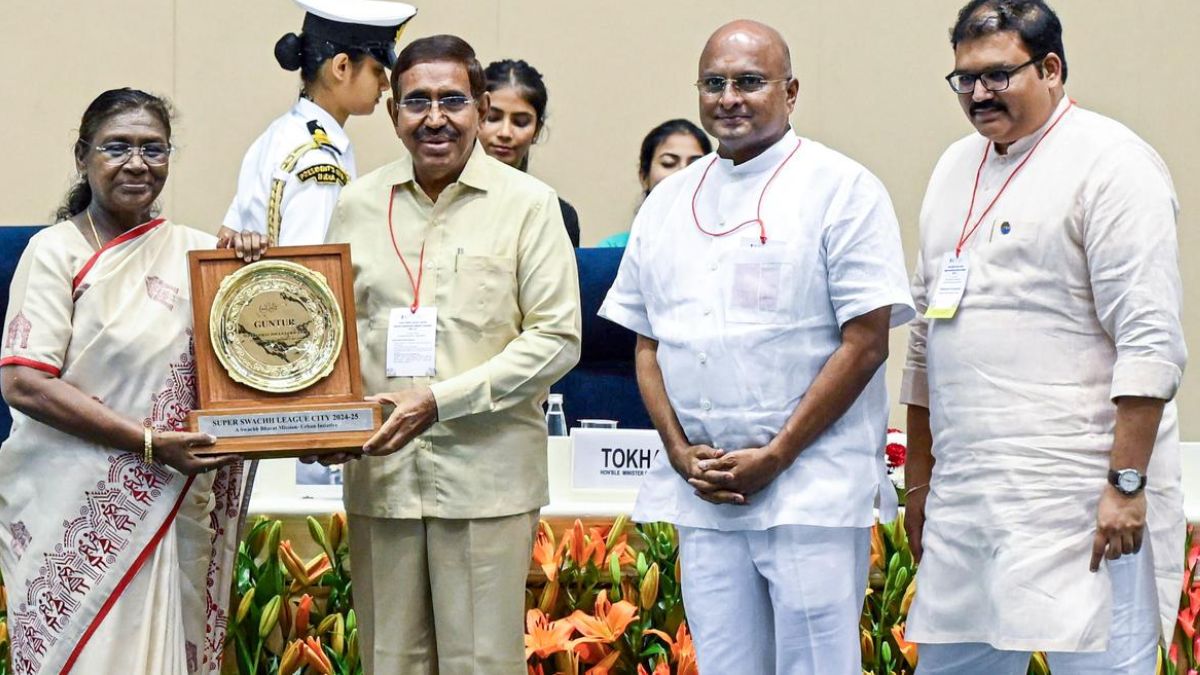
Urban sanitation has become a key parameter of development in modern Indian cities, not only due to rising population density but also in light of increasing health and environmental concerns. Vijayawada’s impressive ranking as the fourth cleanest city in India and its recognition as a ‘Super Swachh League City’ in the Swachh Survekshan 2024-25 is a noteworthy example of a city’s transformation through disciplined administration, effective policy implementation, and active citizen participation. The city’s success is even more remarkable considering the disruption caused by the September 2024 floods, showcasing exceptional resilience and commitment to sustainability.
Background of Swachh Survekshan and Urban Sanitation Drives
Swachh Survekshan is an annual cleanliness survey conducted by the Ministry of Housing and Urban Affairs (MoHUA) under the Swachh Bharat Mission (Urban). Launched in 2016, the survey ranks cities on various sanitation and waste management parameters including solid waste management, citizen feedback, open defecation status, and innovation. With each passing year, the number of participating cities has increased, and so has the competitiveness to secure top ranks.
Vijayawada, located in Andhra Pradesh, has shown consistent improvement in urban sanitation indices, earning top rankings and star ratings for garbage management and cleanliness standards. The city’s performance is aligned with national goals of creating ‘Garbage Free Cities’ and achieving Sustainable Development Goals (SDGs) related to health, cleanliness, and urban resilience.
Significance of the Recognition
Being ranked fourth among cities with a population over 10 lakh and winning the ‘Super Swachh League City’ award carries immense significance for Vijayawada. It places the city alongside well-established urban cleanliness champions like Indore, Surat, and Navi Mumbai. The recognition is not merely symbolic but indicates strong infrastructure, efficient governance, and a high level of public involvement.
The award also reflects the city’s alignment with international sustainability frameworks such as the Paris Agreement and the Indian government’s Net Zero Emissions objective. Clean cities promote better public health, tourism, and investment opportunities, making this accolade a stepping stone to both economic and ecological stability.
Objectives Behind Vijayawada’s Cleanliness Drive
Some of the primary objectives of Vijayawada’s sanitation model include,
- Establishing a 100% door-to-door waste collection system.
- Promoting source segregation of waste into biodegradable and non-biodegradable.
- Encouraging community-led initiatives through awareness campaigns and educational workshops.
- Building resilience against natural disasters through post-calamity sanitation systems.
- Moving towards a circular economy by encouraging recycling, composting, and reuse.
These objectives are designed not just to clean the city visually but to embed sustainability in every layer of the urban system.
Key Features of Vijayawada’s Cleanliness Strategy
- Seven-Star Garbage Free Rating: Indicates high performance in solid waste segregation, processing, and zero open dumping.
- Public Participation: Citizen feedback platforms, school engagement, and NGO partnerships have fostered broader ownership of initiatives.
- Digital Monitoring: Use of GPS tracking for waste collection vehicles, mobile apps for complaint redressal, and real-time dashboards improve efficiency.
- Disaster Readiness: Post the September 2024 floods, rapid sanitation drives and restoration processes showcased the city’s preparedness and robust urban planning.
- Inter-Departmental Coordination: Close collaboration between civic bodies, health departments, environmental authorities, and municipal corporations ensures synchronized action.


 International Booker Prize 2026 Shortlis...
 19-Year-Old Sheetal Devi Honoured as Wor...
 Ramnath Goenka Awards 2026 Winners List:...