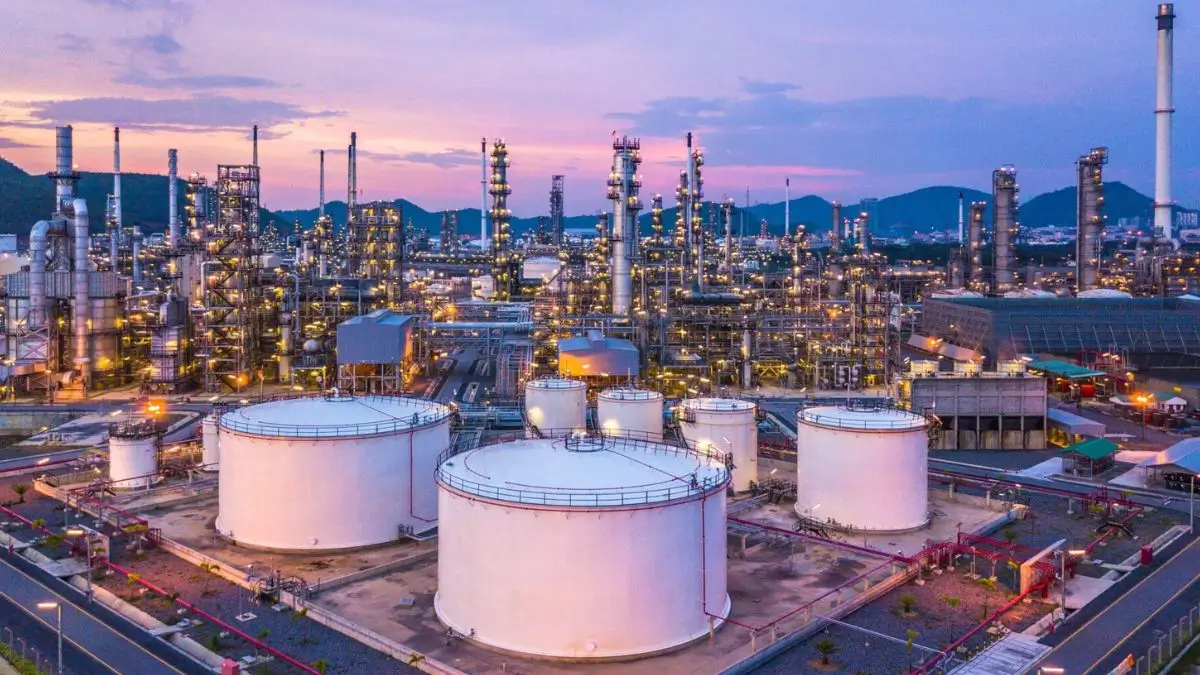
The Union Cabinet led by Honorable Prime Minister Narendra Modi has consented to the Bharat Audyogik Vikas Yojana Rasayan (BHAVYA Rasayan) Scheme. Introduced in the Union Budget 2026–27, this scheme endeavors to create three specialized Chemical Parks all around India with advanced infrastructure. This scheme has a total financial outlay of ₹3,030 crore. The program is expected to enhance India’s competitive position in the chemical industry, attract national and foreign investment, create job opportunities, and promote Viksit Bharat 2047 and Atmanirbhar Bharat.
What Is the BHAVYA Rasayan Scheme?
The BHAVYA Rasayan Scheme is an initiative by the Central Government to set up three Chemical Parks with the requisite common infrastructure and utilities required for the chemical industry.
This initiative aims to develop integrated industrial ecosystems that cater to the entire chemical value chain, from upstream to downstream and auxiliary industries.
The Government intends to cut production costs and enhance efficiency in the chemical sector through the introduction of shared infrastructure.
Salient Features of BHAVYA Rasayan Scheme
Listed below are the key features of the BHAVYA Rasayan Scheme,
- Approved by the Union Cabinet on 24th July, 2026.
- Announced in the Union Budget for FY 2026-2027.
- Provide financial outlay of ₹3,030 crore.
- ₹3,000 crore for infrastructure development.
- ₹30 crore on administrative costs.
- Duration of the scheme FY 2026 to FY 2031.
- There will be three Chemical Parks to be established.
- Maximum assistance from the Center will be ₹1,000 crore per park.
- Minimum contribution by the State Government will be ₹500 crore.
- Park will be selected by a Challenge Route.
Funding Framework
The initiative operates on a co-funded model where both the central and state government funds are utilized.
Financial Support
- Support from the Central Government: Maximum ₹1,000 crore per Chemical Park.
- Contribution from State Government: At least ₹500 crore.
- Total Estimated Expenditure: ₹3,030 crore.
Through this joint funding mechanism the objective is to motivate the states to come forward and work for the creation of good industrial infrastructure.
Infrastructure Feature in Chemical Parks
Every Chemical Park has a plug-play infrastructure which makes it easy for the industries to set up their operations in the park.
- Common Infrastructure Facilities
- Common Effluent Treatment Plant (CETP)
- Treatment, Storage and Disposal Facility (TSDF)
- Hazardous Waste Management Facility
- Water supply and distribution system
- Steam generation and distribution system
- Solvent recovery and distillation facilities
- Interconnected pipeline system
- Logistics and warehousing facility
The sharing of facilities will assist the industry in saving on operational costs by ensuring conformity with the environmental regulations.
Eligibility and Land Requirements
Under the program, Chemical Parks will be established by State Governments.
Basic Requirements
- Land of at least 8 sq.km (approximately 2000 acres) not encumbered and contiguous.
- Eligibility for selection based on the competitive Challenge Route.
- Collaboration with the Central Government for development.
These large integrated parks are likely to host several chemical manufacturing facilities and allied industries.
Purpose of BHAVYA Rasayan Scheme
The objective behind the scheme is to enhance development of the chemical industry in India by means of development of supportive infrastructure and creation of industrial clusters.
Main Objectives
- Promoting integrated chemical production.
- Lowering logistics costs. Reduction in manufacturing expenses.
- Strengthening both upstream and downstream companies.
- Increasing the production capacity of the country.
- Providing incentives for import substitution.
- Increasing the level of exports.
- Attracting domestic and foreign investments.
- Increasing sustainability of the environment.
- Creating jobs.
Benefits for India’s Chemical Sector
The chemical sector is highly important to the functioning of a number of manufacturing industries.
It is anticipated that the BHAVYA Rasayan Scheme will prove to be beneficial in the long term.
Increased Competitiveness
The shared infrastructures would significantly bring the expenses down and produce more productivity and competitiveness of Indian manufacturers in foreign markets.
Enhanced Integration within the Global Value Chains
The objective of the scheme is to improve India’s status in global chemical supply chains and minimize the dependence on chemical goods from foreign countries.
Sustainable Industrial Development
Centralized waste disposal systems and environmental infrastructure will contribute to cleaner and sustainable industrial development.
Boosting Employment
The launch of big chemical parks is expected to create a number of jobs in manufacturing, logistics, etc.








 Prime Minister Dhan-Dhaanya Krishi Yojan...
 Bhagini Nivedita Scheme 2027: West Benga...
 Delhi Doubles ASHA Incentives, Launches ...