
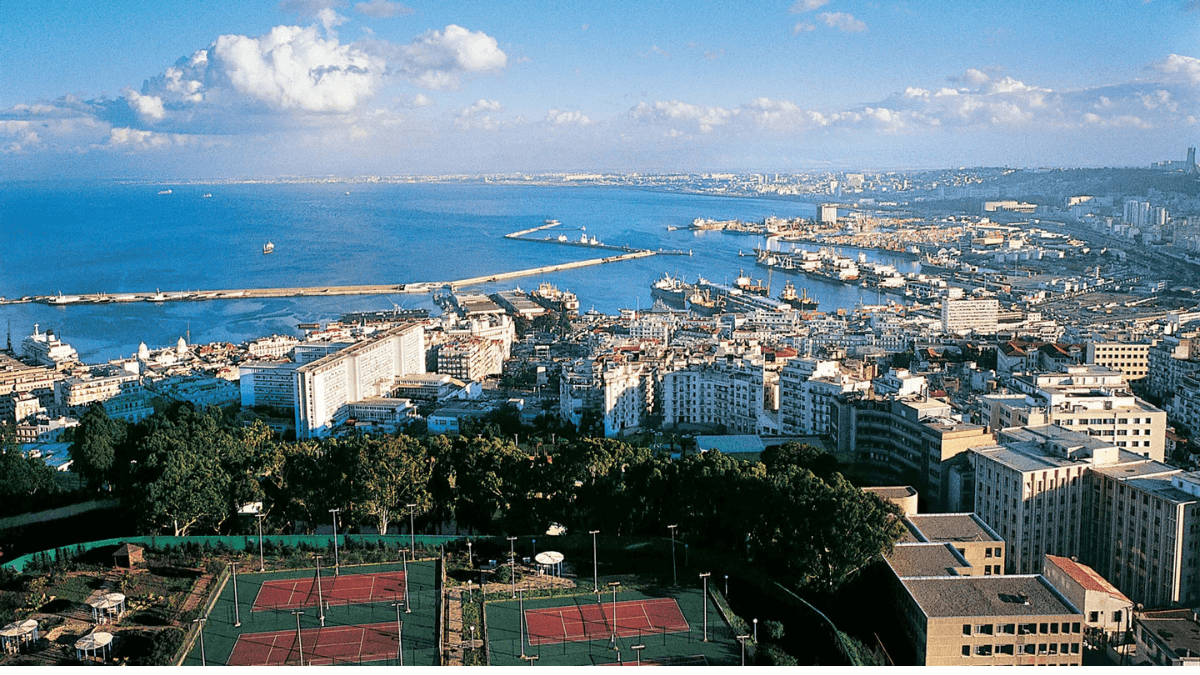
Algeria is the largest country in Africa, located in the northern part of the continent along the Mediterranean Sea. It is known for its vast deserts, rich history, and diverse culture shaped by Arab, Berber, and French influences. Like every nation, Algeria has a central city that serves as its political, cultural, and economic heart, playing a key role in the country’s identity.
An Overview of Algeria
Algeria, officially called the People’s Democratic Republic of Algeria, is the largest country in North Africa’s Maghreb region. It shares borders with Tunisia, Libya, Niger, Mali, Mauritania, Western Sahara, and Morocco, while the Mediterranean Sea lies to its north. The country is known for its deserts, culture, and history. Its capital and biggest city, Algiers, is situated along the Mediterranean coast in the far north.
Capital of Algeria
The capital of Algeria is Algiers. It is also the largest city in the country and is located along the Mediterranean Sea in the north. Algiers is often called “Algiers the White” because of its white-painted houses and buildings that look stunning under the bright sun.
This city is not only the administrative hub of Algeria but also the main center for business, history, and culture. With a population of over 3 million people, Algiers is busy, modern, and full of character.
What Makes Algeria Special?
Algiers is famous for its old Casbah (fortified city), which is a UNESCO World Heritage Site. The city also shows a mix of Ottoman, Arab, and French colonial architecture, making it a place where history meets modern life.
While it is the political capital, Algiers is also known for its markets, mosques, museums, and business centers. It truly reflects the spirit of Algeria.
Why is Algeria Famous?
Algeria is known for many unique things:
- The Sahara Desert: Around 80% of Algeria’s land is desert, filled with golden dunes, oasis towns, and ancient cave art.
- Historic Sites: Roman ruins like Timgad and Djemila, along with the medieval Casbah of Algiers, are world-famous.
- Independence Struggle: Algeria fought a long war against French colonial rule and became independent in 1962, becoming a symbol of strength and freedom.
- Energy Resources: Algeria is one of the largest producers of natural gas in the world, which makes it economically important.
History of Algiers
The story of Algiers goes back thousands of years:
- It was first founded by the Berbers and later became a Phoenician trading post.
- The Romans, Byzantines, Arabs, and Ottomans all ruled here and left behind cultural and architectural influences.
- During the Ottoman period, Algiers became rich through trade but was also known for Barbary pirates.
- In 1830, the French invaded and made Algiers the capital of French Algeria. They built wide roads, French-style buildings, and grand boulevards.
- After independence in 1962, Algiers became the capital of free Algeria and grew into a modern city that balances the old with the new.
Interesting Facts About Algiers
- Algiers is called “Algiers the White” because of its bright white buildings.
- The Casbah of Algiers is one of the best-preserved Islamic cities in North Africa.
- Algeria is bigger than India in size, making it Africa’s largest country.
- In the 16th and 17th centuries, Algiers was a stronghold for Barbary pirates.
- The Martyrs’ Memorial in Algiers honors the fighters who gave their lives for independence.
- The city is home to the Great Mosque of Algiers (Djamaa El Djazair), one of the largest mosques in the world.


 Who were the Seven Sisters of Petroleum?...
 What is the State Flower of Florida? Che...
 Which is the Largest Desert in Asia? Che...











