
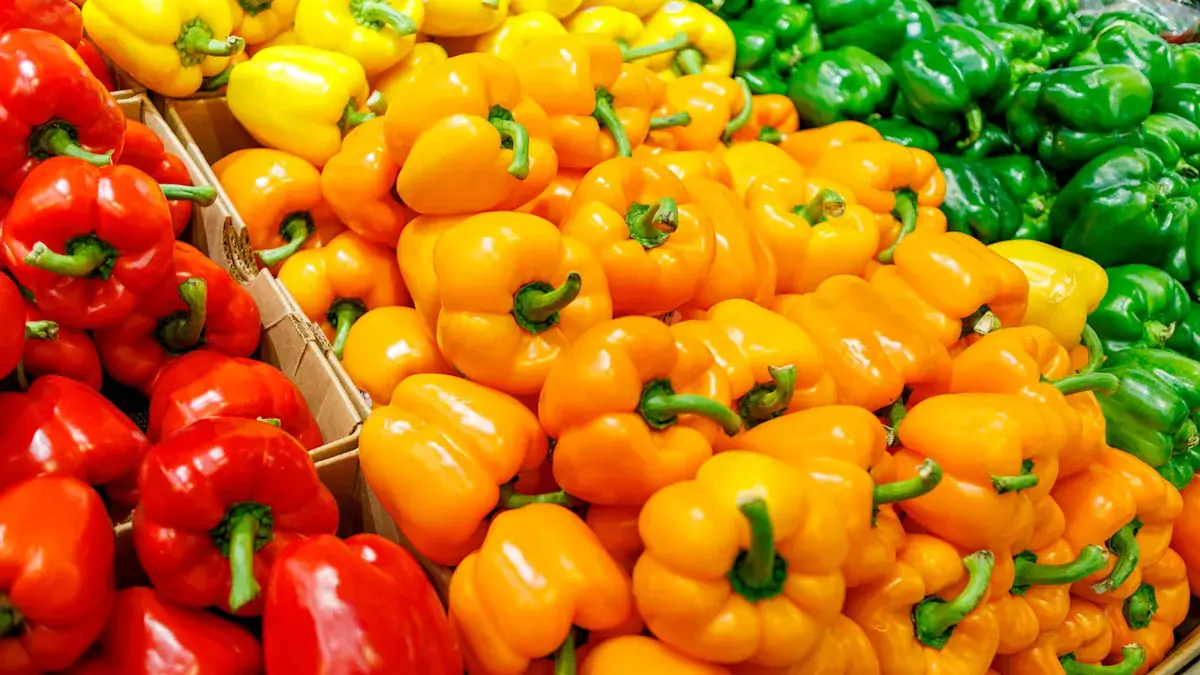
Did you know that the colorful bell peppers you see in markets—red, yellow, and green—are grown in huge quantities around the world? These crunchy vegetables are not only tasty but also rich in vitamins and widely used in many dishes.
Bell peppers grow best in warm climates with good sunlight and proper irrigation. Many countries cultivate them on a large scale because they are in high demand in both local and international markets.
In fact, one country stands out for producing more bell peppers than any other nation. Its advanced farming methods, large agricultural land, and strong export system help it lead global production.
This country supplies fresh bell peppers to many parts of the world. Farmers there grow them throughout the year, making it the top producer globally.
Largest Producer of Bell Pepper in the World
China is the largest producer of bell peppers in the world. The country grows capsicum on a massive scale across different provinces. Both open-field farming and greenhouse cultivation are used to maintain high output throughout the year. Strong farming systems, modern technology, and skilled vegetable growers help China maintain its top position globally.
Why China Leads in Bell Pepper Production?
China’s leadership in bell pepper farming is supported by several key factors.
First, the country has vast agricultural land suitable for vegetable cultivation. Second, it experiences different climate conditions across regions, allowing multiple growing seasons. Third, farmers use advanced horticulture techniques such as drip irrigation, hybrid seeds, and protected cultivation.
In addition, bell pepper is a common ingredient in Chinese cuisine, which increases domestic demand and supports large-scale production.
Check This: Which District is known as the Medical City of Uttar Pradesh?
Major Bell Pepper Growing Regions in China
Bell peppers are grown in many important agricultural provinces. Some of the leading regions include:
- Shandong
- Hebei
- Henan
- Liaoning
These areas have fertile soil, proper irrigation facilities, and favourable temperatures. Many farms in these regions also use greenhouse systems to ensure steady supply even during extreme weather conditions.
Suitable Climate and Soil Conditions
Bell peppers grow best in warm weather with plenty of sunlight. They need well-drained, nutrient-rich soil for healthy growth.
China’s diverse climate allows both seasonal farming and protected greenhouse production. Controlled environments help protect crops from pests, heavy rainfall, or cold temperatures. This improves both yield and quality.
Interesting Facts About China’s Bell Pepper Production
- Global Vegetable Giant: China is the world’s largest producer of many vegetables, including capsicum, tomatoes, and cucumbers. Its vegetable sector plays a vital role in global food supply.
- Growth of Greenhouse Farming: Protected cultivation is expanding rapidly. Greenhouse farming allows year-round production and better quality control.
- Colourful and Nutritious Crop: Bell peppers are available in green, red, yellow, and orange colours. They are rich in vitamin C, antioxidants, and fibre, making them a healthy addition to daily diets.


 Weekly Current Affairs One Liners (30th ...
 Who is known as the Father of Mobile Pho...
 Which is the Highest Airport in the Worl...











