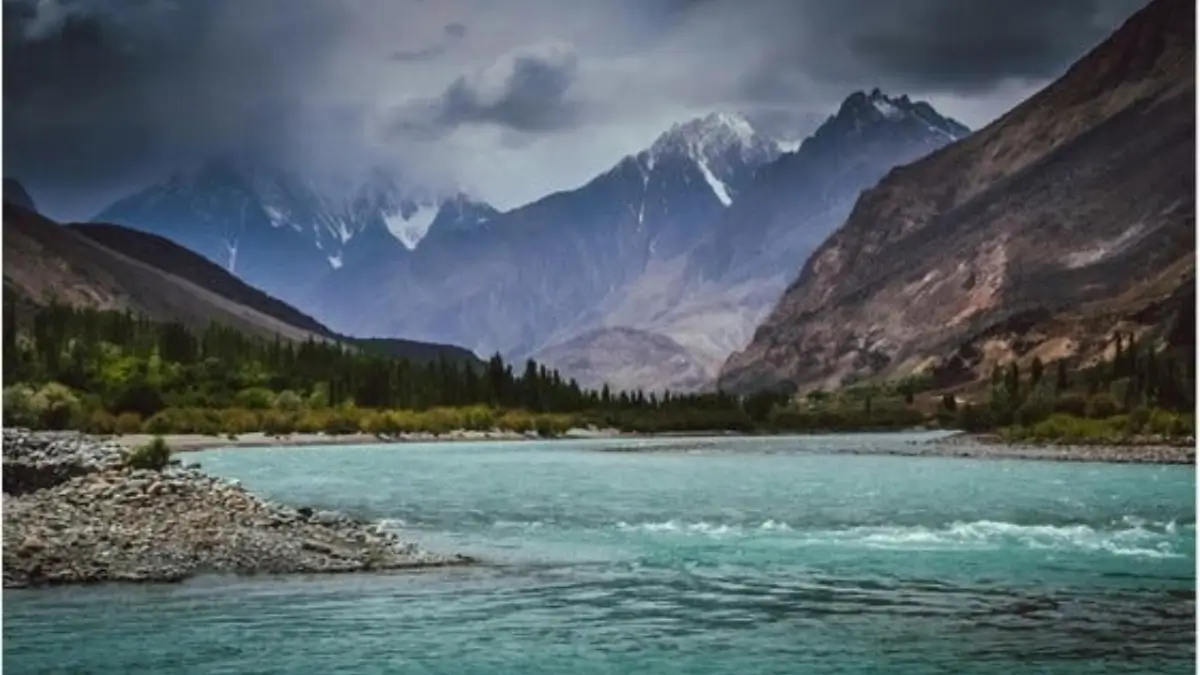
India is home to many beautiful rivers that have shaped its geography, culture, and way of life. These rivers provide water for farming, drinking, and daily needs, making them essential to the country’s growth. Among all Indian states, one stands out for having several major rivers flowing through it, earning it a special title that highlights its natural richness.
Land of Rivers in India
The state of Uttarakhand, located in northern India, is known as the Land of Rivers. It is here that two of India’s holiest and most significant rivers — the Ganga and the Yamuna — originate from the mighty Himalayan glaciers.
Uttarakhand’s landscape is filled with rivers, streams, and confluences that make it both a spiritual centre and a natural treasure for the country.
Why Uttarakhand is Known as the Land of Rivers?
Uttarakhand is called the Land of Rivers because of its many glaciers, tributaries, and river systems that flow through the state.
- The Bhagirathi River originates from the Gangotri Glacier and later joins the Alaknanda River to form the Ganga River, India’s most sacred river.
- The Yamuna River begins from the Yamunotri Glacier, providing water to the fertile plains of northern India.
- Other smaller rivers like Tons, Giri, and Asan are part of the Yamuna basin.
The meeting points of many of these rivers are known as Panch Prayag, making Uttarakhand both a spiritual and geographical wonder.
The Five Holy Confluences – Panch Prayag
The Panch Prayag of Uttarakhand hold deep religious, cultural, and geographical significance. These are the five sacred confluences where different rivers meet the Alaknanda River:
- Vishnuprayag – where Alaknanda meets Dhauliganga.
- Nandprayag – where Alaknanda meets Nandakini.
- Karnaprayag – where Alaknanda meets Pindar.
- Rudraprayag – where Alaknanda meets Mandakini.
- Devprayag – where Alaknanda meets Bhagirathi, forming the holy Ganga River.
These sacred spots are not only important pilgrimage destinations but also reflect the state’s deep connection with its rivers.
Network of Tributaries in Uttarakhand
Uttarakhand is rich in tributary rivers that support its vast ecosystem. Apart from the Ganga and Yamuna, the state has several other rivers, including:
- Mandakini River
- Pindar River
- Kali (Sharda) River
- Eastern Dhauliganga River
- Gauriganga River
- Saryu River
- Ramganga River
Together, these rivers form a complex network of waterways, which are crucial for agriculture, hydroelectric projects, and maintaining the region’s biodiversity.
Longest River of Uttarakhand
The Kali River, also known as the Sharda River, is the longest river in Uttarakhand, stretching for about 300 kilometres. It originates from the Kali Glacier near Kalapani in Pithoragarh district.
This river also forms the natural boundary between India and Nepal, and is called the Mahakali River in Nepal. The Kali River is not only important geographically but also holds great cultural and ecological value.
Importance of Uttarakhand’s Rivers
The rivers of Uttarakhand are vital for the state and the entire country. They:
- Support agriculture and provide irrigation to nearby states.
- Generate hydroelectric power for sustainable energy.
- Sustain wildlife and ecosystems across the Himalayan region.
- Hold spiritual and cultural importance, attracting millions of pilgrims every year.


 KreditBee Joins Unicorn Club After Raisi...
 World Bank Raises India's FY27 Growth Fo...
 UAE Introduces World's First 10G Interne...