
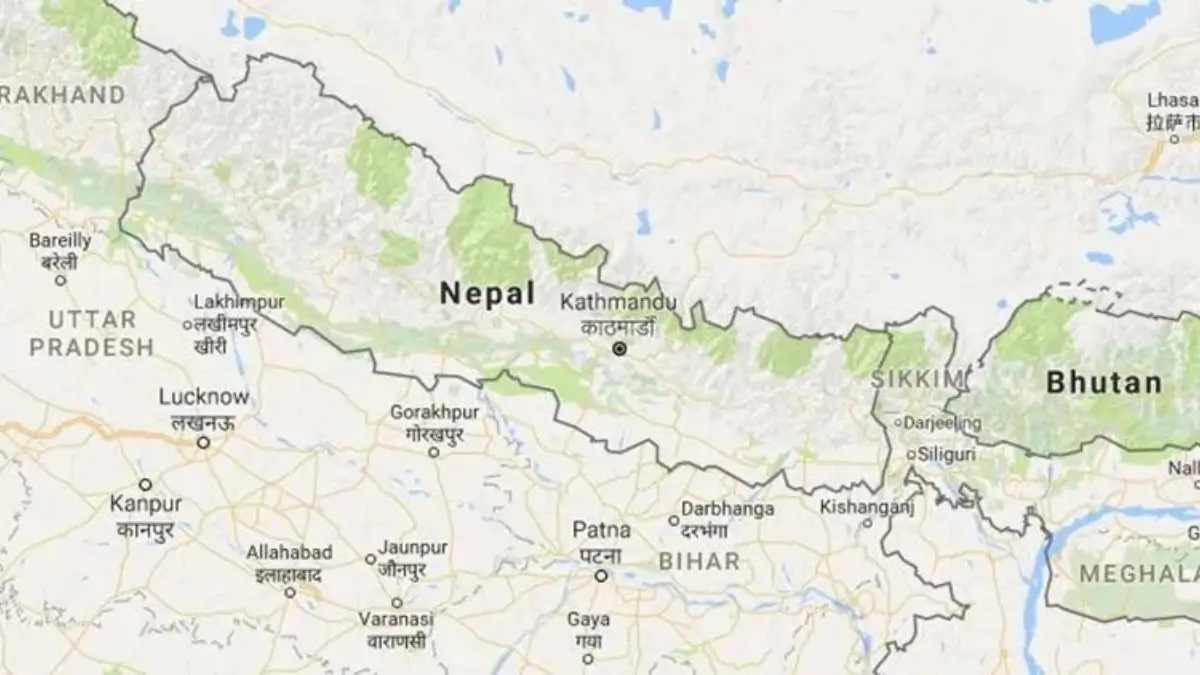
India has a long and very significant open border with Nepal, which is one of the neighbouring countries of India in South Asia. The international border between India and Nepal is about 1,770 km in length and passes through the Himalayan and Terai areas. Five Indian states – Uttarakhand, Uttar Pradesh, Bihar, West Bengal and Sikkim – have a common border with Nepal. The border is crucial not only from a geographical perspective, but also from the perspectives of trade, culture, tourism, security, and movement of people.
Which Indian States Share a Border With Nepal?
The five Indian states bordering Nepal, arranged broadly from west to east, are,
| Indian State | Position Along Nepal Border | Key Geographic Fact |
| Uttarakhand | Western section | Nepal lies to its east |
| Uttar Pradesh | Central section | Has a significant Nepal border |
| Bihar | Central-eastern section | Several northern districts border Nepal |
| West Bengal | Eastern section | Border is located in the Himalayan foothill region |
| Sikkim | Northeastern section | Nepal lies to its west |
Here Are Five Indian States Share Border With Nepal
Together, these five states constitute India’s land border with Nepal.
1. Uttarakhand
It is the westernmost Indian state that has a border with Nepal. Nepal lies to the east of this state. In the India-Nepal border area in this state, the river Kali assumes importance.
In addition to sharing a border with Nepal, Uttarakhand is an important state in strategic terms due to the shared border between this state and China. Himalayan geography of this region renders it important environmentally and strategically for the nation.
2. Uttar Pradesh
It is a state where there is a long stretch of India’s border with Nepal. Nepal lies to the north of this state with several districts lying along the international border.
The border region is important for cross-border trade, transportation and people’s movement. Some border towns act as transit points connecting communities on both sides of the border.
3. Bihar
This is the state lying to the south of Nepal with an international border in its northern districts. Geographically and culturally, it has close ties with Nepal.
Northern districts of the state lie along the Nepal border region.
4. West Bengal
The northern part of West Bengal has a common border with Nepal. The border is near the foothills of the Himalaya range and near the Siliguri corridor area.
West Bengal is an important state as it also has international borders with Bhutan and Bangladesh.
5. Sikkim
Sikkim is the most eastern Indian state that shares a border with Nepal. Nepal is located west of Sikkim. It also has international borders with Bhutan and China.
Being located in the Himalayan region, Sikkim is of geographical significance due to its location near the Kangchenjunga mountain, which is the third highest mountain in the world.
How Long is the Border between India and Nepal?
The total length of the India-Nepal international boundary is commonly considered to be around 1,770 km, but 1,751 km is another number that is used in other sources. It lies across regions that extend roughly from the western region of Uttarakhand to the eastern state of Sikkim.
It traverses areas connected with the Himalayas and Terai plains, thereby giving the border its geographical diversity.
Why is the Border between India and Nepal Important?
There is more to the border than just physical geography. India and Nepal have a very rich history and culture in common. The border provides,
- Trade and commerce
- Pilgrimage and tourism
- Migration
- Exchange of culture and society
- Connectivity
- Border management








 Who Is Navi Pillay? Nobel Peace Prize 20...
 Vande Bharat vs Amrit Bharat Express: Ke...
 Asian Games to LA28: Which Sports Earned...










