
Have you ever wondered the why some parts of the world are home to the hundreds of millions of people but other remain sparsely populated? The answer lies in one simple factor is Water.
For thousands of the years civilization have flourished the along rivers. These waterways provide the drinking water, fertile soil, transportation routes and livelihoods for entire communities. Even in today, world’s most densely populated regions are closely linked to the major river systems.
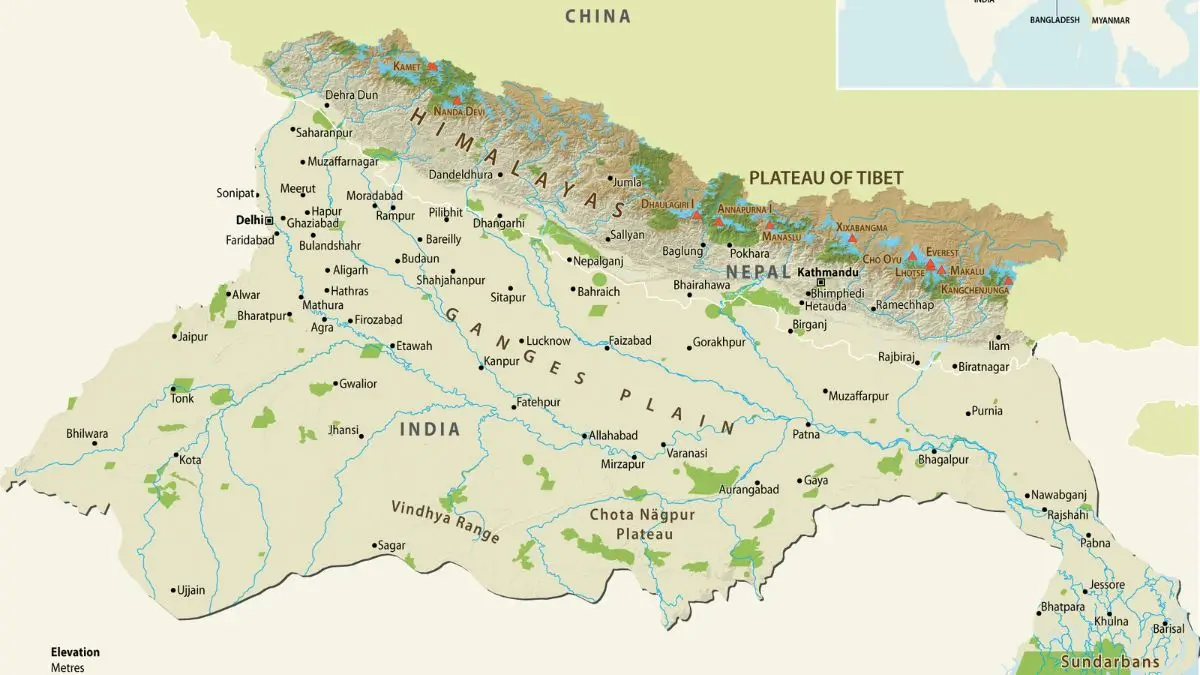
Among all the rivers basins on the earth one important thing stands out for supporting an astonishing number of people. By stretching across five countries and nurturing some of the world’s largest cities and this basin has become the lifeline of more than 650 million people.
Which River Basin Supports the Largest Human Population?
The Ganges-Brahmaputra-Meghna (GBM) River Basin supports the largest population in the world.
As it spreads across the India, Bangladesh, Nepal, Bhutan and China. Tis basin is home to the more than
The Ganges-Brahmaputra-Meghna (GBM) River Basin supports the largest human population in the world. 650 million people and making it as one of the most densely populated regions on the planet.
This basin is formed by the three major river systems,
- Ganges (Ganga)
- Brahmaputra
- Meghna
Together, these rivers creates the very fertile plains which supports the agriculture, industry, transportation and urban development across the South Asia.
Why Does This Basin Support So Many People?
The answer lies in the its exceptional natural advantages formed by this river basin.
The rivers regularly deposit the nutrient rich sediments across the plains and creating some of the most fertile agricultural lands in the world. This has enabled the communities to cultivate the crops for thousands of years and sustain large populations.
The basin also benefits from the,
- Abundant freshwater resources
- Favorable climatic conditions
- Extensive irrigation networks
- Productive agricultural lands
- Major transportation routes
As a result of this, this region has become a hub for the farming, trade and economic activity.
Which Major Cities Depend on the Basin?
Some of the South Asia’s largest urban centres are located within the Ganges – Brahmaputra – Meghna Basin.
Notable cities includes the,
- Kolkata
- Dhaka
- Patna
- Varanasi
These cities rely on the basin for the drinking water, agriculture, industry, transportation and economic growth.
For over the centuries, the river system has served as the foundation for settlement and urbanization throughout the region.
Which Countries Share the Ganges-Brahmaputra-Meghna Basin?
India
India contains the largest portion of the river basin. Rivers such as the Ganga and Brahmaputra flow through the several Indian states and supporting agriculture, industry and daily life for the millions of people.
Also the fertile Indo-Gangetic Plain is one of the world’s most productive farming regions.
Bangladesh
Bangladesh lies downstream and depends heavily on the basin’s waters for the activities like agriculture, fisheries and transportation.
Although the seasonal flooding can cause damage but it also replenishes the soil with the nutrient-rich sediments that support crop production.
Nepal
Several Himalayan rivers originating in the Nepal contributes significantly to the Ganga system.
These rivers provides the irrigation, hydropower and essential water flows which sustain the downstream regions in India and Bangladesh.
Bhutan
Fast-flowing rivers of the Bhutan directly feed into the Brahmaputra system.
Apart from the supporting ecosystems, these rivers play the vital role in the country’s hydropower sector which contributes significantly to its economy.
China
The Brahmaputra originates on the Tibetan Plateau in China and where it is known as the Yarlung Tsangpo.
Water originating from this region influences the river flows across the entire basin and making international cooperation crucial for water management.
What Challenges Does the Basin Face?
Despite the its enormous importance, the Ganges-Brahmaputra-Meghna Basin faces several serious challenges in current times.
Pollution
Industrial waste, untreated sewage and the agricultural runoff threaten the water quality across many sections of the river system.
Flooding
Seasonal monsoon rains often causes the devastating floods and particularly in Bangladesh and parts of eastern India.
Population Pressure
Around more than 650 million people depending on the basin and demand for water and resources continues to grow.
Climate Change
Glacier melt in the Himalayas, changing rainfall patterns and the rising temperatures are affecting the river flows and increasing environmental risks.








 Who Is Navi Pillay? Nobel Peace Prize 20...
 Vande Bharat vs Amrit Bharat Express: Ke...
 Asian Games to LA28: Which Sports Earned...










