
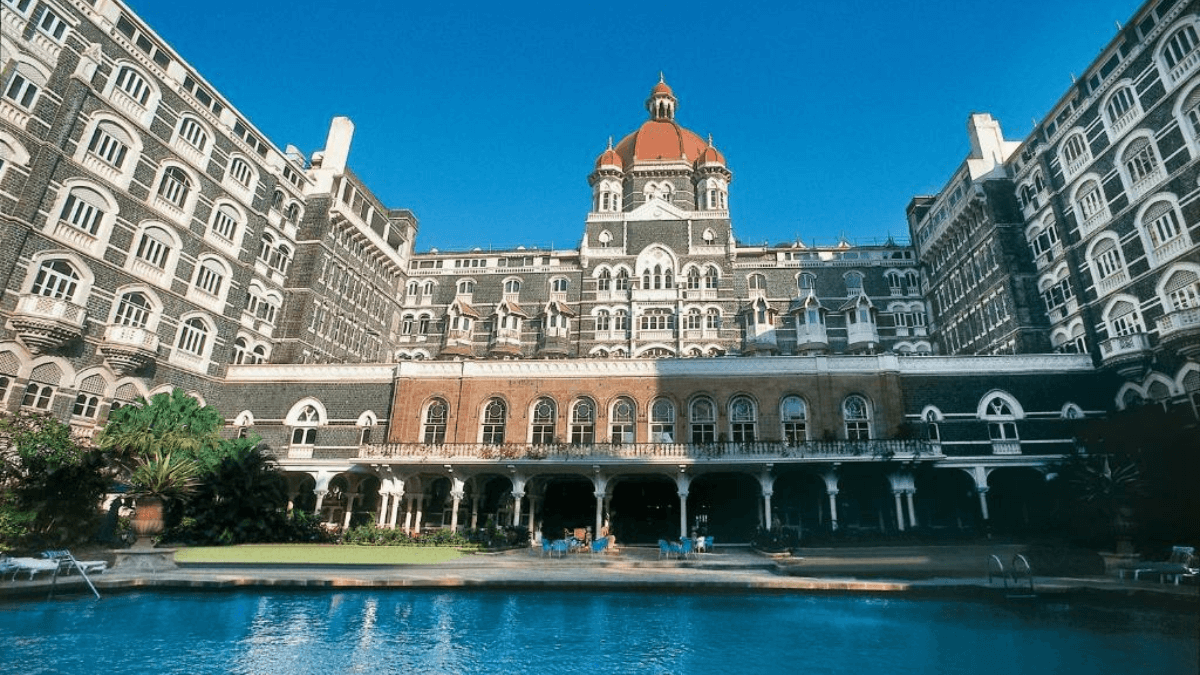
Hotels are not just places to stay; they are symbols of culture, luxury, and progress. In India, the story of 5-star hotels began more than a century ago, marking the rise of world-class hospitality on Indian soil. The journey of the very first 5-star hotel is filled with history, vision, and pride, making it a landmark in India’s hospitality industry.
First 5-Star Hotel in India
The first 5-star hotel in India is the Taj Mahal Palace in Mumbai, opened in 1903 by industrialist Jamsetji Tata. Built as a symbol of pride and modern luxury, it introduced many firsts in India, like air conditioning, lifts, and a 24-hour restaurant. With its grand Indo-Saracenic architecture and iconic location near the Gateway of India, it became a landmark of style, culture, and world-class hospitality.
Opening of the Taj Mahal Palace Hotel
The Taj Mahal Palace Hotel opened its doors on 16 December 1903 in Mumbai. It was built by Jamsetji Tata, one of India’s greatest industrialists. Tata wanted India to have a hotel that could match the best in the world and showcase Indian culture with global standards of luxury.
A Pioneer in Luxury and Comfort
When it first opened, the Taj Mahal Palace introduced many features that were firsts in India, such as:
- The first licensed bar in India
- The first 24-hour restaurant
- Air conditioning in rooms
- Elevators (lifts)
- Telephones in every room
These modern facilities were revolutionary at the time and set new benchmarks in Indian hospitality.
Unique Architecture and Design of Taj Hotel
The hotel was designed in the Indo-Saracenic style, blending Indian, Islamic, and European elements. Its grand domes, tall arches, and elegant interiors gave it a royal charm. Built opposite the Gateway of India, its location made it an unforgettable landmark on Mumbai’s waterfront.
A Cultural and Historical Symbol
The Taj Mahal Palace soon became more than just a hotel. It turned into a meeting point for freedom fighters, political leaders, and global celebrities. Over the years, it has witnessed many important moments in Indian history, including wars, independence movements, and even tragic events like the 2008 Mumbai attacks.
Through it all, the Taj has stood strong as a symbol of resilience and pride.
Expansion and Growth of the Taj Hotel
In 1972, the hotel expanded with the addition of the Taj Tower wing, making it a blend of old-world charm and modern luxury. Over time, it has undergone many renovations but has always retained its original elegance and heritage.
Today, it remains the flagship property of Taj Hotels, inspiring the rise of luxury hospitality across India.
Lasting Legacy of the Taj Hotel
For more than a century, the Taj Mahal Palace has been the heart of Indian luxury hospitality. It continues to attract royalty, world leaders, film stars, and travelers from across the globe. More than just a hotel, it is a symbol of India’s elegance, pride, and world-class service.


 Who were the Seven Sisters of Petroleum?...
 What is the State Flower of Florida? Che...
 Which is the Largest Desert in Asia? Che...











