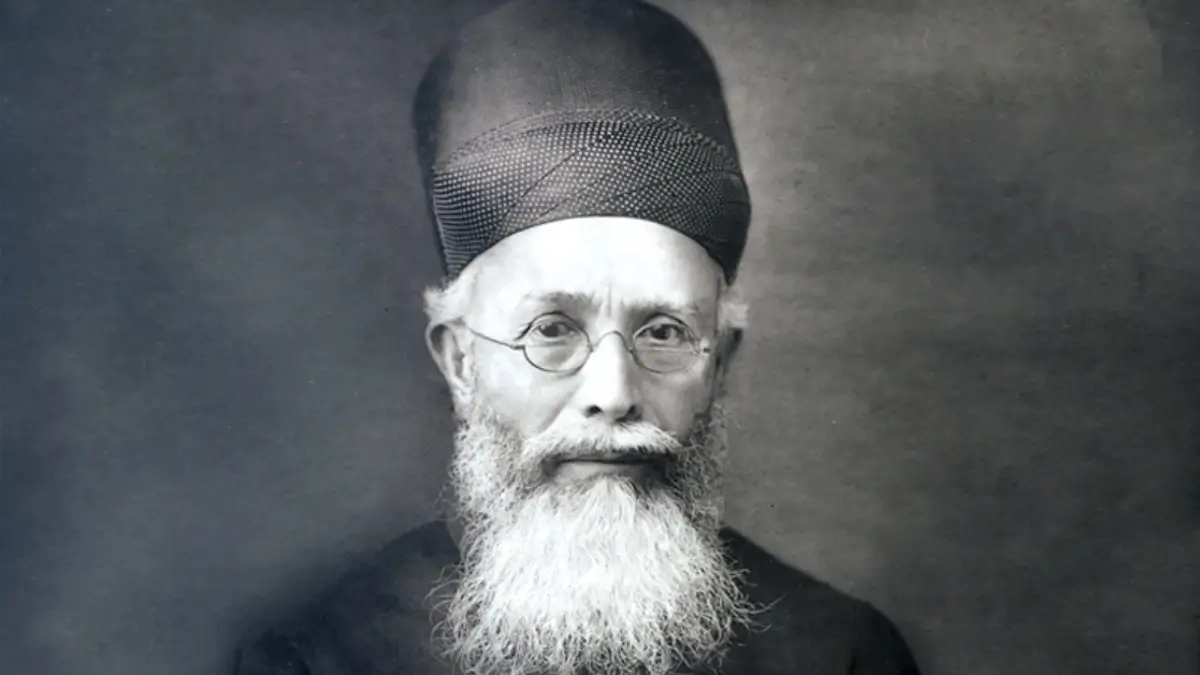
Did you know that India’s freedom struggle was guided by many wise and experienced leaders who worked tirelessly for the nation? Some of them were known not just for their actions, but also for their wisdom and leadership.
Among these great personalities, one senior leader earned a very special title that showed respect for his age, knowledge, and contribution. People admired him for his calm thinking and strong voice for justice.
He played an important role in shaping early political awareness in India. His ideas inspired many young leaders who later became key figures in the independence movement.
This respected figure also worked to highlight the economic problems faced by Indians under foreign rule. His efforts helped people understand the need for change.
Because of his lifelong dedication and guidance, he was honored with a title that reflected both affection and respect from the entire nation.
Who is known as the Grand Old Man of India?
Dadabhai Naoroji is known as the “Grand Old Man of India.” He was one of the earliest leaders of India’s freedom movement and worked tirelessly for the rights of Indians. He explained how British rule was harming India through his famous Drain of Wealth theory. He also became the first Indian to be elected to the British Parliament in 1892. His long service, wisdom, and leadership earned him this respected title.
Why is Dadabhai Naoroji known as the Grand Old Man of India?
Dadabhai Naoroji is called the “Grand Old Man of India” because of his lifelong dedication to the country. He worked for more than six decades to improve the condition of Indians and to demand justice from British rulers.
He was among the first leaders to openly criticize British rule using facts and data. His calm nature, experience, and guidance made him a respected elder among Indian leaders. He played a key role in shaping early nationalism in India.
The Drain of Wealth Theory
One of his most important contributions was the “Drain of Wealth” theory. Through this idea, he explained how Britain was taking away India’s wealth.
He showed that money was being sent to England in many forms, such as taxes, salaries of British officers, and profits from trade. This caused poverty and suffering in India.
His famous book, Poverty and Un-British Rule in India, clearly explained this concept. It helped Indians understand that British rule was not beneficial but harmful to the country’s economy.
Role in the Indian National Congress
Indian National Congress was founded in 1885, and Dadabhai Naoroji was one of its key members. He played an important role in guiding the organization during its early years.
He served as the President of the Congress three times—in 1886, 1893, and 1906. During the 1906 session, he strongly demanded Swaraj (self-rule), which later became the main goal of India’s freedom movement.
His leadership helped unite different groups within the Congress and gave direction to the national struggle.
First Indian in the British Parliament
In 1892, Dadabhai Naoroji created history by becoming the first Indian to be elected to the British Parliament. He represented Central Finsbury in London.
This was a major achievement because it gave Indians a voice in British politics. He used this opportunity to speak about the problems faced by Indians and to demand fair treatment.
His presence in Parliament helped bring international attention to India’s condition under British rule.
Mentor to Future Leaders
Dadabhai Naoroji was not just a leader but also a guide for many future freedom fighters. Leaders like Gopal Krishna Gokhale and Mahatma Gandhi were influenced by his ideas.
His teachings helped shape their thinking and strategies. Gandhi even considered him an important inspiration in understanding India’s struggle.
Because of his guidance and wisdom, he is remembered as a father-like figure in India’s freedom movement.
Key Achievements and Milestones
Dadabhai Naoroji achieved many important milestones during his life. He co-founded the London Indian Society in 1865 to discuss Indian issues. In 1867, he started the East India Association to spread awareness in Britain.
In 1901, he published his famous book explaining the economic exploitation of India. Later, in 1906, he openly demanded Swaraj, which became a turning point in India’s struggle for independence.


 Who were the Seven Sisters of Petroleum?...
 What is the State Flower of Florida? Che...
 Which is the Largest Desert in Asia? Che...