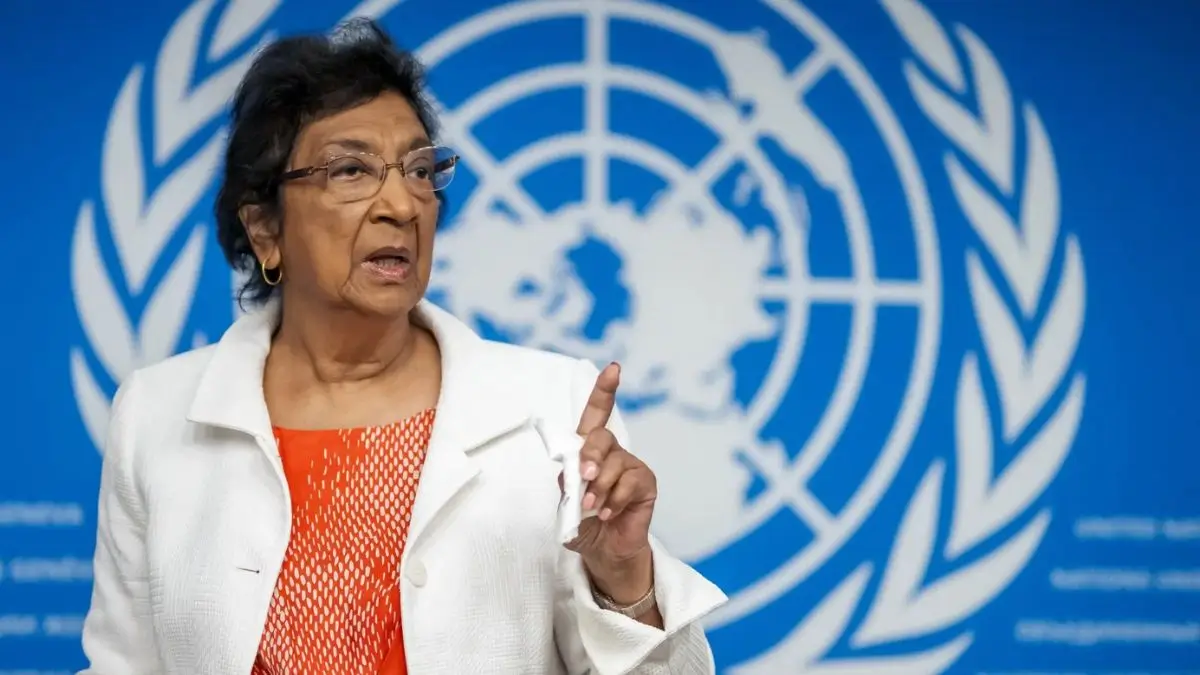
Navi Pillay, who is of Indian Tamil descent and a South African jurist, was awarded the 2026 Nobel Peace Prize for her efforts in the field of international law and peace. Pillay’s career history includes work in the judiciary of South Africa, International Criminal Tribunals and the UN human rights system. Pillay’s life story is significant not only for the award, but also from the perspective of General Studies, in which such topics as apartheid in South Africa, the UN, international human rights law, genocide, crimes against humanity and international courts play an important role.
Background and Early Education
- Born on 23 September 1941 in Durban, an important port city in KwaZulu-Natal province of South Africa, Navi Pillay’s early life was characterized by the period of the apartheid regime in South Africa in which racial discrimination was practiced against the non-white community.
- She comes from a family with an Indian Tamil background. Her background and the practice of discrimination contributed to her passion for human rights.
- Pillay earned her bachelor’s degree in arts in 1963 and in law in 1965 from the University of Natal. Later, she went on to obtain a doctorate in juridical science from Harvard University in 1988, as per the provided biographical details.
Apartheid in South Africa: Background
- Apartheid was the name given to the system of racial segregation and discrimination in South Africa. The apartheid system was officially adopted by the South African government following the ascendance to power of the National Party in 1948.
- It limited political participation and other rights according to racial categorisation. In addition, it ensured that the Blacks were denied political power.
- The anti-apartheid movement included political and civil society groups, as well as international campaigns. One of the most notable leaders of this movement was Nelson Mandela, who eventually became South Africa’s first Black president elected through free and fair elections in 1994.
- Pillay began her legal practice in such an environment and advocated for individuals fighting apartheid. This shows the important role lawyers and the judiciary have in fighting discriminatory systems.
- The transition to democracy in South Africa was completed through the 1994 elections and the promulgation of the country’s constitution in 1996.
Navi Pillay’s Major Achievements
| Year | Achievement |
| 1941 | Born in Durban, South Africa |
| 1963 | Completed a Bachelor of Arts degree at the University of Natal |
| 1965 | Completed a Bachelor of Laws degree at the University of Natal |
| 1967 | Began practising law in South Africa |
| 1988 | Earned a Doctor of Juridical Science degree from Harvard University |
| 1995 | Became the first Black woman appointed to South Africa’s High Court |
| 1995 | Joined the International Criminal Tribunal for Rwanda as a judge |
| 1999 | Became president of the Rwanda tribunal |
| 2003 | Joined the International Criminal Court as a judge |
| 2008 | Became the United Nations High Commissioner for the Human Rights |
| 2014 | Completed her term as the UN High Commissioner for Human Rights |
| 2021–2025 | Chaired the UN Independent International Commission of Inquiry on the Occupied Palestinian Territory, including East Jerusalem, and Israel |
| 2026 | Received the Nobel Peace Prize |
Navi Pillay’s Work with International Tribunals
Several international tribunals have had the presence of Pillay.
- The High Court of South Africa: The year 1995 was a memorable one in which Pillay was appointed a judge in the South African judiciary.
- The International Criminal Tribunal for Rwanda (ICTR): Pillay was involved in hearing cases related to the genocide in Rwanda.
- The International Criminal Court (ICC): Pillay was a judge from 2003 to 2008.
- The International Court of Justice (ICJ): Pillay was an ad hoc judge in the case of The Gambia versus Myanmar on genocide allegations.
It is important to note that while Pillay was an ad hoc judge in the case of the ICJ, she was not a permanent judge of the Court.








 Vande Bharat vs Amrit Bharat Express: Ke...
 Asian Games to LA28: Which Sports Earned...
 Guava Capital of India: Which Place Is K...