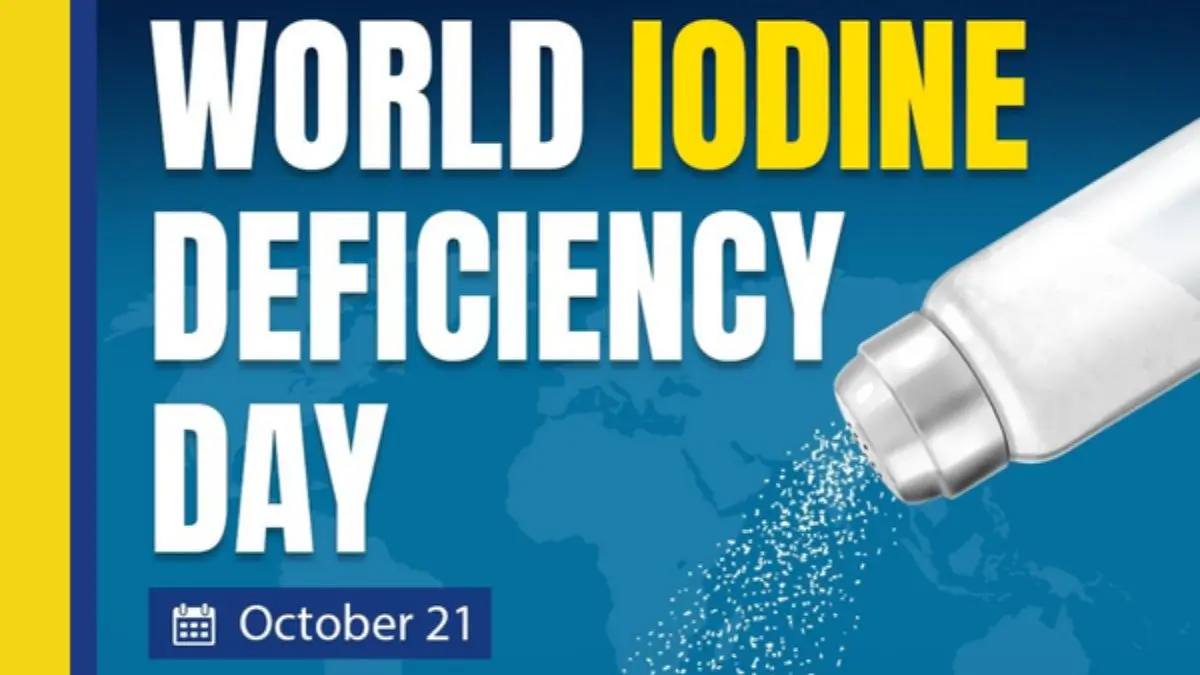
Iodine Deficiency Day or World Iodine Deficiency Disorders Prevention Day is celebrated on October 21 to create awareness regarding the issue of iodine deficiency and its consequences. Iodine is a micro nutrient that is very important for the production of thyroid hormones that help regulate metabolism, growth, and brain development. Deficiency of iodine may lead to various diseases like goiter, hypothyroidism, and developmental disorders especially in pregnancy and childhood. NIDDCP, or National Iodine Deficiency Disorders Control Programme in India, is one such initiative.
What Is Iodine and Why Is It Needed?
Iodine is an important mineral that is needed by the thyroid for the synthesis of two hormones,
- Thyroxine (T4): This is a thyroid hormone with the four iodine molecules.
- Triiodothyronine (T3): This is a thyroid hormone with three iodine molecules.
These above hormones help in the metabolism, body temperature, and body growth. During pregnancy and early life stages, the need for iodine increases because of its role in the proper growth of the brain and nervous system of the fetus and infants.
Some common sources of iodine include iodized salt, sea foods, dairy products and eggs.
Causes and Symptoms of Iodine Deficiency
Iodine deficiency is said to be characterized by the body’s inability to get enough iodine for proper synthesis of thyroid hormones. The consequences of this deficiency largely depend on its severity and length.
Main causes includes,
- Lack of consumption of the iodine containing foods.
- Consuming non-iodized salts in place of sufficiently iodized salts.
- Inaccessibility to iodine-containing foods in some geographical areas.
- Higher needs of iodine during pregnancy and lactation.
Symptoms and their health consequences may include,
- Goiter: An enlargement of the thyroid gland resulting in a swollen neck.
- Hypothyroidism: Under-production of the thyroid hormones which leads to tiredness and cold sensitivity.
- Poor brain development: Severe deficiencies during the time of pregnancy and the first years of the life can hinder brain development.
- Poor growth and development: Long-term deficiencies result in the poor growth and neurological development.
National Iodine Deficiency Disorders Control Programme (NIDDCP) in India
The National Goitre Control Programme (NGCP) was initiated in 1962 by India in order to eliminate iodine deficiency. In August 1992, this programme was renamed as National Iodine Deficiency Disorders Control Programme (NIDDCP) to include all kinds of health disorders that can occur due to iodine deficiency.
This programme is run on a national scale under the Ministry of Health and Family Welfare through Directorate General of Health Services (DGHS) and its Nutrition and Iodine Deficiency Disorders Cell.
Progress Made by India in the Prevention of Iodine Deficiency
Official statistics of the Indian government show significant improvements in terms of the use of iodised salt by Indian families.
According to the data of the National Family Health Survey (NFHS-5) conducted in 2019-21, 94.3% of Indian families use adequately iodised salt. This figure marks an increase from 76% recorded in NFHS-2 during 1998-99.
In addition to this, the NIDDCP evaluates the quality of iodised salt at stages of production, distribution and domestic usage of salt. Surveys, laboratory analysis and awareness campaigns are carried out by state/union territory administrations in this respect.
How can iodine deficiency be prevented?
One of the effective methods of prevention of iodine deficiency is the use of properly iodized salt. According to the World Health Organization (WHO), salt iodization is one of the effective methods that can increase the level of iodine in the population.
Some other methods of prevention are,
- Eating a balanced diet with the suitable sources of iodine, such as sea food, dairy products, and eggs.
- Keeping iodized salt in a dry and closed container.
- Limiting the intake of iodized salt.
- Consulting professionals regarding the need for the iodine during pregnancy and lactation periods.
- Taking iodine supplement only after the prescription of a medical professional, because too much iodine also causes thyroid disease.





 Police Commemoration Day 2026: History, ...
 Dussehra 2026: Date, History, Significan...
 International Day for the Eradication of...