
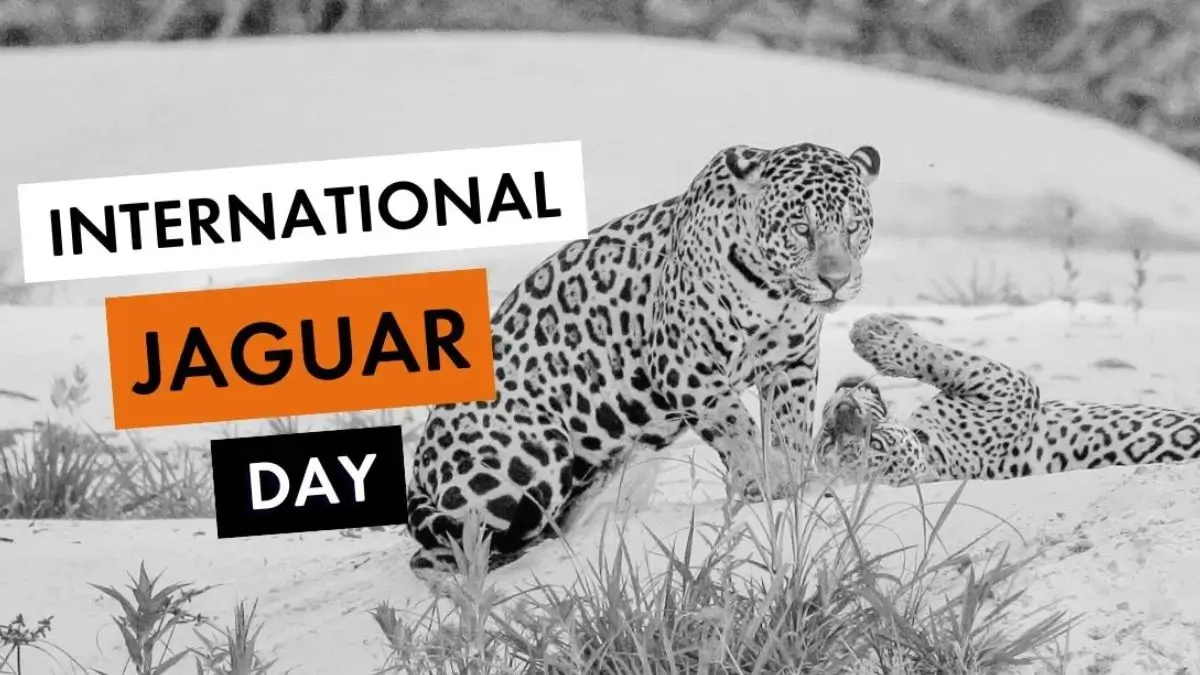
International Jaguar Day is observed every year on 29th of November to raise the awareness about the conservation of the jaguar (Panthera onca) which is the largest wild cat in the Americas. The observance highlights the species’ ecological importance, its cultural significance in Indigenous communities and the threats posed by habitat loss, fragmentation, illegal wildlife trade and human-wildlife conflict. In 2026, the United Nations Development Programme (UNDP) in Argentina and Bolivia organized a regional awareness campaign featuring personalities from sports and science to promote human-jaguar coexistence.
Why Is International Jaguar Day Observed on 29 November?
International Jaguar Day was established as part of an international conservation initiative in 2018. The initiative emerged from the efforts of jaguar-range countries and international conservation organisations to strengthen cooperation for protecting the species.
In November 2018, the Jaguar 2030 Conservation Roadmap for the Americas was launched at the 14th Conference of the Parties (COP14) to the Convention on Biological Diversity (CBD), held in Sharm El-Sheikh, Egypt. Fourteen jaguar-range countries and major conservation organisations supported the initiative.
The roadmap designated 29 November as International Jaguar Day to,
- Raise awareness about the threats facing jaguars.
- Promote international cooperation for jaguar conservation.
- Protect natural habitats and wildlife corridors.
- Reduce human-jaguar conflict.
- Recognise the ecological and cultural importance of the species.
International Jaguar Day 2026: UNDP Conservation Campaign
For International Jaguar Day 2026, UNDP country offices in Argentina and Bolivia launched a regional campaign to highlight the challenges of human-jaguar coexistence.
The campaign involved personalities from sports and science,
- Marcela “Tigresa” Acuña: Former professional boxer from Argentina and a pioneer of women’s boxing in the country and Latin America.
- Paola Nogales: Bolivian biologist and conservationist specialising in wild cats. She was part of the international scientific team that discovered the tilcayo (Leopardus tilcayo).
The campaign aims to encourage collective efforts to protect local wildlife and promote coexistence between communities and their natural ecosystems.\
Understanding the Jaguar (Panthera onca)
The jaguar is a large carnivorous mammal belonging to the family Felidae and genus Panthera. It is the largest wild cat in the Americas and the third-largest living cat species after the tiger and lion.
Jaguars are known for their powerful bodies, strong jaws and distinctive coat patterns. Their fur generally has a yellowish or golden background with black rosettes and spots.
Key Characteristics of the Jaguar
- Common Name: Jaguar
- Scientific Name: Panthera onca
- Family: Felidae
- Order: Carnivora
- Genus: Panthera
- Geographical Range: Central and South America
- Northern Range: Mexico
- Southern Range: Argentina
- Habitat: Tropical forests, wetlands, grasslands and dry forests
- Diet: Carnivorous
- Ecological Role: Apex predator and umbrella species
- IUCN Status: Near Threatened
Jaguars are strong swimmers and are frequently associated with rivers, wetlands and flooded forests. They hunt a wide variety of animals, including deer, capybaras, peccaries, reptiles and other prey.
Why Is the Jaguar Important for Ecosystem Balance?
The jaguar is an apex predator it means that it occupies the top level of the food chain in its natural habitat. It plays an important role in regulating prey populations and maintaining ecological balance.
Its ecological importance includes the,
- Regulation of prey populations: Jaguars help to control the populations of herbivores and other prey animals, influencing grazing pressure on vegetation.
- Food-chain balance: As top predators, they influence the distribution and behaviour of other animals in their habitats.
- Indicator of ecosystem health: Their survival depends on healthy habitats, sufficient prey availability and ecological connectivity.
- Umbrella species: Protecting large landscapes required by jaguars can also help conserve numerous other species sharing those ecosystems.
Habitat and Geographical Distribution
Jaguars are native to the Americas with their geographical range extending from Mexico through the Central America to parts of South America including Argentina.
Major habitats include,
- Amazon Rainforest: An important habitat supporting significant jaguar populations.
- Pantanal Wetlands: A major wetland ecosystem spread across Brazil, Bolivia and Paraguay.
- Tropical Forests: Provide shelter, prey and breeding habitats.
- Grasslands and Savannas: Support jaguars in areas with adequate vegetation and prey.
- Dry Forests: Provide habitat for certain regional populations.
The Jaguar Corridor is an important conservation concept. It aims to maintain connectivity between jaguar habitats across their geographical range, allowing animals to move between protected landscapes and supporting genetic diversity.
Major Threats to Jaguar Populations
Despite their ecological importance jaguars faces the several threats across their natural range.
- Habitat Loss and Deforestation: Agricultural expansion, cattle ranching, mining, logging and infrastructure development reduce the availability of suitable habitats.
- Habitat Fragmentation: Road construction, urbanisation and agricultural activities divide the continuous forests into smaller isolated patches. This restricts animal movement and reduces opportunities for breeding between populations.
- Human-Wildlife Conflict: Jaguars sometimes also attack livestock particularly where the natural prey becomes scarce or habitats are disturbed. Retaliatory killings by livestock owners pose a conservation challenge.
- Illegal Wildlife Trade: Jaguars are hunted for their teeth, skins, bones and other body parts. Illegal trade adds pressure on vulnerable populations.
- Decline in Natural Prey: Overhunting and habitat degradation reduce the availability of natural prey, forcing jaguars to travel farther in search of food.
- Climate Change and Forest Fires: Changing the rainfall patterns, rising temperatures and forest fires can damage habitats, affect prey availability and disrupt ecological connectivity.
Conservation Status and International Protection
The jaguar is also covered by the several international wildlife conservation frameworks.
- IUCN Red List: Near Threatened
- CITES Appendix: I
- Convention on Migratory Species (CMS): Appendices I and II
- Scientific Name: Panthera onca
IUCN Red List – Near Threatened: The jaguar is classified globally as Near Threatened. However, several regional subpopulations face higher risks, with some classified as Endangered or Vulnerable.
CITES Appendix I: The jaguar has been included in the Appendix I since 1975. This provides the highest level of protection under CITES and generally prohibits international commercial trade in wild-caught specimens, subject to limited exceptions.
Convention on Migratory Species (CMS): The jaguar was included in Appendices I and II of CMS in 2020. This supports international cooperation to protect its populations, migration routes and habitats across national boundaries.








 Red Planet Day 2026: History, Significan...
 Samvidhan Diwas 2026: Why India Celebrat...
 National Milk Day 2026: Date, History an...