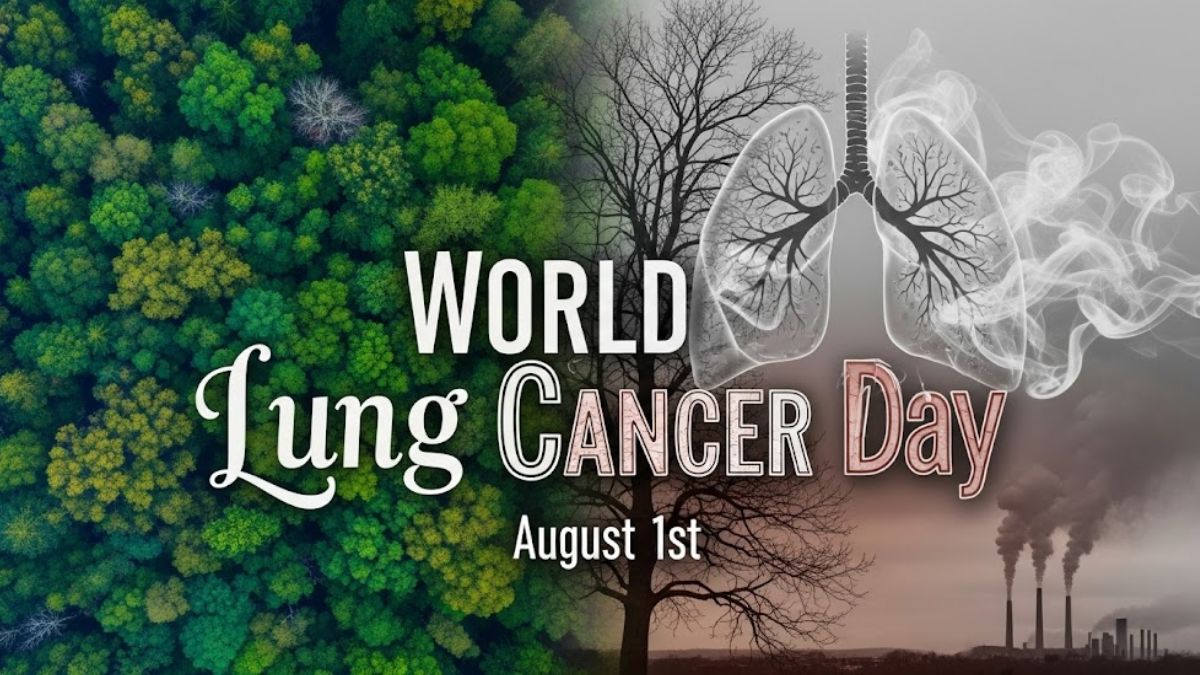
Lung cancer remains one of the most deadly and widespread forms of cancer, claiming nearly one in five cancer-related deaths globally. Despite its high risk, many cases go undetected until advanced stages, primarily due to a lack of awareness, late screening, and persistent stigma surrounding the disease. While often associated with smoking, lung cancer has several other causes that many people overlook, such as air pollution, occupational hazards, radon exposure, and genetic factors.
Every year on August 1, the world observes World Lung Cancer Day to unite in spreading awareness, encouraging early detection, and promoting preventive measures. This day reminds us that awareness can save lives, and early recognition of symptoms plays a vital role in improving survival rates.
The History and Significance of World Lung Cancer Day
World Lung Cancer Day was first observed in 2012 through the combined efforts of the Forum of International Respiratory Societies (FIRS) and several patient advocacy groups. The initiative aimed to bring global attention to lung cancer, which, despite being a leading cause of cancer deaths, often remained under-recognized and misunderstood.
The day’s significance lies in its ability to shed light on the gaps in public knowledge, the late-stage diagnoses, and the stigma faced by non-smokers diagnosed with the disease. By focusing on awareness, early detection, prevention, and support for patients and families, World Lung Cancer Day fosters open conversations and helps communities understand the importance of timely medical intervention.
Understanding Lung Cancer: Types and Nature
Lung cancer begins when the cells in the lungs grow uncontrollably, forming a tumor that interferes with breathing and can spread to other parts of the body.
There are two main types of lung cancer,
- Non-Small Cell Lung Cancer (NSCLC): The most common form, usually slower-growing, making up the majority of cases.
- Small Cell Lung Cancer (SCLC): Less common but more aggressive, often linked strongly to smoking and spreading rapidly.
What makes lung cancer especially dangerous is its silent progression. Early stages often show no clear symptoms, which leads to delayed detection and reduces treatment success rates.
Causes and Risk Factors: More Than Just Smoking
While smoking remains the leading cause of lung cancer, it is not the only factor. Over the years, studies have revealed multiple risk contributors, many of which are overlooked,
- Smoking and Second-Hand Smoke: The primary cause, with risks increasing with the frequency and duration of smoking. Second-hand smoke also poses significant risks, especially for family members exposed at home.
- Air Pollution: Long-term exposure to pollutants like PM2.5, nitrogen dioxide, and industrial emissions damages lung tissue.
- Occupational Exposure: Substances like asbestos, diesel exhaust, silica, and arsenic in industries such as mining, shipbuilding, and construction significantly elevate risks.
- Radon Gas: A naturally occurring radioactive gas that seeps into poorly ventilated homes, contributing to many non-smoker cases.
- Genetic and Family History: Inherited genetic mutations or shared environmental factors can predispose individuals, even if they have no history of smoking.
These risk factors highlight that lung cancer is not just a smoker’s disease, making awareness all the more critical.
Recognizing Symptoms: The Silent Warnings
Early detection is often missed because lung cancer symptoms can be subtle or mistaken for other health issues. Some common warning signs include,
- Persistent cough that worsens over time
- Shortness of breath even with mild activity
- Chest pain during deep breathing or coughing
- Unexplained weight loss or loss of appetite
- Coughing up blood
- Fatigue and weakness
- Hoarseness in voice
- Recurring chest infections such as pneumonia
Since these symptoms may also indicate less severe conditions, it is crucial for anyone—especially those with risk factors—to consult a doctor promptly when such signs persist.
Diagnostic Methods for Lung Cancer
Diagnosing lung cancer requires a combination of medical tests to determine its presence and stage. Doctors may use,
- Chest X-rays for initial detection of abnormal shadows.
- CT and PET-CT scans for detailed images and detection of cancer spread.
- Bronchoscopy for airway inspection and tissue sampling.
- Biopsies to confirm cancer by analyzing tissue.
- Sputum Cytology to check mucus for cancerous cells.
- Early detection using these methods significantly improves survival chances and allows for personalized treatment planning.
Treatment Options: Fighting the Disease
Treatment depends on the type, stage, and overall health of the patient. Key approaches include,
- Surgery: Effective in early stages; includes lobectomy, pneumonectomy, or wedge resection.
- Chemotherapy: Used before or after surgery, or as the main treatment in advanced cases.
- Radiotherapy: High-energy rays to destroy cancer cells, often used when surgery isn’t possible.
- Targeted Therapy: Drugs that act on specific genetic changes in cancer cells, sparing most healthy tissues.
- Immunotherapy: Boosts the immune system to fight cancer, especially beneficial in advanced cases.
- Palliative Care: Focused on improving quality of life when curative treatment is not possible.
New Advances in Lung Cancer Care
In recent years, lung cancer treatment has seen revolutionary improvements,
- Molecular and genetic testing now helps design personalized treatment plans.
- Next-generation immunotherapy improves immune system targeting of cancer cells.
- Precision radiotherapy techniques, like Stereotactic Body Radiotherapy (SBRT), deliver radiation with higher accuracy.
- Minimally invasive surgeries allow faster recovery and fewer complications.
- These innovations bring new hope, proving that lung cancer is no longer an automatic death sentence if caught early.
Debunking Common Myths Around Lung Cancer
Awareness efforts often struggle due to dangerous myths,
- “Non-smokers don’t get lung cancer.” – False; many non-smokers are affected.
- “It always shows symptoms early.” – Wrong; it often remains silent for years.
- “There’s no hope after diagnosis.” – Advances in treatment prove otherwise.
- “Quitting smoking after diagnosis won’t help.” – In reality, it greatly aids recovery and treatment success.
- “Only older men are at risk.” – Anyone, including women and young people, can develop lung cancer.
Dispelling these myths ensures that fewer cases go undetected.
Staying United Against Lung Cancer
The fight against lung cancer is a collective effort. Beyond medical treatment, awareness campaigns, community discussions, and supportive environments can make a huge difference. By encouraging screenings, reducing exposure to pollution and smoke, sharing accurate information, and standing by patients emotionally, society can collectively reduce the toll of this deadly disease.


 International Day of Sport for Developme...
 List of Important Days in April 2026, Na...
 National Maritime Day 2026: Remembering ...