
PM Modi Inaugurates Advanced Mother and Child Centre and Advanced Neurosciences Centre at PGIMER Chandigarh

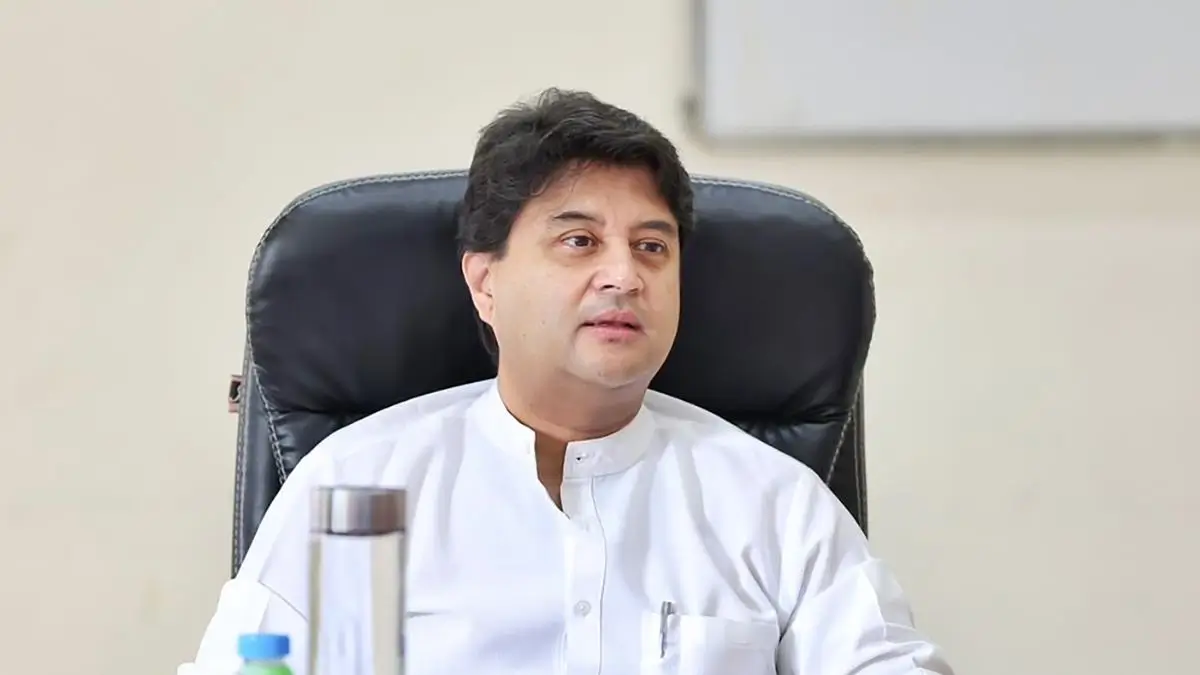
Honourable Prime Minister Narendra Modi has officially launched the Advanced Mother and Child Centre and the Advanced Neurosciences Centre at the Chandigarh’s Post Graduate Institute of Medical Education and Research. Also, Prime Minister has laid the foundation stone of a Modern Critical Care Block with 150 beds under the Pradhan Mantri Ayushman Bharat Health Infrastructure Mission. The main objective behind these projects is to enhance the access to advanced medical facilities, improve the preparedness for the emergencies, and support medical education and research in Northern India.

PM Modi Unveils Top-Class Healthcare Facilities

Recently, Prime Minister Modi inaugurated two important healthcare facilities which would provide the excellent medical support.

The event was attended by Punjab Governor along with Union ministers J.P. Nadda and Ashwini Vaishnaw as well as Chandigarh MP Manish Tewari.

Apart from these inaugurations, PM also laid the foundation stone for a 150-bed Critical Care Block under PM-Ayushman Bharat Health Infrastructure Mission which will help strengthen the Intensive Care and Disaster Preparedness services.

In his address, PM said that these new healthcare facilities would bring immense relief to thousands of people living in Chandigarh and surrounding areas.

Key Features of the New PGIMER Facilities

Advanced Mother and Child Centre

The Advanced Mother and Child Centre has just been set up with the aim of to providing comprehensive tertiary healthcare services to women and children.

Main Features

  • 300-bed advanced facility
  • Specialized care for complicated pregnancies
  • Advanced neonatal care
  • Care of critically ill newborn babies
  • Pediatric special care
  • Modern diagnostic facilities and clinics
  • Complete maternal and child health services

The centre is expected to help the thousands of families by providing easy access to specialized healthcare services.

Advanced Neurosciences Centre

The Advanced Neurosciences Centre is the next big step in the field of neurological healthcare in our area.

The centre provides various services like,

  • Neurology care
  • Neurosurgery
  • Neuro-critical care
  • Advanced neurological care
  • Integrated care services
  • Research and medical teaching facilities

Foundation Stone Laid for 150-Bed Critical Care Block

The Prime Minister has also inaugurated the construction of a contemporary Critical Care Block under the Pradhan Mantri Ayushman Bharat Health Infrastructure Mission (PM-ABHIM).

The facility will play an important role in,

  • Strengthening emergency medical services
  • Enhancing ICU capacity
  • Developing resources for disaster response
  • Improving the infrastructure of medical institutions in the area
  • Optimizing management of medical emergencies

The initiative aims at modernization of India’s healthcare structure undertaken by the government.

Key Statements by PM Narendra Modi

In his speech, the Prime Minister underlined how the health industry has transformed across the country over the last 12 years.

Some of the main statements are,

  • Since 2014, 15 new AIIMS have been sanctioned.
  • Many new medical colleges have been set up.
  • Cancer treatment facilities have been enhanced greatly.
  • India has become one of the top options for health tourists.
  • Over 175000 Ayushman Arogya Mandirs are active throughout the country.
  • More than 480 million consultations have been held over eSanjeevani telehealth facility.
  • More than 90% deliveries are done in hospitals now.
  • Maternal mortality has decreased.
  • Infant mortality has lowered down.
  • Approval has been granted for a new MBBS college at PGIMER Chandigarh and admissions shall be starting soon.

What Is EPFO VISHWAS 2026? Benefits, Eligibility and Key Features Explained

The VISHWAS 2026 scheme, which is a one-time scheme introduced by the Employees’= Provident Fund Organisation (EPFO), is aimed at to helping all employers in resolving their issues which have been pending for a long time with regard to the damages and penalties. This scheme has been launched by the Ministry of Labour & Employment with the aim of minimizing litigation, encouraging the compliance voluntarily, and increasing coordination in the management of social security in India. The VISHWAS scheme, which was started on June 29th, has introduced new penalties that are lower than the existing penalties applicable in most of the cases.

What is VISHWAS 2026?

VISHWAS 2026 is an initiative to resolve the disputes that has been started by the Employees Provident Fund Organisation under the Ministry of Labour & Employment.

This scheme aims to resolve the disputes regarding damages caused under Section 14B of the Employees Provident Funds and Miscellaneous Provisions Act, 1952, and also penalties that are levied under Section 128 of the Code on Social Security, 2020.

The scheme has been notified by the way of G.S.R. 525(E), on 29 June 2026 as part of the EPF Scheme, 2026 and is valid for the six months from the date of notification.

What Was the Reason for EPFO to Launch VISHWAS 2026?

The main goal of the scheme is to settle the disputes that have been unresolved for the long time while motivating organizations to conform to the EPF rules voluntarily.

The main aims are,

  • Reducing the cases of disputes regarding the EPF compensations and fines
  • Helping employers fulfill rules without any pressure
  • Resolving cases faster
  • Supporting the employees
  • Making the settlement easy with the help of technology
  • Improving social protection administration in India

EPFO proposes lenient fine rates to enable organizations to pay fines instead of going through long disputes.

Which Cases are Eligible to be Covered Under the Scheme of VISHWAS 2026?

The scheme has four categories of cases as mentioned below,

Cases Still Running Before the Courts

Cases involving disputes for which judgment has been pronounced in the respect of the imposition of penalty of damages are being challenged in courts and tribunals.

Cases of Final Orders Assigned for Recovery

Cases which involving final orders of penalty or damages passed but with recovery being still pending or only partially completed. This includes Recovery Certificate (RC) cases.

Issuance of Notices but Pending Final Orders

Cases issued notices but there is no final orders have yet been passed.

Cases Where Notices have not been Issued

Even cases in which there are no notices issued are covered under the scheme.

Lower Penalty Rates as per VISHWAS 2026

A major benefit of the scheme is significant reduction in penalty and damage rates for defaults occurring prior to 14th June 2024.

Following the revised rates are,

Period of Default Discounted Penalty Rate
Less than 2 months 0.25% per month
Between more than 2 months and up to 4 months 0.50% per month
More than 4 months 1.00% per month

The purpose of these concessional rates is to expedite resolution of outstanding disputes.

Eligibility Criteria for Employers

In order to benefit from the provisions of the VISHWAS 2026, certain requirements must be fulfilled.

Employers must have to,

Ensure the complete deposit of statutory interest applicable in terms of Section 7Q of the EPF & MP Act, 1952 or Section 127 of the Code on Social Security, 2020 before applying for the scheme.

Provide an undertaking stating that no more appeals will be initiated in respect of the disputes settled under the scheme. Apply for the scheme within the time period prescribed.

If the eligibility requirements are not complied with, an employer may become ineligible for getting benefits under VISHWAS 2026.

Cases Exempted from the Scheme

Certain groups of cases have also been excluded from the VISHWAS 2026, such as,

  • Cases where liability to pay has already been settled.
  • Cases arising out of cases of dishonest conduct or deliberate misstatement of facts.
  • Cases where statutory interest has not been deposited fully under the provisions.
  • These exclusions ensure that the scheme helps only genuine cases in complying voluntarily.

How to Apply for EPFO VISHWAS 2026

The applications under this scheme should be submitted online through the portal of EPFO for the employers.

The digital procedure involves the,

  • Logging in through Digital Signature Certificate (DSC) or through e-Sign.
  • Online submission of application.
  • Digital verification of documents.
  • Processing of EPFO electronically.
  • Issue of the orders of the settlement from the EPFO site.

It is expected that this paperless procedure will help in removing the delays from the system and ensuring efficient work.

Dedicated Cells for VISHWAS to Help Employers.

EPFO has created dedicated VISHWAS Cells at its Zonal, Regional, and District offices to ensure smooth implementation of the initiative.

These cells will,

  • Help the employers in filing the applications.
  • To verify the documents.
  • To process the application.
  • To ensure timely resolution of issues.
  • To guide them through the entire process.

The EPFO has issued guidelines for the same which include monitoring of the operations from Zonal and Headquarters

RBI Financial Stability Report 2026: Top Takeaways You Should Know

The Financial Stability Report (FSR) – June 2026 has been published by Reserve Bank of India (RBI), giving an overall view of the financial market of the country. The report is published bi-annually and gives an idea of the current condition of banks, NBFCs, insurance companies, Mutual Funds, etc., while bringing forward possible risks that can arise in the future. The report has a positive view about the banking sector of India, mentioning the lowest ever bad loans, high profitability, high liquidity, and strong credit growth. However, at the same time, the report also indicates the issues related to cyber threats, geopolitical risks, and inflation, as well as the growth of unsecured loans.

What Is the RBI’s Financial Stability Report?

The Financial Stability Report (FSR) is the RBI’s main report on the stability of India’s financial system.

It is compiled with inputs from all financial authorities by the Financial Stability and Development Council (FSDC) committee, the FSR evaluates,

  • The banking sector
  • The non-banking financial institutions (NBFIs)
  • The insurance and mutual fund sectors
  • The stability in the financial market
  • Systemic risks
  • The macroeconomic scenario

FSR differs from the usual notifications issued by regulatory bodies in that it gives an anticipatory analysis of the situation and points out the aspects where further policy interventions may be required.

Key Takeaways From RBI Financial Stability Report June 2026

The report issued in June 2026 presents multiple positive aspects related to the following indicators.

Indicator June 2026 Status
Scheduled Commercial Bank Credit Growth 14.5%
Gross NPA Ratio 1.8% (lowest in decades)
Profit After Tax ₹4.05 lakh crore
Liquidity Coverage Ratio (LCR) 124.2%
Net Stable Funding Ratio (NSFR) 122.1%
Inflation Forecast 5.1%
Fastest Growing Retail Segment Gold Loans

 Growth in Credit is Observed Continuously

Scheduled Commercial Banks experienced at the 14.5% annual credit growth for the years 2025-26.

The important conclusions are,

  • Public Sector Banks overtook the private ones.
  • The retail trade “lending” remains high.
  • The service industry pushes for the issuance of credit.
  • Improvement in agricultural and industrial loans.

RBI recommends banks to comply with careful lending policy, especially in terms of the rapidly expanding retail lending field.

Banking Industry Registers Impressive Asset Quality

The most essential factor mentioned in the report is the fall in the ratio of Gross Non-Performing Assets (GNPA) to 1.8%, which is the lowest level in decades.

Other benefits include,

  • Solid capital adequacy
  • Stable profits
  • Strong ROA
  • Constant ROE
  • Total profit after tax at ₹4.05 lakh crore.

As estimated by the RBI’s stress tests, banks are ready to survive any severe shock in the economy keeping required capital at hand.

Liquidity Situation Is Stable

According to the report, banks have made no changes with high liquidity positions.

Key ratios include,

LCR (Liquidity Coverage Ratio)

The average level of the LCR of the banking sector was 124.2%, meeting the required minimum of 100%, indicating that banks can meet their short-term liabilities.

NSFR (Net Stable Funding Ratio)

The average NSFR value was 122.1%, which confirming the stable funding and effective management of liquidity.

Cyber Risk Becomes a Serious Problem

As the financial system advances in technology, the Reserve Bank of India lists cyber risk as one of the biggest threats to financial stability.

The key problems includes the,

  • Rising instances of cybercrime
  • Reliance on cloud service providers
  • Heavy dependence on third-party technology
  • Disruptions in operations
  • Threat to data security

RBI urges banks and non-banking financial companies to enhance cybersecurity and upgrade their technological infrastructure while cutting down on their reliance on third-party technology.

Key Risks Identified by RBI

The Financial Stability Report brings the following risks,

  • Geopolitical disputes
  • Fluctuation in crude prices
  • Inflationary risks
  • Climate and Weather-related dangers
  • Global recession
  • Volatile capital flows
  • Cybersecurity risks
  • Concentration of AI-related investments
  • Concentration of lending in sectors
  • Easing of underwriting norms

Banks should improve their stress testing, diversify their portfolios, enhance credit evaluation and have solid liquidity and capital reserves.

Gujarat has emerged as the top-ranked large state in NITI Aayog’s first Investment Friendliness Index. Learn about the index, rankings, assessment criteria, and why it matters for India’s investment climate.

Explore NITI Aayog’s first Investment Friendliness Index, where Gujarat ranked first among large states. Know the methodology, top-performing states, key pillars, and implications for investors.

West Indies Legend Sir Garfield Sobers Passes Away at 89

Sir Garfield Sobers, who is referred to as a great cricketer in history, has died at the age of 89. He was the great all-rounder from the West Indies, he represented the Caribbean nation between the years 1954 to 1974 and left behind an unmatched legacy of his prowess as batsman, bowler and as a fielder. People from the cricketing world have come out with their tributes for Sobers with the International Cricket Council (ICC), Cricket West Indies and many players remembering him as the pioneer of the excellence in the sport.

Sir Garfield Sobers Passes Away at 89

Sir Garfield Sobers, a cricketer legendary in his achievement passed away on July 17th, 2026, when he was 89 years old.

Sobers is known as one of the best all-rounders ever in the history of the cricket with a two-decade-long career in international matches in cricket.

Sobers’s death was the development that caused multiple cricket associations, his colleagues in cricket, newcomers to the sport, and fans to pay their respects and express appreciation for his significant contribution to cricket.

ICC Chairman Jay Shah stated on Sobers’s passing by calling him “one of history’s greatest cricket players.” Cricket West Indies mentioned Sobers in their statement regarding his death as a proud representative of Caribbean nation whose great success motivated a great number of people.

A Cricket Career That Redefined the Game

Sir Garfield Sobers made his Test debut for the West Indies at 17 against England in 1954. While he was initially known as a left-arm bowler, he soon established a remarkable career and one of the best cricketers in the game of cricket because of his all-around capabilities.

During his professional career, he played 93 matches and scored 8,032 runs including the following,

  • 26 centuries
  • 30 half-centuries
  • Highest score: 365 not out

With his bowling, Sobers took 235 wickets in Test matches at an average of 34.03. His approach was unique as he applied left-arm fast-medium bowling and spin bowling.

Due to this remarkable performance, he is regarded as a standard for all-rounders.

The Unmatched 365 That has Topped Records

One of the most celebrated feats for the Sir Gary Sobers happened in 1958, when he made an historic 365 not out against Pakistan.

This performance broke the previous record for the highest Test score held by Sir Len Hutton, who has 364.

Interestingly, Sobers held this record for 36 years, until Brian Lara managed to surpass it with his score of 375 against England in Antigua in 1994.

This innings has turned Sobers into a legend of cricket.

The First Player to Hit Six Sixes in One Over

Sir Garfield Sobers made history in the year 1968 when he achieved something very few cricketers have done in county cricket with Nottinghamshire.

During the County Championship match against Glamorgan’s Malcolm Nash, Sobers hit six sixes in one over in first-class cricket.

This amazing achievement has earned him a place in the history books and motivated many cricketers worldwide.

Beyond Just an All-Rounder

Sobers was not just only a brilliant batsman and bowler but he was also a great fielder.

He made over the,

  • 28,000 runs
  • More than 1,000 wickets
  • Countless incredible catches

The way he played and adapted made him a player to be feared on the field and a legend of cricket.

Leadership and Contributions to West Indies Cricket

Sobers served as the captain of the West Indies from 1965 to 1972 leading one of the strongest cricket teams in the world during a crucial period in Caribbean cricket.

He was also a member of the famous Frank Worrell team that went to Australia for a tour in 1960–61, known for producing the first tied Test in Brisbane. Sobers played a significant role in that series, scoring 430 runs and taking 15 wickets.

Honors and Lasting Legacy

Sir Garfield Sobers earned many honors in his lifetime.

Here are some of his most famous awards earned by him such as,

  • Awarded as a knighthood for the services to cricket in 1975
  • Inducted into the ICC Hall of Fame in the year 2009, making him as its first member
  • Selected as one of the Wisden’s Five Cricketers of the Century
  • Recognised as one of the National Heroes of Barbados

Skyroot’s Vikram-1 Set for Historic Launch as India’s First Private Orbital Rocket

Vikram-1, it is the country’s first ever private orbital rocket developed and designed indigenously. As part of ‘Mission Aagaman’ scheduled for 18 July 2026 from the Satish Dhawan Space Centre (SDSC-SHAR), Sriharikota, this rocket will mark the new milestone for India’s private space sector. In case of a successful launch, Vikram-1 will become the first privately made launch vehicle to launch from an Indian launchpad, establishing the capabilities of the private sector in this sector.

What is Vikram-1?

The Vikram-1 is a launch vehicle developed by private Armor publicly owned Indian Skyroot Aerospace Company, which is among the first and only companies to develop a flight vehicle capable of launching small payloads into low earth orbit (LEO).

The mission will provide vital flight information to facilitate the commercial launches of Skyroot and set a pace of satellite flight missions over the years to come.

Dubbed “Mission Aagaman” meaning that “arrival,” the flight is the first of its kind in Indian private aerospace industry.

What makes the Vikram-1 launch a remarkable one?

There are a number of factors which make the Vikram-1 mission an important one,

  • It is the first rocket designed and developed by a private firm attempting to launch from India.
  • It is a turning point in the development of the private space ecosystem in India after the recent evolution of the space sector.
  • The mission signifies an important achievement toward India’s self-dependence in technologies related to the space business.
  • The launch will help India to reinforce its position in the rapidly growing global market of small satellite launches.
  • It opens new commercial opportunities for launching services.

The launch comes after Skyroot’s successful suborbital launch of Vikram-S rocket in November 2022, which was the first private rocket to reach outer space from Indian territory.

Plan for Launch and Objectives of Mission

The launch of Vikram-1 is planned for the,

Launch day

  • 18 July 2026 (Saturday)

Launch place

  • First Launch Pad, Satish Dhawan Space Centre (SDSC-SHAR), Sriharikota

The authorities have given proper notice to the airspace and marine authorities to make necessary restrictions in the zones during the ascent and impact distance of the rocket.

The primary objective of the mission is to do that of testing the functioning of the rocket in live stage in flight and validating its systems for conducting future operational missions.

Technical Characteristics of Vikram-1

Vikram-1 is portrayed as a modern and lightweight launch vehicle that is specially developed for small satellite launches.

Key Characteristics

  • Type of Rocket: Multi-stage orbital launch vehicle
  • Height: Approx. equal to height of seven stories building
  • Payload: 350 kg upper limit
  • Orbit: 450 km LEO
  • Inclination: 60 degree
  • Structure: All-carbon composite
  • Propulsion: Self-propelled system
  • Engines: 3D-printed engines
  • Booster: Solid high-thrust rocket booster

The unique use of the carbon composites reduces the weight and increases strength, making the rocket more efficient for commercial launch missions.

Payloads on Mission Aagaman

Vikram-1 will perform the several technology demonstration tests and at the same time carry out successive payloads from Indian and foreign institutions.

Partners include,

  • Grahaa Space,
  • Cosmoserve,
  • DCubed,
  • Skyroot’s SCOPE payload.

Among other payloads is

  • Cosmic Bloom, a piece of art created by the Cosmos Diamonds.
  • A micro-art payload dedicated to creative innovations targeted only for the outer space missions.

All of these payloads will not only perform technology tests but will also showcase a growing diversity in commercial applications of space.

Mission Aagaman: Building on Vikram-S Success

Mission Aagaman is the second significant mission of Skyroot Aerospace.

Its first mission, Vikram-S, had launched on 18 November 2022 successfully reaching space to become the first ever privately developed rocket of India to cover sub-orbital flight.

The lessons learned from the Vikram-S helped Skyroot’s engineering team to innovate and advance the technologies used, improve the propulsion system, and work on the much superior Vikram-1.

As per the company, the present mission is the result of almost three thousand days of engineering work, contributions from nearly a thousand professionals, and assistance from about four hundred suppliers.

RBI Financial Inclusion Index Rises to 70 in FY26

India is advancing its access to the formal financial services, as Reserve Bank of India (RBI) increasing the Financial Inclusion (FI) Index from 67 to 70 in the FY26. The increase in the FI Index occurred mainly due to the rise in the use of financial services, while the country’s three sub-indices Access, Usage, and Quality, it continue to improve as well. The current standing of the index demonstrates how the country makes continuous efforts to strengthen the financial inclusion through banking, digital payments, insurance, pensions, and investing services, contributing to economic growth and inclusive development.

RBI Financial Inclusion Index Reaches 70

The Reserve Bank of India has announced that the Financial Inclusion (FI) Index rose to 70 for the year ending March 2026 compared to 67 in March 2025.

This increase reflects increased access, and usage of financial services.

The improvement is attributed to the following factors are,

  • Growing usage of financial services.
  • The expansion of formal financial systems in the economy.

What is Financial Inclusion Index by RBI?

The Financial Inclusion (FI) Index is an indicator introduced by the Reserve Bank of India to measure the level of financial inclusion in the country.

It was designed to track financial inclusion as of 2021.

The FI Index includes a wide range of sectors like,

  • Banking
  • Investments
  • Insurance
  • Postal financial systems
  • Pension schemes

The FI Index is developed in consultation with the Government of India and relevant financial authorities.

Parameters of the Financial Inclusion Index

The Reserve Bank of India determines the Financial Inclusion Index based on three major elements that carry different weights.

1. Access (35%)

This refers to the extent of financial service availability. It comprises,

  • Bank branches
  • ATMs
  • Banking correspondents
  • Outreach of financial services

2. Usage (45%)

This component carries the largest weight and is concerned with how people make use of financial services. It consists of indicators such as the,

Bank account activities

  • Digital payments
  • Savings and deposits
  • Use of credit
  • Entry into insurance
  • Enrolment in pension plans

According to the Reserve Bank of India witness, the improvement in FY26 can be attributed mostly to higher usage. This means that citizens have started to use formal financial products more actively.

3. Quality (20%)

As for the quality parameter, it assesses,

  • The performance of financial services
  • Consumer protection
  • Financial literacy
  • Availability of necessary financial products
  • Quality of service delivery

The Financial Inclusion Index (FI Index) and its Scale

The FI Index is scored from 0 to 100.

  • 0 = No financial access.
  • 100 = Total financial access.

For example, India, which has scored 70, it is making headway in becoming fully financially inclusive, although some advancements still need to take place.

Why Financial Inclusion is Important

Financial inclusion is regarded as one of the most important factors for the development of inclusive economy.

With the increase in financial inclusion,

  • Drive Inclusive Growth
  • Encourage Savings
  • Facilitate Access to Credit
  • Foster the Use of Digital Payments
  • Improve the Delivery of Public Benefits

How an Italian Sculptor Created the FIFA World Cup Trophy That Became Football’s Greatest Icon

In the FIFA World Cup 2026, either Spain or Argentina will lift the ultimate trophy of the World Cup. This trophy is not just a prize but it is the hopes of countless nations and their relentless efforts of the players to achieve their ultimate goal to win the World Cup.

The famous trophy was created by Mr. Silvio Gazzaniga, an Italian artist who was able to make it a lasting symbol of success as it has become the most sought-after trophy in soccer history.

Reason for FIFA Changing Its World Cup Trophy

The FIFA World Cup trophy we see today was first launched in the year 1974 and is a substitute to the Jules Rimet Trophy.

FIFA decided to come up with a different trophy because Brazil had permanently won the Jules Rimet Trophy by becoming the first team ever to win the FIFA World Cup three times in the FIFA World Cup.

According to the rules of the tournament, the original trophy would be given permanently to the team who achieved that feat first.

The new trophy was a result of an international competition that attracted more than fifty entries from all over the world. There was one submission that stood out not just because of its design but also because of the story behind it.

The winning trophy design was that of an Italian sculptor and designer named Silvio Gazzaniga based in Milan.

The Vision Behind the Iconic Design

While working from his workshop located in the historical part of the city known as the Brera neighborhood in Milan, Gazzaniga wanted to come up with a trophy that would express the emotional experience of football.

He did not want to make a static object and decided to make a moving sculpture consisting of two people who are moving upwards, holding the globe in their hands. The wavy spiraling shape of the sculpture represents movement, ambition, and striving for excellence.

According to Gazzaniga’s son Giorgio Gazzaniga, the design symbolizes three important feelings of sport,

  • Struggle and effort of athletes
  • Happiness of fans celebrating victory
  • The moment of victory of the champions of the world

The upward movement of the figures symbolizes the moment of the humanity’s great achievement, while the globe symbolizes the universality of football.

A Trophy that Symbolizes Strength and Festivity

Unlike the many other sports awards, the FIFA World Cup trophy has a story to tell.

The toned human forms seem to rise from the base, symbolizing the challenges that the players have to face both physically and mentally.

Their lifted arms can be perceived as wings, signifying not only the athletes but also devotion of millions of fans all over the globe.

The idea behind the design won admiration of the FIFA commission and made Gazzaniga’s design to stand out against other projects in the competition.

From Prototype to the Most Important Award in Football

As reported, Gazzaniga was one of the few contestants who submitted a 3D model instead of sketches in the contest.

The detailed prototype allowed FIFA officials to appreciate all artistic work and the meaning behind the design.

Gazzaniga’s drafts, wax model, and prototype have been preserved by the family and serve as the evidence how the artist’s vision has found its way into history.

What Is Used For Making FIFA World Cup Trophy?

The FIFA World Cup trophy is the most prestigious award in global sports.

The dimensions and features of the trophy are,

  • Height: 36 centimeters.
  • Material: Made from 18-carat gold.
  • Base: Two rings crafted from green malachite decorate base.
  • Weight: Approximately 6.1 kilograms.

The malachite base symbolizes the football fields, while the golden globe on top stands for the universal character of the sport.

Since 1974, the trophy has not changed the elegance of its design.

Is it True That World Cup Champions Retain the Original Trophy?

One of the most frequent diffusions regarding the World Cup is the belief that the champions retain the original trophy.

However, the truth is that during the ceremony, the trophy raised in the air belongs to FIFA and is returned to its office in Switzerland once the tournament is over.

The winner receives a replica made of the solid gold for being exhibited in the winning country.

It is done to protect the original trophy and preserve its historical importance for posterity.

The Story of the Stolen Jules Rimet Trophy

Previously, FIFA had utilized the Jules Rimet trophy before the award of the FIFA World Cup.

The trophy has suffered two notable acts of theft.

In the year 1966, while it was displayed in England, the trophy was stolen, only for it to be discovered shortly afterward, buried in a hedge in South London by Pickles, the dog that became internationally recognized.

Once more, in 1983, the trophy was stolen from the headquarters of the Brazilian Football Confederation after Brazil retained it in perpetuity.

Unlike the earlier theft, the trophy has never been recovered and the presumption is that it has been melted down.

These thefts led to the enforcement of high-security standards for the safety of the current trophy.

A Legacy of Football/Soccer Superiority

Since being introduced in the year 1974, the FIFA World Cup trophy has been given out at 14 World Cups.

Over the years, immortal skippers like Franz Beckenbauer, Diego Maradona, Cafu, Fabio Cannavaro, Iker Casillas, Philipp Lahm, Hugo Lloris, and Lionel Messi among others, have handled the trophies many times, thus creating some of the most spectacular images in football history.

FIFA confirmed that Gazzaniga’s treasure would be used for the FIFA World Cup until 2038 for sure and thus becomes one of the ultimate champions of the sports world.

Serum Institute to Manufacture M72 TB Vaccine Under Gates MRI Partnership

The Serum Institute of India (SII) has reached a watershed agreement with the Gates Medical Research Institute (Gates MRI) on creating the capacity to manufacture the M72/AS01E tuberculosis (TB) vaccine candidate. This deal will give SII the opportunity to produce the vaccine in large quantities for countries with high tuberculosis prevalence, subject to the smooth completion of Phase III clinical trials and all regulatory approvals. The partnership constitutes another step in the global struggle against tuberculosis, one of the deadliest diseases in the world, and strengthens India’s status as a prime vaccine manufacturing center.

SII and Gates MRI Establish TB Vaccine Cooperative Pact

According to the cooperative pact, Serum Institute of India will create the M72/AS01E TB vaccine candidate and supply it if the Phase III clinical trials yield favorable results.

The aim of the partnership is,

  • To establish large-scale manufacturing capability
  • To make the vaccine more affordable
  • To supply struggling countries
  • To assist the international efforts of eradicating TB
  • To improve access for lower and middle-income nations

This pact fortifies the SII’s status as a global manufacturer of vaccines combating major health emergencies.

What Is M72/AS01E Tuberculosis Vaccine?

The M72/AS01E vaccine is one of the most advanced candidates for vaccines against pulmonary tuberculosis (TB) in adults and adolescents.

The GlaxoSmithKline (GSK) company first developed the vaccine, which is now developed by the Gates Medical Research Institute based on medical research technology licensed from GSK.

If the vaccine succeeds, it will become,

  • The first novel vaccine against pulmonary tuberculosis in adults in the last 100 years.
  • A much-needed complement to the BCG vaccine, in active use for more than a century.

Unlike the BCG vaccine, which protects mainly babies from severe TB, the M72 vaccine targets older age groups.

Role of Serum Institute of India (SII)

The Serum Institute of India (SII) is the world’s largest vaccine producer by volume.

Among its current achievements are,

  1. Supplying vaccines to over 170 countries across the globe
  2. Supporting various global immunization initiatives
  3. Commercial production of vaccines against many infections such as polio, measles, meningitis, influenza, and COVID-19.

This new agreement shows SII’s efforts to extend its traditional vaccination work into the development of next-generation vaccines against diseases that are very problematic for public health.

Latest Global Vaccine Ventures by SII

The Gates MRI partnership is part of multiple important international partnerships made by SII.

Bundibugyo Ebola Vaccine Trial

The company has initiated the world’s first Phase I clinical trial for an Ebola vaccine developed jointly with:

  • University of Oxford’s Jenner Institute
  • Oxford Vaccine Group
  • Dengue Therapeutic Clinical Trial

Furthermore, SII made an announcement concerning a multinational clinical trial carried out in:

  • Brazil
  • Malaysia
  • Thailand

This trial assesses a dengue treatment developed by SII.

These initiatives reflect the increasing global presence of the company in the fields of infectious diseases research and vaccine development.

Karnataka Apartment Bill 2025: Common Ownership Rights, Redevelopment Rules and Key Features

Karnataka has made public the draft Karnataka Apartment (Ownership and Management) Bill, 2025 (KAOMA), an awaited initiative intended to modernise the administration of apartments, enhance the powers of the owners and resolve the old disputes in the fast-growing real estate industry of the state. The draft legislation provides for a system of joint ownership of the land and common facilities, introduces a legal basis for redeveloping old apartments and brings apartment regulation in line with the provisions of the Real Estate (Regulation and Development) Act, (RERA), 2016. The state is ready to receive feedback from the public until August 6, 2026 and plans to introduce the Bill during the coming Monsoon session of the Karnataka Legislature.

Why Karnataka is Bringing Out a New Law on Apartments?

In recent years, Bengaluru has undergone rapid urbanization with a surge in apartment-based dwellings.

According to the Karnataka government,

  • Over 25,000 apartment buildings are present in Bengaluru.
  • These buildings together hold around 2.5 to 3 million residence
  • Around 60,000 to 75,000 apartments were registered with KRERA last year.
  • But the apartment regulation has been mostly governed by laws created more than 50 years back.

The state government feels that these laws don’t serve the purpose of the modern housing projects, and that they also conflict with the provisions of RERA, 2016, which has made it difficult for the apartment owners.

Important Aspects of the Bill on Karnataka Apartments 2025

This draft law provides a number of amendments aimed at enhancing clarity, accountability and the rights of residents.

Joint Ownership of Land and Common Spaces

One of the major changes is that ownership of the following is given to the apartment owners as a whole,

  • Land of the development
  • Common rooms
  • Common utilities

Apartment Owners Councils will be in charge of operating and maintaining the property but they will not own it.

This change is intended to avoid disputes over ownership of the common facilities at apartment buildings.

Scope of the Law

The law is to be applicable to all apartment buildings that consist of 8 or more flat units.

The Department of Urban Development will be responsible for implementing the law and supervising its execution.

Clear Definitions to Solve Property Disputes

The arguments regarding land measurements are the most common problems that home buyers face.

To promote clarity in real estate transactions, the Bill provides standardized definitions for,

  • Private area
  • Super built-up area
  • Undivided share of land

The purpose of the law is to help eliminate the disputes between developers and apartment owners during property registration and transfer.

Framework for Redevelopment of Aging Apartment Buildings

The main aspect of the Bill is the establishment of Karnataka’s first legal framework for the redevelopment of old apartment buildings.

Safety Requirements of Architecture

According to the new law,

  • Apartment buildings that reach 30 years of age must have a Structural Stability Certificate.
  • The certificate needs to be renewed every five years.

These rules have been created to enhance safety for citizens since many old apartments have already outlived their time of operation.

Permission for Redevelopment

The Bill contains detailed instructions for redevelopment.

The critical aspects include,

  • Redevelopment starts only if 75% of owners agree.
  • Owners who do not agree cannot be forced to take part in the process; they must receive compensation.
  • Owners refusing to agree will receive compensation of no less than twice the value of their apartment in the market.

Public Consultation Prior to Conclusion

D.K. Shivakumar, the Chief Minister, requested proposals from,

  • Owners of Flats
  • Resident Welfare Associations (RWAs)
  • Housing Professionals
  • Realty Representatives
  • Common Citizens

The comments on the draft Bill could be given by 6 August 2026.

The state has suggested that proposals provided by the stakeholders will be taken into account before the final version of the laws is introduced during the monsoon session.

Uttar Pradesh Launches ‘Kaushal Setu’ and ‘Kaushal Sarathi’ Portals

Uttar Pradesh state government made an announcement of the two digital platforms, that are called Kaushal Setu and Kaushal Sarathi. It was launched during the celebration of World Youth Skills Day in 2026. These platforms will help to facilitate the vocational training process, enhance the transparency of the skill development services, and strengthen the cooperation between the industry and job seekers.

What is Kaushal Setu & Kaushal Sarathi?

The two portals were launched to improve the operations of Uttar Pradesh Skill Development Mission (UPSDM) and bring vocational training online.

Kaushal Setu serves as the official digital portal of UPSDM whereby training centres can register and apply.

It substitutes the several tedious manual procedures with the paperless process that allows institutions to file applications and documents online.

On the contrary, Kaushal Sarathi is a platform especially for students and job seekers. The platform provides a digital guide to training centres, available courses and training partners available in the state of Uttar Pradesh for the youth to find opportunities in their working area.

Primary Characteristics of Kaushal Setu

Kaushal Setu offers the various digital mechanisms designed to streamline administrative functions of training organizations.

Online Registration

Training partners are able to register online without the necessity to visit the government offices.

Digital Document Submission

Educational establishments may submit all the needed documents electronically and thus save time.

Transparency in Empanelment

The website provides equal opportunities to all educational institutions willing to offer their services.

Increased Efficiency in Administration

By using the digital technology, it is estimated to speed up the process and improve control in the circle of the skill development.

Industry Partnerships to Enhance Employment Opportunities

To strengthen the employment prospects, Uttar Pradesh Skill Development Mission has entered into MoUs with KLK Private Limited and Winsome Textile Industries Limited as it rolls out its ports as part of its initiative.

The objective of these partnerships is to augment the participation of industries in the promotion of vocational education initiatives, so that it can provide the,

  • Practical skills
  • Exposure to industry
  • Support for placement
  • Employment prospects

These partnerships primarily target new sectors such as the,

  • AI
  • Robotics
  • Textile production

By adjusting the training to industry requirements, it is expected that the state will be able to create opportunities in the job market.

Unveiling on the occasion of World Youth Skills Day 2026

The inauguration of the portals took place as part of the celebration of World Youth Skills Day 2026 at Indira Gandhi Pratishthan in Lucknow.

The event was presided over by Kapil Dev Aggarwal, Minister of State (Independent Charge) for Vocational Education, Skill Development and Entrepreneurship.

The government also released the coffee table book entitled as “Skilling the Future: Uttar Pradesh – Journey from Training to Transformation,” it marks the achievements of the state in the vocational education and workforce development.

_12.1
July 2026
M T W T F S S
 12345
6789101112
13141516171819
20212223242526
2728293031