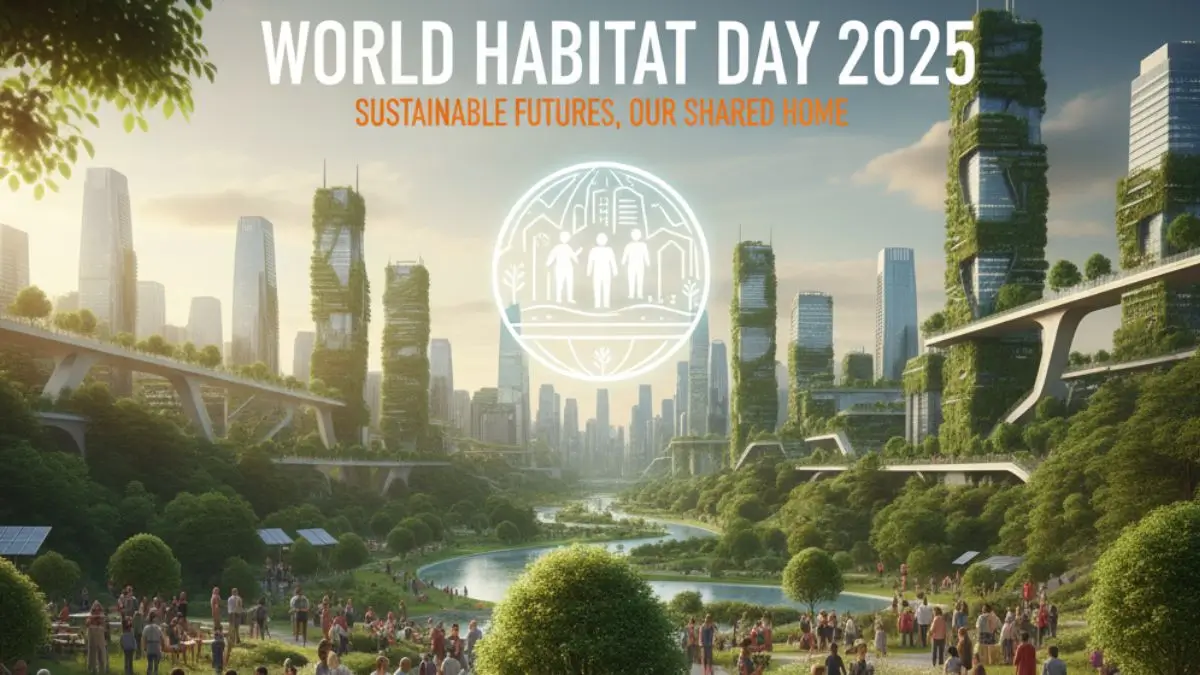
Every first Monday of October, the world comes together to mark World Habitat Day, a moment to reflect on the state of human settlements and the right of every person to adequate shelter. In 2025, it falls on 6 October, and is being observed under the theme “Urban Crisis Response.” The focus is on addressing urgent urban challenges such as climate change, conflict, inequality, and the need for resilient, inclusive cities. This day also kicks off Urban October, a month-long campaign concluding with World Cities Day on 31 October, spotlighting sustainable urban futures.
Historical Context
- World Habitat Day was established by the United Nations General Assembly in 1985, with the first observance in 1986 in Nairobi under the theme “Shelter is My Right.”
- Since then, it has become a global platform to advocate for sustainable urban development, affordable housing, and inclusive planning in response to rapidly growing cities.
- In 1989, the UN-Habitat Scroll of Honour Awards were introduced to recognize outstanding contributions toward improving urban living conditions.
Theme 2025: Urban Crisis Response
This year’s theme, “Urban Crisis Response,” brings attention to the compounding challenges facing cities worldwide — including,
- Climate change
- Conflict-driven displacement
- Widening urban inequality
The theme calls for crisis-ready governance, resilient infrastructure, and inclusive policies to protect the most vulnerable urban communities. It supports the implementation of the New Urban Agenda and aligns with Sustainable Development Goal 11 (SDG 11), which advocates for making cities inclusive, safe, resilient, and sustainable.
Objectives and Key Focus Areas
World Habitat Day 2025 seeks to,
- Raise global awareness about the right to adequate shelter
- Promote urban resilience and sustainable recovery
- Encourage governments, organizations, and citizens to act collectively
- Highlight the importance of climate preparedness, urban-rural linkages, and nature-based solutions
- Support innovation in affordable housing and disaster management
These goals are pursued through regional activities, workshops, community engagement, and international collaboration.
Global Celebrations and Activities
The 2025 observance includes,
- High-level UN panels and discussions
- UN-Habitat Scroll of Honour Award presentations
- Workshops on inclusive city planning, green infrastructure, and housing innovation
- Community programs addressing displaced populations and climate resilience
- Educational events and films to raise awareness about building sustainable, crisis-ready cities
These initiatives are taking place across continents, uniting governments and civil society in a shared vision for a better urban future.
Significance of Urban October
Urban October, starting with World Habitat Day and ending with World Cities Day, aims to maintain global momentum on urban development topics. It brings together ideas, innovations, and policies aimed at,
- Tackling the housing crisis
- Planning inclusive and affordable cities
- Responding to emergencies like floods, heatwaves, and forced migration due to conflict
It encourages multilateral collaboration for long-term urban resilience.
Key Takeaways
- Date: 6 October 2025 (First Monday of October)
- Theme: Urban Crisis Response
- First Observed: 1986, Nairobi
- Established by: United Nations General Assembly in 1985
- Campaign: Part of Urban October, ending on 31 October (World Cities Day)
- Focus: Climate change, conflict, inequality, urban resilience








 World Population Day 2026: Theme, Histor...
 World Zoonoses Day 2026: History, Signif...
 Dr. Syama Prasad Mookerjee 125th Birth A...