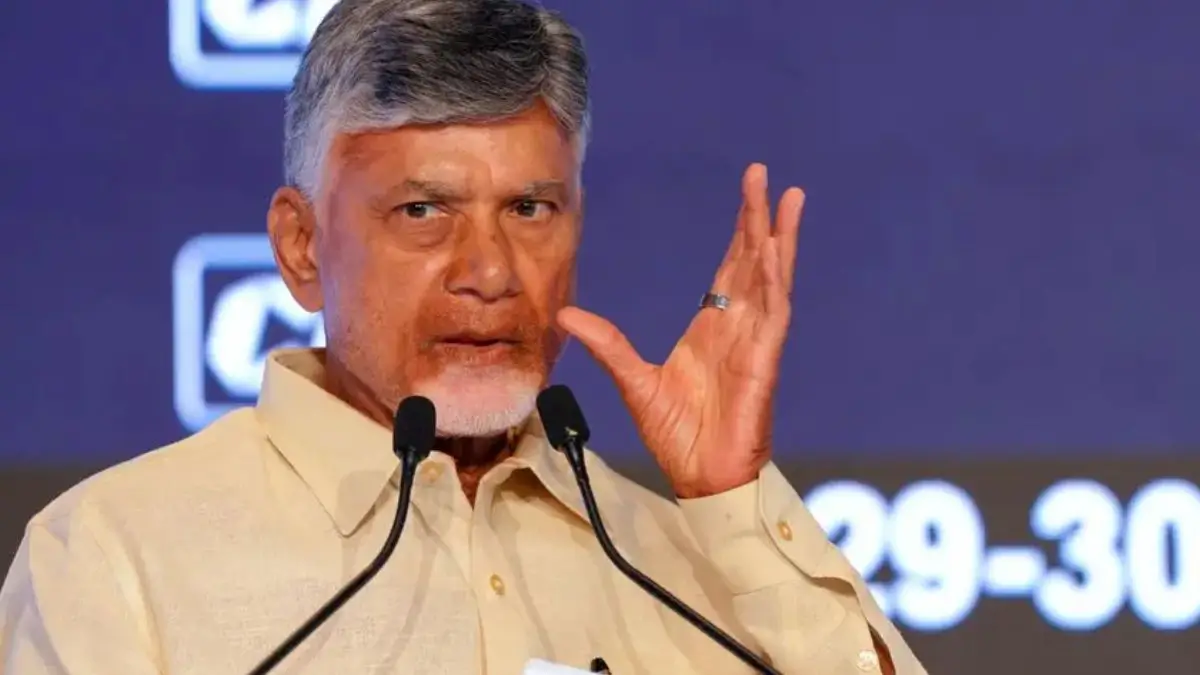
Respectable Chief Minister of Andhra Pradesh N Chandrababu Naidu has announced the major policy to address the state’s declining population growth. Speaking at the public event in Srikakulam district, CM Naidu said that families will receive ₹30,000 for the birth of a third child and ₹40,000 for a fourth child.
Andhra Pradesh New Birth Incentive Scheme
In a significant development, Chief Minister Chandrababu Naidu said the Andhra Pradesh state government will provide the direct financial support to families choosing to have more children.
Under the proposed plan,
- ₹30,000 incentive for the birth of a third child
- ₹40,000 incentive for the birth of a fourth child
The government is also expected to release the complete implementation details within the next month.
This decision comes after the earlier proposal which offers around ₹25,000 for the birth of a second child.
Why Andhra Pradesh Is Changing Its Population Policy
For the many years, multiple Indian states promoted the smaller family norms to control population growth.
Now, Andhra Pradesh moving in the opposite direction.
According to the CM Naidu, the state is witnessing the gradual decline in fertility rates.
He also pointed out that rising incomes and changing family preferences are leading the many couples to have only one child.
This trend if continued it could create the long term economic and social challenges.
What Is Replacement-Level Fertility Rate?
Replacement-level fertility rate refers to the average number of the children a woman needs to have to maintain a stable population over time.
Globally, this level is generally considered as the 2.1 children per woman.
If fertility falls below this level for the long period,
- Population begins to shrink
- Elderly population increases
- Workforce size declines
- Economic productivity may slow
- Social welfare pressure increases
Why Population Decline Is Becoming a Concern
Population decline is increasingly becoming a policy issue in the several parts of the world.
Countries such as the,
- Japan
- South Korea
- Italy
- China
have faced the demographic challenges due to falling birth rates.
Common impacts of the population includes the,
- Labor shortages
- Increased pension burden
- Higher healthcare costs
- Slower economic growth
Andhra Pradesh appears to be proactively responding to the similar long-term concerns.
A Big Shift from Earlier Population Control Thinking
Interestingly, CM Chandrababu Naidu acknowledged that he once supported the population control measures.
However, he now believes that the demographic situation has been changed.
This reflects a broader policy shift where the governments are beginning to focus not just on controlling population numbers, but also on to maintaining demographic balance.
This is becoming specially important in regions experiencing the declining fertility.







 Lakshadweep Becomes India’s First 100%...
 Ayodhya Ram Temple Receives FSSAI’s â€...
 Ambaji Mohanthal Gets GI Tag: Gujarat’...