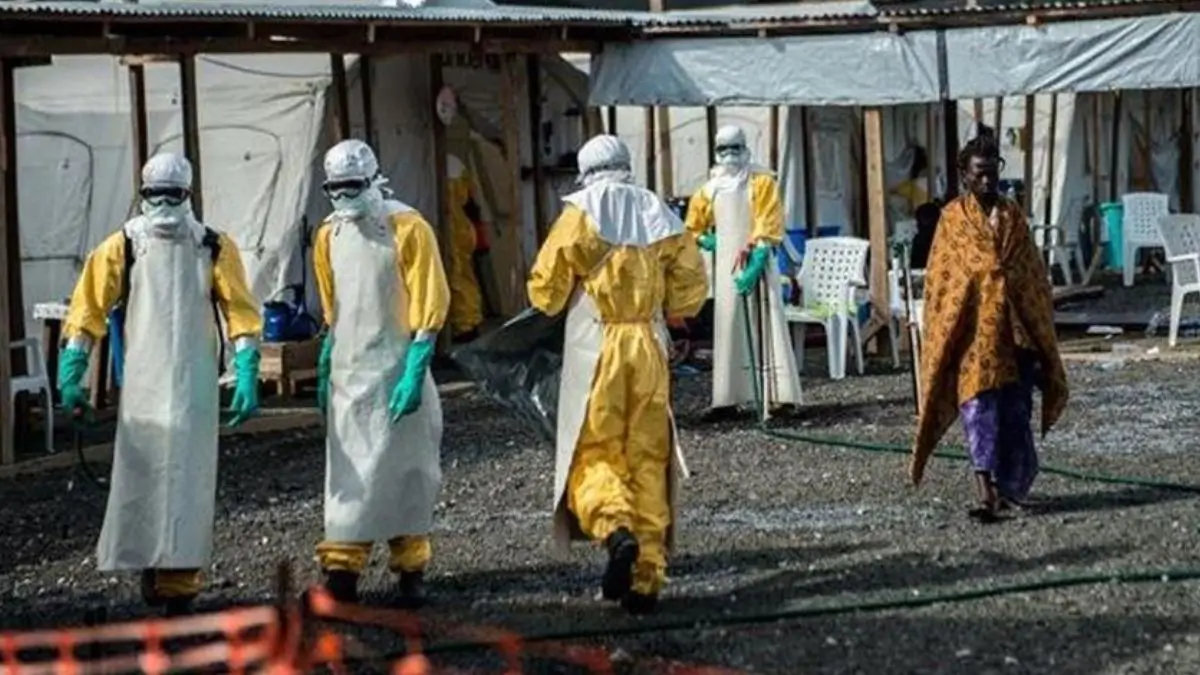
The World Health Organization (WHO) declared the Emergency of International Concern (PHEIC) for the latest Ebola outbreak in Democratic Republic of Congo (DRC) and Uganda. This decision comes after a surge in the suspected infections and deaths in the respected country. However, the WHO clarfied that this is not a pandemic emergency like COVID-19.
WHO Declares Global Health Emergency Over Ebola
WHO Director-General Dr Tedros Adhanom Ghebreyesus has announced the emergency declaration after the outbreak showed signs of regional spread.
Around more than 300 suspected cases and 88 deaths have raised the major concern among global health agencies.
WHO has also said that international border closures are not necessary at this stage.
Where the Outbreak is Happening
The outbreak is mainly centered in the Ituri Province in the Democratic Republic of Congo.
The respected authorities have reported 8 laboratory confirmed cases, 246 suspected cases and 80 suspected deaths.
Uganda has also confirmed the two Ebola cases which includes the one death.
Both the cases involved the travelers who are arrived from Congo.
Health experts believe that the real number of infections could be much higher.
What is Ebola Virus?
Ebola is a highly dangerous viral disease which causes severe haemorrhagic fever in humans.
It belongs to the Orthoebolavirus family.
The current outbreak is linked to the Bundibugyo virus strain which is a rare form of Ebola.
This strain is particularly concerning because the treatment and vaccine coverage remain limited.
How Ebola Spreads
Ebola is a zoonotic disease means that it can spread from animals to humans.
The fruit bats are considered as the natural host.
Humans can get infected througt the contact with infected animals like monkeys, gorillas, chimpanzees or contaminated meat.
Also human to human spread happens through direct contact with infected,
- Blood
- Vomiting
- Saliva
- Sweat
- Semen
- Body fluids
It can also spread through the contaminated bedding or surfaces.
Ebola does not spread through the air like COVID-19.
Symptoms of Ebola
Symptoms of Ebola virus usually appear between 2 and 21 days after infection.
Early signs includes the high fever, weakness, headache, sore throat and muscle pain.
As the disease worsens, patients may develop the vomiting, diarrhoea, abdominal pain, rash and organ failure.
In the severe cases, internal and external bleeding can occur.
Some patients also experience the confusion and neurological complications.
Why Ebola is So Dangerous
Ebola is one of the deadliest infectious diseases in the world.
The average fatality rate is around 50 percent though some outbreaks have recorded even higher death rates.
The virus spreads quickly in the healthcare settings if strict precautions are not followed.
Also delayed diagnosis makes the situation even more dangerous.
How Ebola is Diagnosed
As Ebola symptoms look similar to the malaria and other viral infections, testing is essential.
The doctors are uses RT-PCR tests, ELISA tests, antigen detection and virus isolation methods.
Early testing improves the survival chances significantly.
Treatment Options
WHO has recommended the monoclonal antibody treatments like Ansuvimab (mAb114) and Inmazeb (REGN-EB3) for some Ebola strains.
However, the effectiveness depends on the virus variant.
Also supportive care remains the main treatment.
This includes hydration, oxygen support and infection management.
Are Ebola Vaccines Available?
Yes, vaccines for Ebola virus are present.
The currently approved vaccines include the Ervebo, Zabdeno, and Mvabea.
But protection against the current Bundibugyo strain remains uncertain right now.
This is the main reason behind the health agencies are highly alert.
What is a Public Health Emergency of International Concern?
A PHEIC is the WHO’s highest emergency alert under international health regulations.
It means that the outbreak poses a risk beyond one country and needs coordinated global action.
Previously the PHEIC declarations include COVID-19, Mpox, Zika, Polio and earlier Ebola outbreaks.
Background of Ebola Outbreak History
Ebola virus was first discovered in the year 1976 near the Ebola River in present day Democratic Republic of Congo.
Since then, the Africa has witnessed multiple outbreaks.
The deadliest Ebola epidemic occurred between the year 2014 and 2016 in West Africa which have killed 11,000 people.





 India Hosts First BIMSTEC Home Ministers...
 World Bank Mobilises $112 Billion in Pri...
 Who Is Katie Zacharia? Trump Names New W...