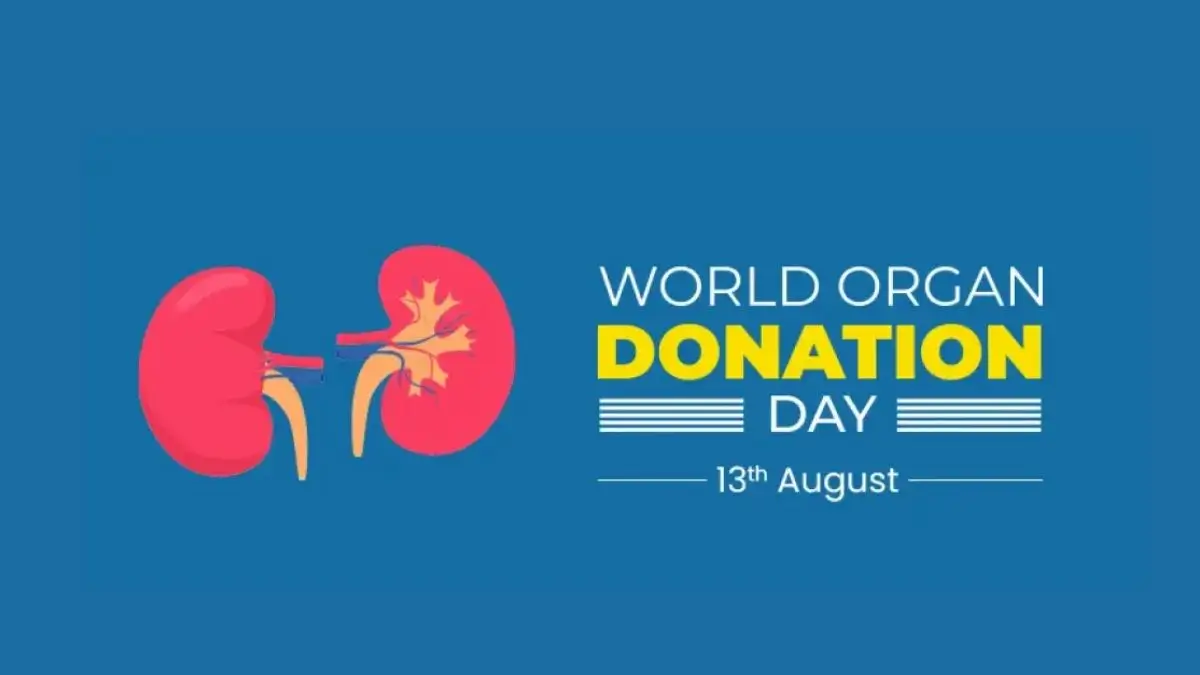
August 13 is celebrated every year as the World Organ Donation Day to raise awareness regarding organ donation and to dispel misconceptions around transplantation. Organ donation provides the second chance of life to patients experiencing organ failure, as kidneys, heart, liver, lungs, and pancreas are some of the organs that can be transplanted under certain medical conditions. World Organ Donation Day helps in bringing out the continuous difference between the number of patients needing transplants and available donated organs. Knowing everything about organ donation, eligible donors and organ donations can make one take an informed decision to save lives.
What Is World Organ Donation Day?
World Organ Donation Day tries to create awareness among people regarding the significance of organ donation and encourage people to become donors.
Organ donation is a procedure by which an organ or tissue is removed legally from a body, with the permission of the donor, to transplant the organ into another person. It can depend upon the situation whether the donor is alive or dead.
The awareness campaign also helps in dispelling myths regarding organ donation.
History of Organ Donation and Transplantation
The history of modern organ transplants is characterized by a number of important milestones, including the kidney transplant that took place in 1954. Ronald Lee Herrick donated one of his kidneys to his identical twin brother, Richard Herrick. This transplant procedure was done by a doctor named Dr Joseph Murray.
Joseph Murray was later awarded the 1990 Nobel Prize in Physiology or Medicine together with E Donnall Thomas for his discoveries regarding organ and cell transplantation in the treatment of human diseases.
In the case of India, organ donation awareness programs at the national level have also come a long way. National Organ Donation Day was observed on November 27 every year since 2010 under the Ministry of Health and Family Welfare and was linked to the National Organ and Tissue Transplant Organisation (NOTTO).
Later on, its date of observance was moved to August 3 as a tribute to India’s first successful deceased-donor heart transplant in 1994.
Importance of Organ Donation
One of the major reasons why organ donation is important is because there are patients who need transplants to stay alive due to the failure of their organs.
An individual who dies can donate several organs to various patients depending on the circumstances. Some of the organs which can be donated include the heart, kidneys, liver, lungs, pancreas and intestines. In addition, there are also some types of tissues that can be donated.
What Are the Types of Organ Donation?
Organ donations can fall into one of two categories:
Living Donation
Organs or parts of organs can be donated by someone who is alive in some cases. This includes,
- One kidney
- Part of the liver
- Part of the pancreas
- Part of the intestine
- And sometimes part of a lung
Living donation requires rigorous medical examination to safeguard both the donor and the procedure.
Deceased Donation
Organs can also donated after the death of the donor, pending certain medical and legal requirements. This could entail,
- Kidney
- Liver
- Lung
- Heart
- Pancreas
- Intestine
- Hands and face in special cases
Organs and Tissues that Can be Donated
Organs that can be donated vary according to whether the donor is living or dead and other circumstances.
In living donors, one kidney can be donated or parts of organs like the liver, pancreas and intestines can be donated.
For dead donors, various organs can be donated including kidneys, liver, heart, lungs, pancreas and intestines. Corneas, heart valves, bones and skin may also be taken in some cases.






 National Human Rights Commission to Mark...
 World Arthritis Day 2026: Date, Theme, H...
 Navratri 2026: Dates, Nine Forms of Godd...