
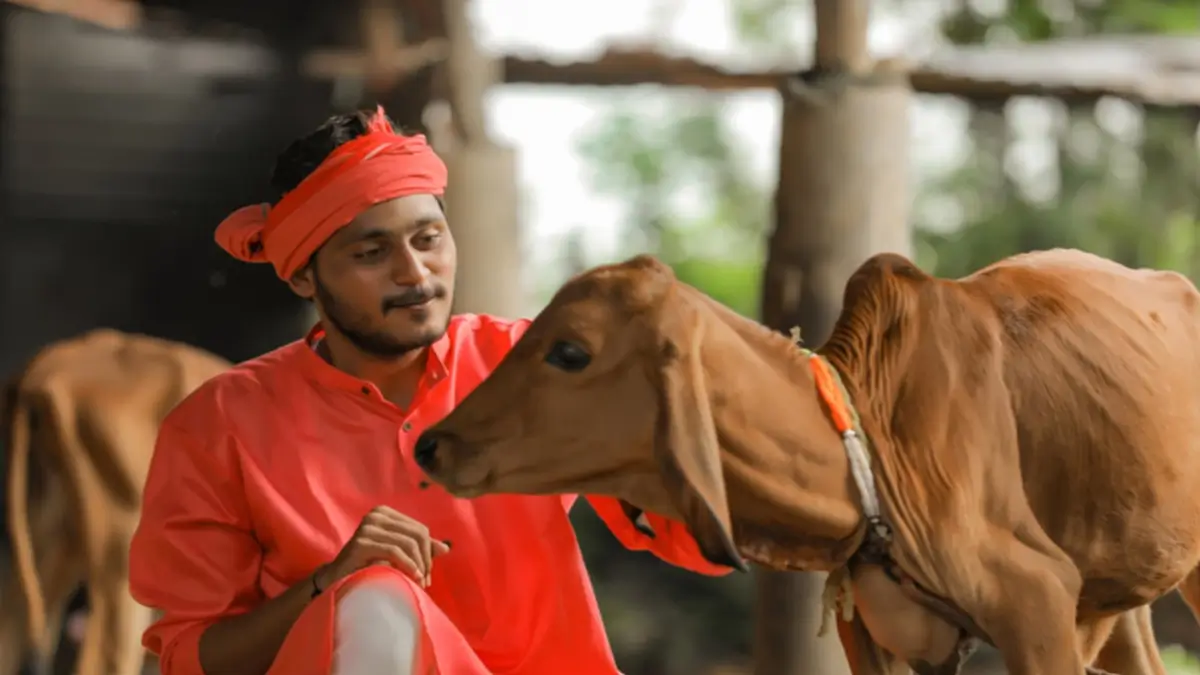
The UP Kamadhenu Pashu Bima Yojana has been associated with livestock insurance support for farmers and livestock owners in Uttar Pradesh. However, for 2026, an important update needs to be noted: the Uttar Pradesh Cabinet approved the Mukhyamantri Jokhim Prabandhan Evam Pashudhan Bima Yojana on July 6, 2026, with a ₹60 crore provision for FY 2026–27. The new state scheme provides livestock insurance support, with 85% of the insurance premium borne by the state government and 15% by the beneficiary.
Therefore, the older information about fixed coverage of ₹40,000 per cow, ₹50,000 per buffalo and ₹80,000 for exotic breeds should not be presented as the current 2026 scheme structure without qualification.
UP Livestock Insurance Scheme 2026: Quick Overview
| Particulars | Details |
|---|---|
| Scheme Name | Mukhyamantri Jokhim Prabandhan Evam Pashudhan Bima Yojana |
| State | Uttar Pradesh |
| Approved By | Uttar Pradesh Cabinet |
| Approval Date | July 6, 2026 |
| Financial Year | 2026-27 |
| Budget Provision | ₹60 crore |
| Government Premium Share | 85% |
| Beneficiary Share | 15% |
| Target | 2,28,350 livestock |
| Coverage Area | All 75 districts of Uttar Pradesh |
| Main Objective | Financial protection against livestock loss |
| Implementing Department | Livestock and Dairy Development Department, Uttar Pradesh |
The Cabinet-approved scheme targets insurance for 2,28,350 livestock in FY 2026–27. Of these, 1,86,800 animals are planned under the general component and 41,550 under the SCSP component.
What Is UP Kamadhenu Pashu Bima Yojana 2026?
The livestock insurance initiative aims to protect farmers, livestock owners and dairy operators from financial losses caused by the death or serious loss of productive capacity of insured animals.
Under the latest 2026 state-approved scheme, insurance support is intended for eligible livestock owned by small and marginal farmers, landless livestock owners, dairy farm operators and other eligible livestock keepers.
The scheme covers losses arising from situations such as epidemics, natural calamities and accidental incidents. The Cabinet decision also provides for claims in cases where an insured animal becomes permanently disabled.
Objective of the UP Livestock Insurance Scheme
The major objectives are:
Financial Security
The scheme aims to reduce the financial burden on livestock owners when an insured animal dies or becomes permanently unusable.
Protection of Livelihood
For many rural households, cattle and other livestock are important sources of income. Insurance can provide a financial safety net against unexpected losses.
Support for Dairy and Livestock Farming
The scheme is also intended to encourage livestock rearing and dairy-related economic activities by reducing the financial risks associated with animal ownership.
Risk Management
The programme provides insurance-based protection against specified livestock risks, including death resulting from epidemics, natural calamities and accidents.
Key Benefits of UP Pashudhan Bima Yojana 2026
The major benefits include:
- 85% of the insurance premium will be paid by the Uttar Pradesh Government.
- The beneficiary will contribute the remaining 15% of the premium.
- Insurance is planned for 2,28,350 livestock during FY 2026–27.
- The scheme is planned across all 75 districts of Uttar Pradesh.
- Eligible livestock owners can receive financial assistance for covered livestock losses.
- Permanent disability cases can also receive insurance support under the approved framework.
Who Is Eligible?
The Cabinet-approved framework identifies several categories of livestock owners for coverage, including:
- Small and marginal farmers
- Landless livestock owners
- Dairy farm livestock owners
- Other eligible livestock keepers
- Livestock covered under eligible government and dairy-oriented programmes
Priority is also proposed for animals already covered under state government and dairy-oriented schemes.
Important: The exact animal-wise eligibility conditions, policy period, sum insured and application procedure should be confirmed through the Uttar Pradesh Animal Husbandry and Dairy Development Department before applying.
How Much Premium Will the Beneficiary Pay?
One of the most important features of the 2026 scheme is the premium-sharing arrangement.
| Premium Component | Share |
|---|---|
| Uttar Pradesh Government | 85% |
| Beneficiary | 15% |
| Total | 100% |
For example, if the applicable insurance premium for an eligible animal is ₹1,000, the government contribution would be ₹850 and the beneficiary contribution would be ₹150.
The actual premium and insurance amount can vary according to the applicable policy and animal category.
Is ₹40,000, ₹50,000 or ₹80,000 Coverage Still Applicable?
Earlier information associated with UP Kamadhenu Pashu Bima Yojana cited ₹40,000 coverage for a cow, ₹50,000 for a buffalo and up to ₹80,000 for certain exotic breeds.
However, the July 2026 Cabinet approval for the Mukhyamantri Jokhim Prabandhan Evam Pashudhan Bima Yojana does not establish these amounts as the universal current 2026 coverage limits in the material available.
Therefore, these figures should not be published as confirmed 2026 coverage amounts unless the applicable government notification or policy document specifically confirms them.
Documents Required
Applicants should keep commonly required livestock-insurance documents ready, such as:
- Aadhaar Card
- Proof of residence in Uttar Pradesh
- Bank account details
- Land or farmer-related documents, where applicable
- Livestock ownership details
- Veterinary health or identification documents, where required
- Animal identification or ear-tag details, where applicable
- Passport-size photograph
- Documents related to eligibility under a government or dairy scheme, if applicable
The final document list should be confirmed with the concerned veterinary office or official department portal before submission.
How to Apply for UP Pashudhan Bima Yojana 2026?
The application process should be completed through the Uttar Pradesh Animal Husbandry and Dairy Development Department or the designated veterinary/departmental channel.
Step 1: Visit the Concerned Veterinary Office
Contact the nearest government veterinary hospital or the concerned Animal Husbandry Department office.
Step 2: Check Eligibility
Officials can verify whether the applicant and livestock qualify under the applicable insurance programme.
Step 3: Complete Animal Verification
The animal may need veterinary examination and identification/ear-tagging according to the applicable insurance requirements.
Step 4: Submit Documents
Submit the required identity, bank, livestock and eligibility documents.
Step 5: Pay the Beneficiary Contribution
The beneficiary is required to contribute 15% of the applicable insurance premium, while the state government bears 85%.
Step 6: Receive Insurance Details
After successful processing, the beneficiary should retain the insurance/policy document and other relevant records.
What Happens If the Insured Animal Dies?
In the event of the death of an insured animal, the beneficiary should immediately inform the concerned veterinary authority and insurer and follow the prescribed claim procedure.
The Cabinet-approved framework provides for a transparent claim process, with the claim amount after an eligible animal’s death to be transferred directly to the beneficiary’s bank account.
For permanent total disability cases, the approved framework provides for a claim of up to 75% of the insured amount, subject to the applicable terms and verification.
UP Pashu Bima Yojana 2026: Important Facts for Exams
- State: Uttar Pradesh
- Latest scheme: Mukhyamantri Jokhim Prabandhan Evam Pashudhan Bima Yojana
- Cabinet approval: July 6, 2026
- Budget: ₹60 crore
- Government premium contribution: 85%
- Beneficiary contribution: 15%
- Target livestock: 2,28,350
- Coverage: All 75 districts of Uttar Pradesh
- Purpose: Livestock risk and financial protection
- Permanent disability claim: Up to 75% of insured amount under the approved framework








 Uttarakhand Becomes India’s 6th Fully ...
 Odisha Launches India’s First MICE Inc...
 Which is India’s First 100% Organic St...










