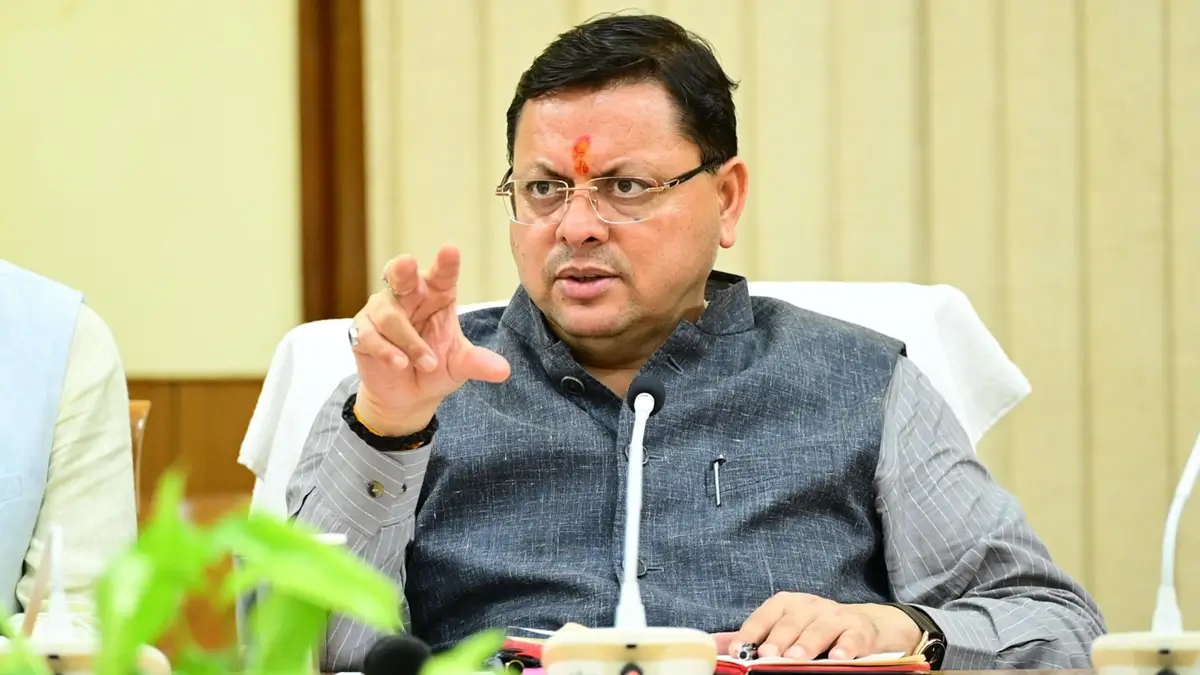
Uttarakhand has been declared India’s sixth fully literate state in 2026, after crossing the national benchmark for full literacy under the ULLAS – Understanding of Lifelong Learning for All in Society initiative.
The announcement was made in Dehradun by Uttarakhand Chief Minister Pushkar Singh Dhami, who credited teachers, community volunteers and adult learners for helping the state achieve the milestone.
Under the national framework, a state or Union Territory is considered fully literate when it achieves at least 95% functional literacy. Uttarakhand has reported an adult literacy rate of 98.70%.
Uttarakhand Joins Five Other Fully Literate States
With this achievement, Uttarakhand joined Sikkim, Himachal Pradesh, Mizoram, Goa and Tripura in the list of states that have crossed the national literacy benchmark.
The state’s performance is particularly significant because of its difficult Himalayan geography, scattered settlements and remote mountain villages.
Top 6 Fully Literate States in India
| Rank | State | Adult Literacy Rate | Declaration Year | Key Achievement |
|---|---|---|---|---|
| 1 | Sikkim | 99.82% | 2026 | Inclusive literacy outreach in Himalayan areas |
| 2 | Himachal Pradesh | 99.30% | 2025 | Rapid literacy expansion across hill regions |
| 3 | Mizoram | 98.20% | 2025 | Strong community participation and female education |
| 4 | Goa | 96.00% | 2025 | Strong educational infrastructure |
| 5 | Tripura | 95.60% | 2025 | Tribal outreach and literacy campaigns |
| 6 | Uttarakhand | 98.70% | 2026 | 25,000+ volunteers and remote mountain coverage |
What is ULLAS?
ULLAS stands for Understanding of Lifelong Learning for All in Society.
It is a central initiative aimed at improving adult and functional literacy among people who missed formal schooling.
The programme focuses on:
- Foundational literacy and numeracy
- Reading and writing skills
- Basic calculation
- Digital literacy
- Financial literacy
- Civic awareness
- Lifelong learning
The programme is aligned with the broader goals of the National Education Policy (NEP) 2020.
Role of Volunteers in Uttarakhand
According to the state government, around 25,000 volunteers played a major role in achieving full literacy.
These volunteers:
- Conducted door-to-door surveys
- Identified non-literate adults
- Registered learners
- Supported them during the learning process
- Helped candidates prepare for literacy assessments
Learners were assessed through the Foundational Literacy and Numeracy Assessment Test (FLNAT) conducted through the National Institute of Open Schooling (NIOS) framework.
What Does “Fully Literate” Mean?
Full literacy does not simply mean being able to sign one’s name.
Under the current framework, literacy includes functional abilities needed in everyday life.
These include:
- Reading and Writing – Ability to understand and communicate basic information
- Numeracy – Ability to perform basic calculations
- Digital Literacy – Ability to use digital tools and services
- Financial Literacy – Understanding basic banking and financial services
- Civic Awareness – Knowledge of public services, rights and responsibilities
- Functional Skills – Ability to apply literacy in daily life
A state is considered fully literate after reaching the 95% literacy benchmark.
India’s National Literacy Rate
India’s national literacy rate has been reported at around 81.1%.
This means states crossing the 95% benchmark are performing significantly above the national average.
Uttarakhand’s achievement highlights the impact of community participation, government programmes and targeted outreach in difficult-to-reach areas.
Education Infrastructure in Uttarakhand
The state has also expanded educational infrastructure in remote districts.
Virtual Classes
Studio-based virtual learning facilities have been developed to connect more than 500 schools in remote regions.
Science Laboratories
Laboratory facilities have been established in around 200 science high schools and intermediate colleges.
Support Schemes
The state also runs several education-related schemes, including:
- Nanda Gaura Scheme – Financial support for girl students
- Chief Minister Balashray Yojana – Free education and support for orphan children
These programmes aim to improve access to education and reduce social and geographical barriers.
How India Measures Literacy Progress
India follows a structured process to assess functional literacy.
1. Foundational Literacy and Numeracy
Learners are trained in basic reading, writing and arithmetic.
2. FLNAT Assessment
Learners appear for the Foundational Literacy and Numeracy Assessment Test.
3. Functional Skills
The literacy framework also includes digital, financial and everyday-life competencies.
4. Certification
Learners who clear the assessment receive literacy certification.
5. State-Level Benchmark
A state or Union Territory may be declared fully literate after achieving at least 95% literacy.
Why Uttarakhand’s Achievement Matters
Uttarakhand has large mountainous areas where delivering education and public services can be difficult.
The full-literacy milestone therefore reflects progress in:
- Reaching remote villages
- Adult education
- Community participation
- Digital learning
- Women’s education
- Functional literacy
- Lifelong learning
The achievement also shows how volunteer-led campaigns can help bridge gaps in formal education.





 Punjab Launches SANGAT Mental Health Clu...
 Odisha Launches India’s First MICE Inc...
 UP Kamadhenu Pashu Bima Yojana 2026: Lat...