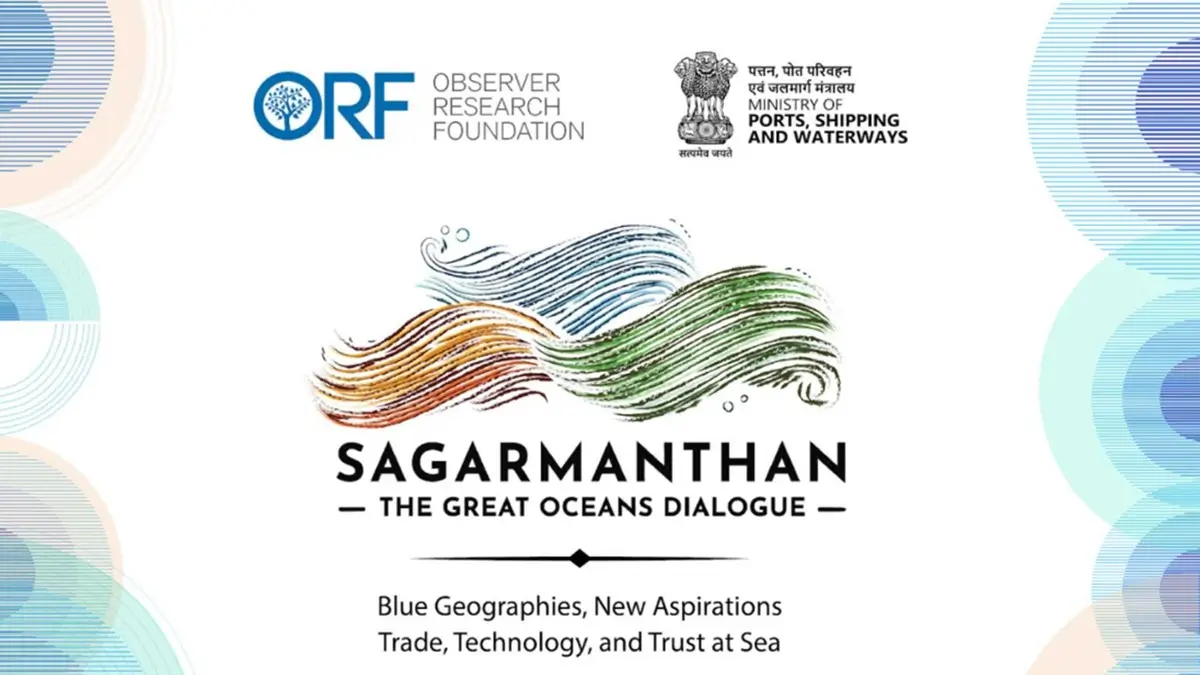
The third edition of Sagarmanthan: The Great Oceans Dialogue is scheduled to be held in New Delhi from 7 to 9 October 2026.
The maritime dialogue is expected to bring together more than 1,200 speakers, delegates and participants from nearly 75 countries, making it one of the major international forums focused on oceans, shipping, trade and maritime cooperation.
What is Sagarmanthan?
Sagarmanthan: The Great Oceans Dialogue is an annual maritime conference series launched in New Delhi in 2024.
It is jointly organised by:
- Observer Research Foundation (ORF)
- Ministry of Ports, Shipping and Waterways, Government of India
The platform brings together policymakers, industry leaders, scholars, experts, multilateral institutions and representatives from governments around the world.
Its objective is to promote discussion on the future of the global maritime sector and strengthen cooperation on ocean-related economic and strategic issues.
Theme of Sagarmanthan 2026
The theme of the 2026 edition is:
“Blue Geographies, New Aspirations: Trade, Technology, and Trust at Sea”
The theme highlights the growing importance of oceans in global trade, technology, sustainability and international cooperation.
Major Discussion Areas
Sagarmanthan 2026 will focus on several important maritime issues, including:
- Global maritime trade
- Shipping and port connectivity
- Maritime technology
- Digital transformation
- Sustainable shipping
- Blue economy
- Ocean governance
- Maritime resilience
- Cooperation at sea
- Marine sustainability
- International maritime security
- Climate-related risks to oceans and ports
These themes reflect the increasing role of oceans in global economic activity and strategic cooperation.
International Participation
The 2026 edition is expected to see participation from ministers, policymakers and maritime leaders from several countries and international institutions.
Among the prominent participants mentioned are:
- Annick De Ridder
- Apostolos Tzitzikostas
- Arvin Boolell
- Chandra Bahadur Gurung
Representatives from Belgium, the European Commission, Mauritius and Bhutan are also expected to participate.
Why is Sagarmanthan Important?
Maritime transport carries a major share of global trade, making oceans central to the functioning of the world economy.
Platforms such as Sagarmanthan provide an opportunity for countries to discuss:
- Secure and resilient shipping routes
- Port modernisation
- Sustainable maritime infrastructure
- Technology in shipping
- Global supply chains
- Marine-resource management
- Ocean-related climate challenges
- International maritime cooperation
For India, the dialogue also supports its broader ambitions in the blue economy, port-led development and maritime diplomacy.
What is the Blue Economy?
The blue economy refers to the sustainable use of ocean and marine resources for economic growth, employment and improved livelihoods while protecting marine ecosystems.
It includes sectors such as:
- Shipping
- Fisheries
- Coastal tourism
- Offshore energy
- Marine biotechnology
- Port infrastructure
- Ocean-based industries
The concept focuses on balancing economic development with environmental sustainability.
What is Ocean Governance?
Ocean governance refers to the rules, institutions, policies and international cooperation mechanisms used to manage seas, oceans and marine resources.
It covers areas such as:
- Maritime laws
- Marine conservation
- Shipping regulations
- Resource management
- Maritime boundaries
- Pollution control
- International cooperation
Effective ocean governance is important because oceans are shared spaces connecting countries and economies.







 India Hosts 7th Agrivoltaics World Confe...
 10th India Mobile Congress 2026 Begins a...
 Indian Parliamentary Delegation Particip...