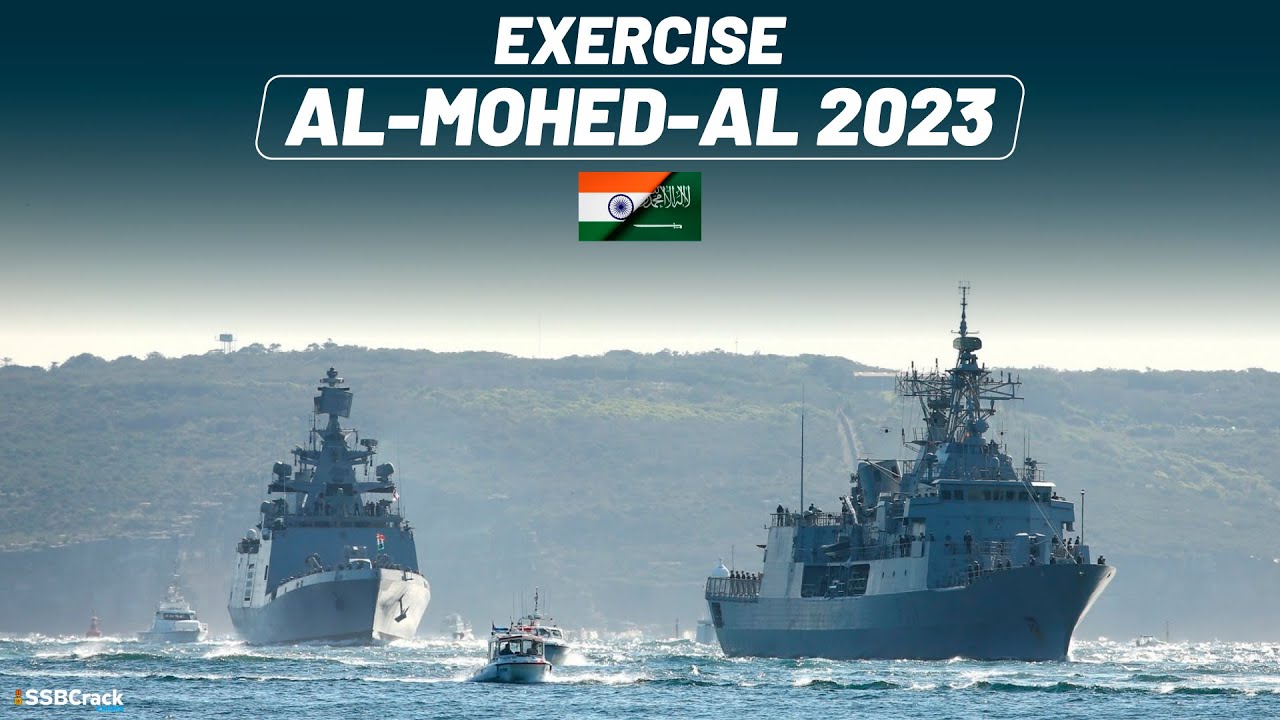
Marking a significant milestone in the growing defense cooperation between India and the Kingdom of Saudi Arabia, the INS TARKASH and INS SUBHADRA have arrived at Port Al-Jubail to commence the second edition of the naval exercise, ‘AL-MOHED AL-HINDI 2023.’ The visit of these Indian naval ships signifies the beginning of the harbor phase, highlighting the deepening defense ties and promoting regional stability in the Arabian Sea and the Gulf region.
I. INS TARKASH: A State-of-the-Art Stealth Frigate Commissioned on November 9, 2012, INS TARKASH is a state-of-the-art stealth frigate belonging to the Talwar class. This vessel is equipped with advanced weapon-sensor technology and possesses the capability to address threats in all dimensions. Its design incorporates stealth technologies and a specialized hull for reduced radar cross-section. The ship showcases a range of naval systems of Indian origin and derives its name from the Sanskrit word ‘Tarkash,’ meaning “Quiver of Arrows,” symbolizing its agility and versatility. INS TARKASH has actively participated in humanitarian missions, including the evacuation of Indian nationals from Yemen in 2015 (Operation Raahat) and Sudan in April 2023 (Operation Kaveri).
II. INS SUBHADRA: A Versatile Patrol Vessel Accompanying INS TARKASH is the INS SUBHADRA, a patrol vessel of the Sukanya class. This vessel has served as a test bed for the Dhanush ship-launched ballistic missile, showcasing its versatility and contribution to India’s naval capabilities.
AL-MOHED AL-HINDI 2023
Buy Prime Test Series for all Banking, SSC, Insurance & other exams
Enhancing Defense Cooperation The second edition of the naval exercise, AL-MOHED AL-HINDI 2023, kicked off with the arrival of INS TARKASH and INS SUBHADRA at Port Al-Jubail. The exercise encompasses a series of joint exercises conducted on land and at sea by the Indian and Saudi Arabian navies. This collaboration aims to enhance maritime security, promote information sharing, and foster greater interoperability between the two naval forces. The warm welcome extended to the Indian ships by officials of the Royal Saudi Naval Forces, Border Guards, and the Indian Embassy further highlights the cordial relations between the two countries.
Strengthening Regional Stability
The arrival of INS TARKASH and INS SUBHADRA in Saudi Arabia and the commencement of the naval exercise mark a significant step towards strengthening defense ties between India and Saudi Arabia. The cooperation between the two nations serves to contribute to regional stability in the Arabian Sea and the Gulf region. The AL-MOHED AL-HINDI 2023 naval exercise plays a crucial role in building trust, fostering collaboration, and promoting a secure maritime environment in the region.
Also Read: Air Marshal Ashutosh Dixit takes over as Deputy Chief of Air Staff









 BRICS 2027: China to Host Next Summit, S...
 Which Is the Only Floating Village in In...
 Women’s Asia Cup Winners List (2004-20...