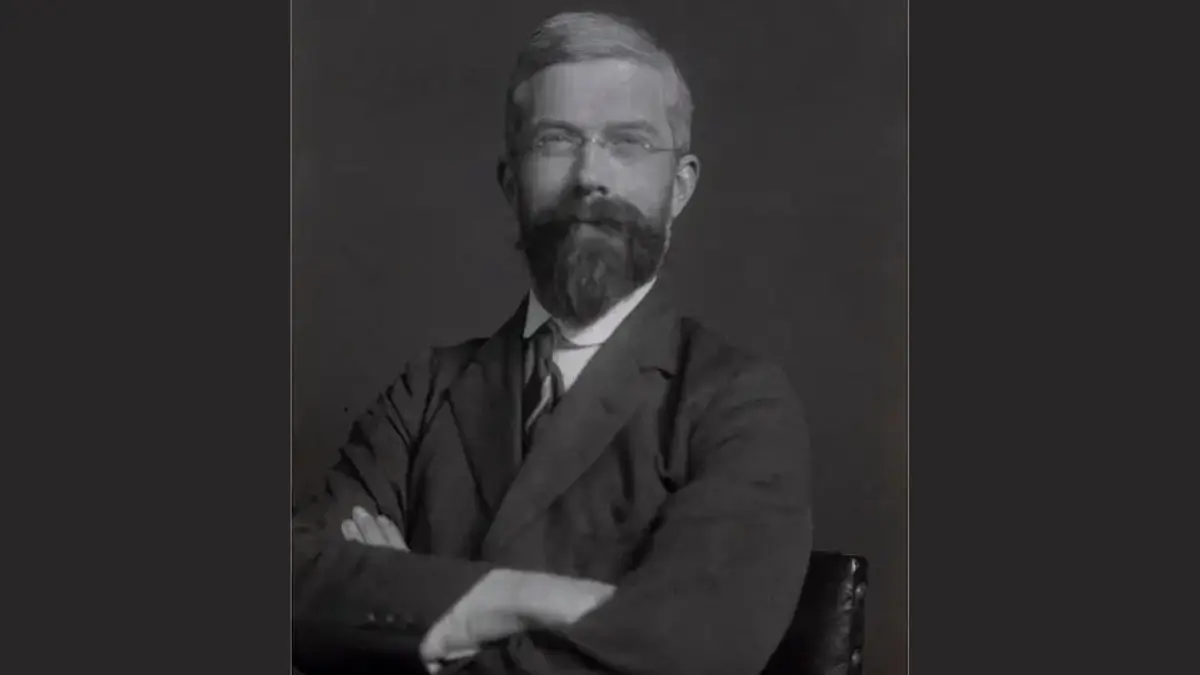
Statistics is an important subject that helps us understand facts, figures, and data in a simple way. It is used in daily life, science, education, business, and government planning. By studying statistics, we can collect information, compare results, and make correct decisions. Over time, this subject developed with the help of great thinkers, and one person played a major role in shaping statistics into a proper and useful field.
What is Statistics?
Statistics is the study of collecting, organising, analysing, and interpreting data. It helps us draw conclusions from numbers and make better decisions.
In daily life, statistics is used to:
- Predict weather conditions
- Analyse business growth
- Measure economic progress
- Study population trends
- Test medical treatments
Without statistics, it would be difficult to understand large amounts of information clearly.
Basic Concepts Used in Statistics
Some important ideas used in statistics include:
- Mean (Average): It is the sum of all values divided by the total number of values.
- Median: It is the middle value when data is arranged in order.
- Mode: It is the value that appears most often.
- Variance and Standard Deviation: These show how much the data differs from the average.
- Correlation and Regression: These help us understand the relationship between two variables.
- Hypothesis Testing: It helps check whether a statement or assumption is true using data.
Who is Known as the Father of Statistics?
Sir Ronald Aylmer Fisher is widely recognised as the Father of Modern Statistics. He was a British scientist who made statistics a strong scientific discipline.
Early Life of Ronald Fisher
- Born on 17 February 1890 in London, England
- Had weak eyesight but strong mathematical thinking
- Studied Mathematics at Cambridge University
Despite difficulties, Fisher became one of the most influential statisticians in history.
Major Contributions of Ronald Fisher
- Design of Experiments: He introduced randomisation to reduce bias in experiments.
- Analysis of Variance (ANOVA): This method helps compare multiple data groups effectively.
- Maximum Likelihood Method: It is used to estimate unknown values based on available data.
- Fisher’s Exact Test: A statistical test used when sample sizes are small.
- Experimental Research Methods: His principles are used in agriculture, medicine, biology, and social sciences.
Because of these achievements, Fisher is rightly called the Father of Statistics.
Interesting Facts About Ronald Fisher
- Worked at the Rothamsted Experimental Station
- Helped develop population genetics
- Introduced the term variance
- Wrote the famous book Statistical Methods for Research Workers
- Received the Copley Medal from the Royal Society
His work continues to influence modern research worldwide.
Who is the Father of Statistics in India?
Prasanta Chandra Mahalanobis is known as the Father of Indian Statistics. He played a key role in developing statistics in India and applying it to national planning.
Contributions of Prasanta Chandra Mahalanobis
- Founder of Indian Statistical Institute (ISI): He established ISI in 1931 to promote statistical education and research.
- Mahalanobis Distance: A mathematical method used to measure differences between data groups.
- National Sample Survey (NSS): He started large-scale surveys to collect reliable data in India.
- Economic Planning: He helped design India’s Second Five-Year Plan using statistics.
- Government Statistics System: He helped set up India’s official statistical organisations.
Why is Mahalanobis known as the Father of Indian Statistics?
Mahalanobis made statistics useful for government planning, economics, and social development. His work helped India use data for decision-making and development policies.








 Weekly Current Affairs One Liners (7th S...
 Railway Station vs Junction vs Terminal:...
 Duleep Trophy Winners: Complete List fro...