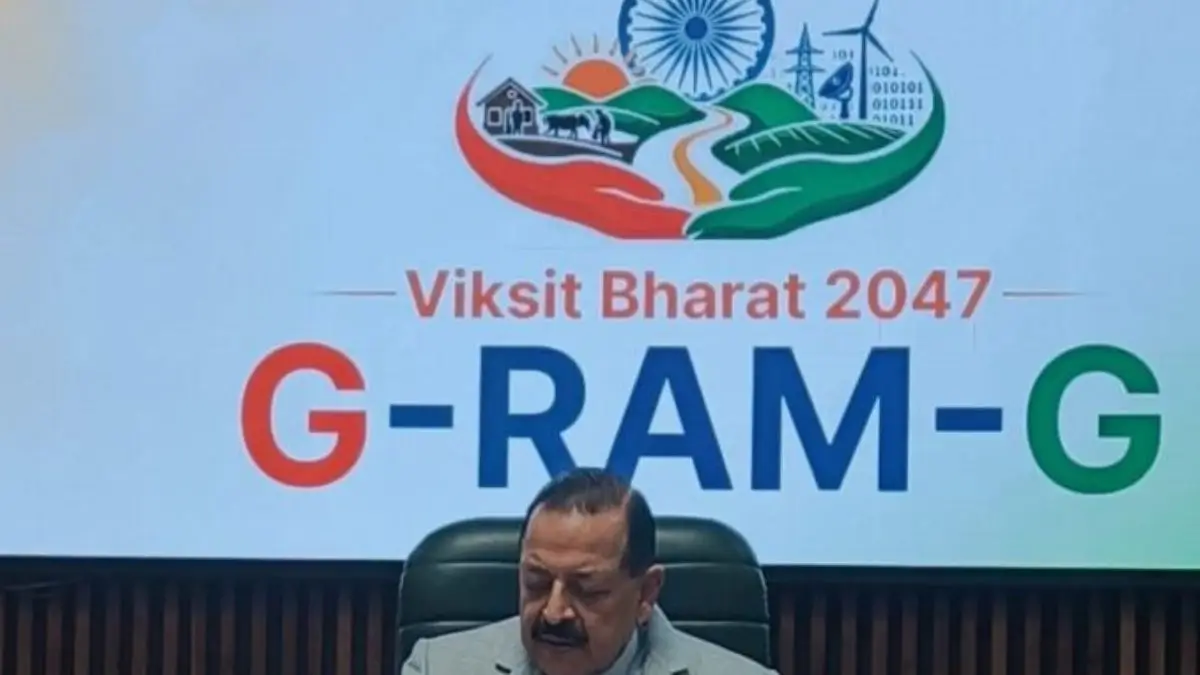
The Government of India ha announced the nationwide rollout of the Viksit Bharat – Guarantee for Rozgar and Ajeevika Mission (Gramin) Act, 2025 which i known as VB-G RAM G Act will come into force from July 1, 2026. This new reform is aims to provides the livelihood security, improve the rural infrastructure and will increase the employment opportunities.
MGNREGA to Be Replaced From July 1, 2026
The Ministry of Rural Development has officially notified that the Mahatma Gandhi National Rural Employment Guarantee Act (MGNREGA), 2005 will stand repealed from the July 1, 2026.
This transition marks one of the most important reforms in the India’s rural governance and employment structure in the recent decades.
The government has also described the move as a shift towards a more integrated, productivity driven and future ready rural economy.
Importantly the all ongoing MGNREGA works will continue without any interruption and will seamlessly shift into the new framework.
What Is the Viksit Bharat G RAM G Act?
The Viksit Bharat – Guarantee for Rozgar and Ajeevika Mission (Gramin) is the statutory rural employment program which is designed to strengthen employment generation and livelihood security in the villages.
Under the new law,
- Every eligible rural household will receive the legal guarantee of 125 days of wage employment every financial year.
- Employment will be provided to adults who are willing to perform the unskilled manual work.
- Also the workers will continue to receive the unemployment allowance if jobs are not provided within the prescribed time.
This is an increase from the previous 100 day employment guarantee under old MGNREGA framework
Record Budget Allocation for Rural Employment
The Central Government has already made the historic budgetary allocation of ₹95,692.31 crore for the financial year 2026-27.
According to the government,
This is the highest-ever Budget Estimate allocation for the any rural employment program.
This also includes the state contributions, the total program outlay is expected to cross around ₹1.51 lakh crore.
The large allocation is expected to accelerate,
- Rural infrastructure development
- Village level asset creation
- Employment generation
- Rural income growth
- Grassroots economic activities
Direct Benefit Transfer and Timely Wage Payments
The government has also retained the Direct Benefit Transfer (DBT) system to ensure the transparency and accountability in wage payments.
Under the new framework,
- The wages will be directly transferred into the workers bank or post office accounts.
- Also the payments must be made weekly or within 15 days after closure of the muster roll.
- Workers will receive the delay compensation if payments are not made on time.
Existing Job Cards Will Remain Valid
To ensure the smooth transition the government ha already clarified that,
- The existing e-KYC verified MGNREGA Job Cards will remain valid temporarily.
- New Gramin Rozgar Guarantee Cards will be issued gradually after implementation of new framework.
- Also the workers can continue the registration at Gram Panchayat offices.
- No worker will be denied any employment opportunity due to pending e-KYC verification.
State governments will continue to providing support for e-KYC completion at the local level.
Gram Panchayats to Become Central Pillars of Rural Development
One of the important features of the new framework is the stronger role given to the Gram Panchayats.
The government aims to make local self governance institutions the driving force behind the,
- Rural employment planning
- Infrastructure development
- Livelihood generation
- Community participation
- Village-level economic growth
This approach is expected to strengthen the decentralized governance and improve implementation efficiency.







 National Strategic Trade Command Centre ...
 India Plans Mandatory Automatic Emergenc...
 India Notifies New Telecom Rules for Tes...