
The Organisation for Economic Cooperation and Development (OECD) has revised its GDP growth projection for India in the fiscal year 2024, forecasting a growth rate of 6.3%. This upward revision represents a notable increase from the previous estimate of 6%. The OECD attributes India’s positive growth surprises to favorable agricultural outcomes driven by favorable weather conditions.
Global Economic Outlook
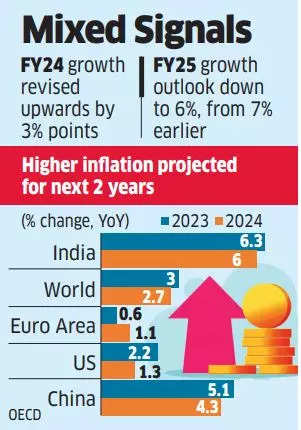
While India sees an improved growth outlook, the global economy is projected to grow at a rate of 3% in 2023 and is expected to slow down further to 2.7% in 2024, as indicated in the OECD report. Despite a weaker-than-expected recovery in China, the report highlights that a significant portion of global growth in 2023-24 is expected to originate from Asia.
Inflation Projections for India
The OECD has also revised India’s inflation projection, anticipating it to be 5.3%, an increase from the previous estimate of 4.8% made in June. The report points out that while headline inflation has decreased in many countries due to declining food and energy prices in the first half of 2023, core inflation has not experienced a significant slowdown. The report underscores the risk of persistent inflation, which could necessitate further interest rate tightening or an extended period of higher interest rates.
Policy Recommendations
The OECD report suggests there is room for modest policy easing in several major economies, including India, Indonesia, Mexico, and South Africa, over the next year. However, it advises a cautious approach to monetary policy until clear signs of lasting relief from inflationary pressures emerge.
Furthermore, the OECD emphasizes the importance of fiscal policy in preparing for future spending pressures. It also highlights the potential benefits of reducing trade barriers, particularly in the service sectors, to boost productivity and growth. The report encourages governments not to be deterred by concerns about economic security when considering opportunities to lower trade restrictions.
Revised GDP Growth Projection for FY25
In a noteworthy adjustment, the OECD has revised its GDP growth projection for India in the fiscal year 2025 downward to 6%, down from the earlier projection of 7%. This revision suggests potential challenges or uncertainties in the medium-term economic outlook for the country.
Find More News on Economy Here









 Weekly Current Affairs One Liners (21st ...
 World Tourism Day 2026: Theme, India Tou...
 India at Asian Games 2026: Day 7 Medal W...