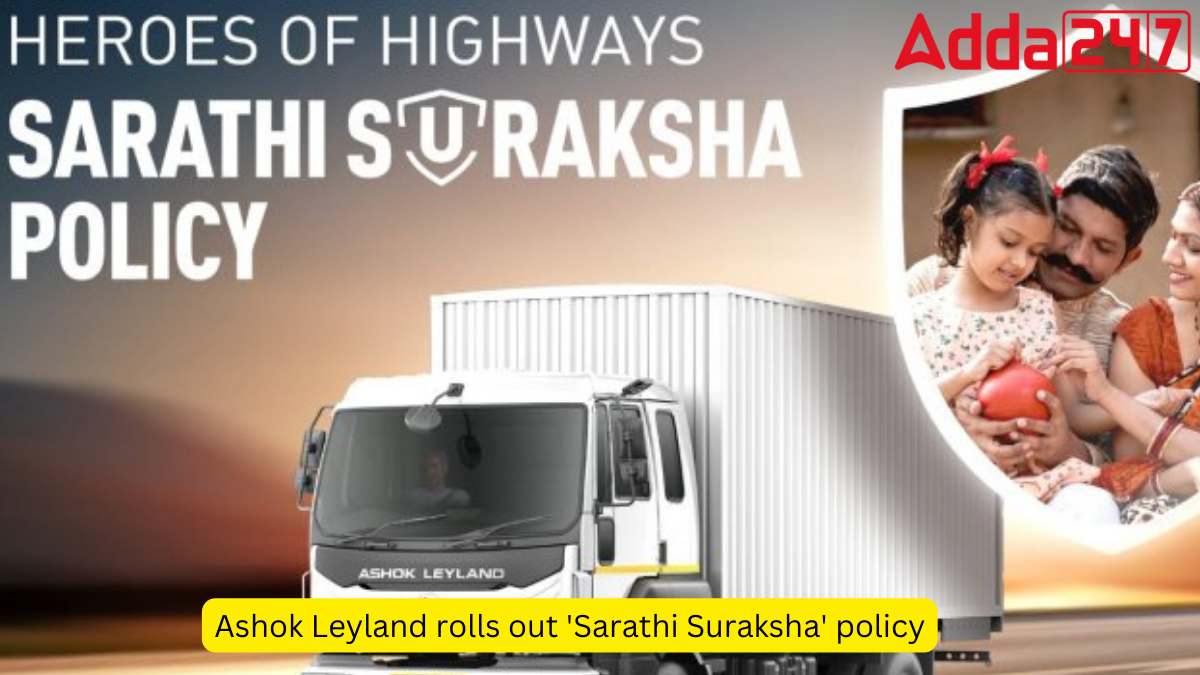
Ashok Leyland, the Indian flagship of the Hinduja Group and one of the country’s leading commercial manufacturers, launched ‘Sarathi Suraksha Policy’ a comprehensive insurance policy for safeguarding the driver community.
About Sarathi Suraksha Policy
- The “Sarathi Suraksha Policy” covers accidental death, permanent disability, and partial disability up to INR 10 lakh per chassis. The corporation stated that this policy also covers other things like children’s special education bonuses and unintentional hospitalization.
- Beginning on June 1, 2024, all Intermediate Commercial vehicles (ICV) and haulage trucks that are billed to clients are covered by this insurance policy at no additional cost. Drivers that operate an Ashoka Leyland vehicle are covered by the Sarathi Suraksha Policy, which is categorized as an Unnamed GPA (Group Personal Accident) Policy, offering their complete protection.
Vision
Ashoka Leyland’s Managing Director and CEO, Shenu Agrawal, stated, “We at Ashoka Leyland appreciate our drivers’ contributions to the road transportation and logistics industries.” A proof of our commitment to their security and welfare is the Sarathi Suraksha Policy. Fostering a secure and encouraging ecology for all of our stakeholders is in line with the larger goal of this. Ashoka Leyland continues to set industry standards by prioritizing the interests and welfare of the drivers community, cementing its position as one of the leaders in the commercial vehicles market. The ‘Sarthi Suraksha Policy’ showcases Ashoka Leyland’s commitment to the health and welfare of drivers who from the cornerstone of the transport sector, contributing to its growth and development.








 Prime Minister Dhan-Dhaanya Krishi Yojan...
 Bhagini Nivedita Scheme 2027: West Benga...
 Delhi Doubles ASHA Incentives, Launches ...