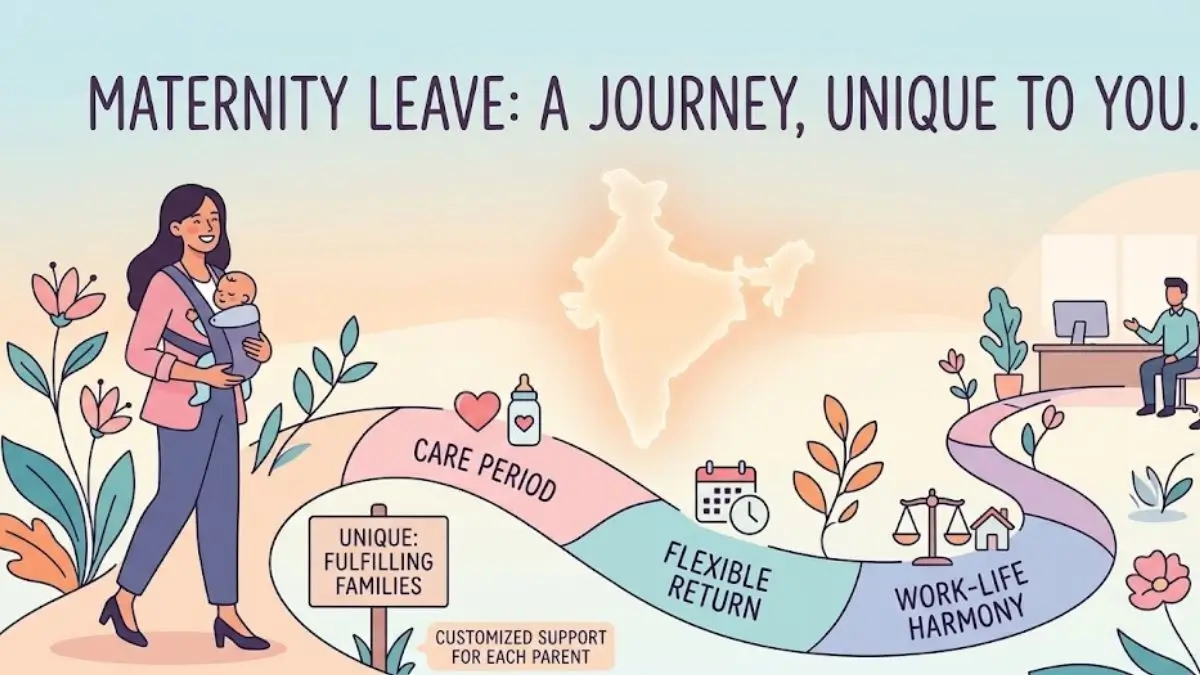
The respectable Supreme Court of India has struck down the age limit on maternity leave for adoptive mothers. And Supreme Court stated it the calling it unconstitutional. The higher court ruled out that all the adoptive mothers are entitled to 12 weeks of maternity leave and regardless of the child’s age at adoption. The earlier provision under the Social Security Code 2020 had restricted this benefit to children below three months. This decision will strengthen the equality and will recognize the adoption as valid parenthood.
Supreme Court Maternity Leave Judgment Explained
The Supreme Court maternity leave ruling come in the case of the Hamsaanandini Nanduri v. Union of India.
The court has declared the Section 60(4) of the Social Security Code 2020 and stated the unconstitutional.
This judgment held that the restricting maternity benefits based on the child’s age violates theArticle 14 (Right to Equality) and Article 21 (Right to Life).
The court also emphasized that motherhood is about caregiving and bonding and not just childbirth.
Adoptive Mothers India: Now Equal Maternity Rights
This landmark ruling will ensures that adoptive mothers in India to receive equal maternity benefits irrespective of the age of the adopted child.
This removes the major limitation in the earlier law.
The court clarified that all adoptive and commission mothers will now receive the 12 weeks of maternity leave from the date the child is handed over.
Why the Social Security Code Provision Was Struck Down
The Supreme Court has found that the earlier provision had no logical basis and it failed in practical implementation.
It restricted the benefits to adoptions of children below three months.
Most of the children are legally available for adoption after three months.
The provision was termed illusory and ineffective.
And also it denied benefits to a majority of adoptive mothers
Focus on Child Welfare and Family Bonding
The Supreme Court judgment give high emphasize that maternity leave is important for the child’s development and family integration.
Adoption requires time, care and the emotional adjustment.
The court stated that to denying leave to adoptive mothers of older children negatively affects both the child’s well being and the family bonding process.
Call for Paternity Leave Reform in India
Along with the this ruling Supreme Court also urged the government to consider introducing paternity leave as part of social security benefits.
This will reflects a progressive approach towards shared parenting.
The court emphasized that caregiving responsibilities should not be limited to mothers alone.
Recognizing paternity leave would ensure balanced parenting and better support for families.
Question
Q. What is the maternity leave duration granted to adoptive mothers after the judgment?
A) 6 weeks
B) 8 weeks
C) 12 weeks
D) 26 weeks








 NBSS&LUP Develops India’s First So...
 Supreme Court Reduces Practice Period fo...
 BJP to Chalk Out Nationwide Plan for Mod...