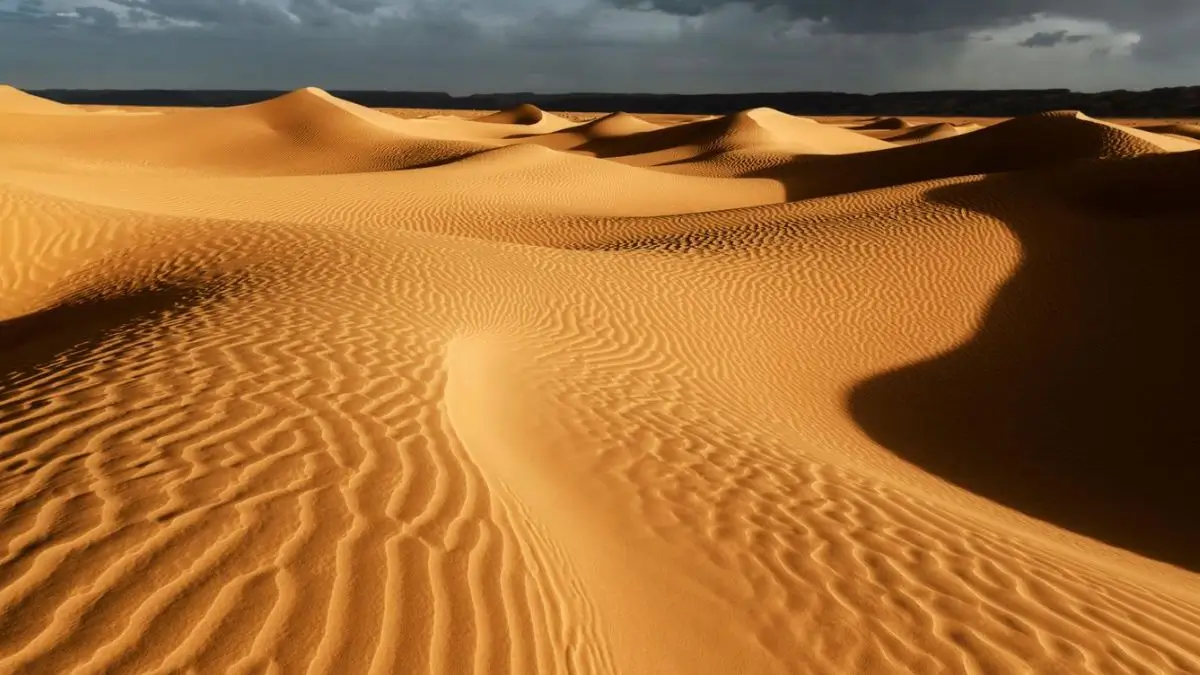
As the Deserts are among the most fascinating geographical regions on the Earth. There are many people associate the deserts only with vast stretches of sand but they also include the rocky plateaus, gravel plains, salt flats and even cold snow-covered landscapes.
On earth there are some of the world’s largest deserts extend across the international borders which influencing the climate, biodiversity, economy and culture of entire regions.
These transboundary deserts have served as the important trade routes, migration corridors and the centers of human civilization for centuries. So, here is the detailed breakdown of the ten most significant deserts that span across the multiple countries.
What Are The Transboundary Deserts?
Transboundary deserts are present in the arid regions which extends across the borders of two or more countries. These deserts are not just limited by political boundaries and it often forms the large ecological systems that supports the unique wildlife, indigenous communities and valuable natural resources.
Many of these deserts influence the weather patterns, groundwater systems and economic activities across entire continents. Their conservation often requires the cooperation among neighboring nations.
Here Are Top 10 Deserts That Span Across Multiple Countries
1. Sahara Desert
The Sahara Desert is the world’s largest hot desert on Earth and it covers nearly the 9.2 million square kilometers across North Africa.
It stretches through the countries like Algeria, Chad, Egypt, Libya, Mali, Mauritania, Morocco, Niger, Sudan, Tunisia and Western Sahara.
This desert is known for its vast sand dunes, rocky plateaus and extreme temperatures and size of the Sahara is roughly around the size of United States.
Despite the harsh conditions there are millions of people who live around its oases and desert settlements.
Historically, the Sahara desert has played the crucial role in trans-Saharan trade networks connecting to Africa’s interior with Mediterranean regions.
2. Arabian Desert
The Arabian Desert covers approximately cover the 2.3 million square kilometers and it extends across the countries like Saudi Arabia, Yemen, Oman, the United Arab Emirates, Jordan, Iraq and Kuwait.
One of the most famous regions of the desert is the Rub’ al Khali or Empty Quarter which contains some of the world’s largest continuous sand dunes.
This desert has historically been home to the Bedouin communities and it is part of the ancient caravan routes that connected the major trade centers of the Middle East.
3. Gobi Desert
The Gobi Desert spans across the northern China and southern Mongolia and it covering around 1.3 million square kilometers.
Unlike the many deserts, the Gobi experiences extremely cold winters and the occasional snowfall.
It is internationally renowned for the dinosaur fossil discoveries and unique wildlife such as the Bactrian camel and snow leopard.
This region is also the major focus point of the environmental studies due to increasing desertification.
4. Kalahari Desert
The Kalahari Desert stretches across the southern African countries like Botswana, Namibia and South Africa and it covers the around 900,000 square kilometers.
Although it is technically classified as the semi-desert because it receives the more rainfall than true deserts and the Kalahari remains as one of the Africa’s most iconic dry landscapes.
It supports the rich biodiversity, including lions, cheetahs, meerkats and antelopes.
Also the indigenous San communities have lived in the region for the thousands of years.
5. Patagonian Desert
The Patagonian Desert extends across the southern Argentina and parts of the Chile and it covering nearly to 670,000 square kilometers.
Strong winds, low rainfall and rugged terrain are the main characteristics of this desert.
Also the Andes Mountains creates the rain-shadow effect that contributes to the arid climate.
This region is famous for the unique wildlife, fossil discoveries and the breathtaking natural landscapes.
6. Karakum and Kyzylkum Desert Region
The Karakum and Kyzylkum deserts form as one of the largest desert systems in the Central Asia.
The Karakum Desert dominates most part of the Turkmenistan while the Kyzylkum stretches across the countries like Uzbekistan and Kazakhstan with extensions into the neighboring areas.
These deserts experiences the extreme temperatures and it contain significant natural gas reserves and making them economically important to the region.
7. Thar Desert
The Thar Desert spans across the northwestern India and southeastern Pakistan and it covering around 200,000 square kilometers.
A major portion of the desert lies in the state of Rajasthan, while its western reaches extend into the Pakistan’s Sindh and Punjab provinces.
The Thar desert is one of the world’s most densely populated deserts and it supports the agriculture, livestock rearing and vibrant cultural traditions despite limited rainfall.
8. Namib Desert
The Namib Desert stretches along the Atlantic coastline of the Namibia and it extends into Angola and South Africa.
Scientists also believe that the Namib has remained arid for more than 55 million years and making it as one of the oldest deserts on Earth.
It is famous for the its towering red dunes, dramatic coastal scenery and specialized wildlife which includes the desert adapted elephants and oryx.
9. Atacama Desert
The Atacama Desert area extends across the northern Chile and southern Peru.
Some regions of the Atacama receive almost no rainfall for the many decades which makes it the driest non-polar desert in the world.
Also the Mars-like landscape attracts the scientists and space agencies for the research and testing.
The desert is also rich in the mineral resources and it hosts highly specialized ecosystems.
10. Sonoran Desert
The Sonoran Desert spans across the southwestern United States and northwestern Mexico and it covering around the 260,000 square kilometers.
It is famous for the giant saguaro cactus, which can grow over the 12 meters tall.
Compare to the many deserts, the Sonoran receives the rainfall during two separate seasons and it supporting the remarkable biodiversity and making it one of North America’s most ecologically important desert regions.








 Which Indian State Has the Most GI-Tagge...
 QDENGA Dengue Vaccine: India’s First A...
 Asian Games 2026 Mascot: HONOHON, Meanin...