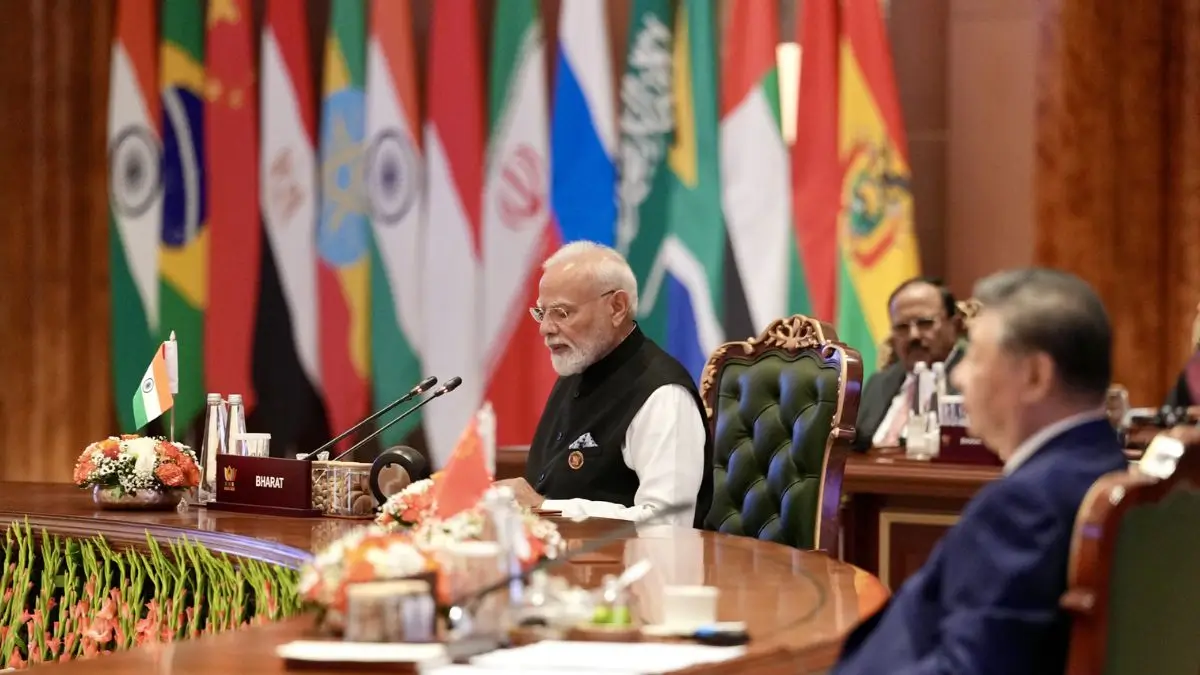
The BRICS New Delhi Declaration 2026 was signed by all member countries on the first day of the 18th BRICS summit in New Delhi. The 45-page-long declaration consists of 140 points dealing with terrorism, global governance, trade, energy security, conflict prevention, women empowerment, and international finance cooperation. India, which is presiding over the BRICS in 2026 with the theme “Building for Resilience, Innovation, Cooperation and Sustainability,” has played a vital role in reaching out to consensus amongst BRICS countries.
Key Aspects of New Delhi Declaration 2026
The declaration was adopted unanimously through intense negotiations which went on until early Saturday morning. The document reiterated the BRICS commitment to mutual respect, sovereign equality, solidarity, inclusiveness and consensus.
The main aspects included,
- Terrorism: BRICS unequivocally condemned terrorism in all its forms including cross-border terrorism, terrorism financing and safe havens. The organization also condemned the 22 April 2025 terrorist attack in Jammu and Kashmir and emphasized zero tolerance towards terrorism.
- Prevention of conflict: The organization encouraged dialogue, consultation and diplomacy in resolving disputes and called upon the parties to adhere to the ceasefire agreement in Gaza and provision of humanitarian aid.
- Trade: The BRICS was concerned about the unilateral tariff and non-tariff barriers affecting the trade and global supply chains.
- Energy: The organization advocated for secure and diverse energy supplies and just, orderly and equitable energy transition.
- Empowerment of women: It stressed on the role of women in governance, economy, entrepreneurship, peace-building and climate change actions.
- Local currency: The organizations encouraged the use of BRICS members’ local currencies for cross-border payments and transactions.
Global Governance Reform and BRICS
Global governance reform was yet another crucial issue. The Indian Prime Minister urged more representation of the Global South in global decision-making process and put forward 10 recommendations to form a BRICS reform agenda.
The joint declaration favored reform of the UN system, including UN Security Council, to make global organizations more democratic and representative. China and Russia, the permanent members of the UN Security Council, reaffirmed the need to give a greater role to Brazil and India in the UN including Security Council.
This stance is important against the backdrop of India’s age-old struggle for more representation of developing nations in global institutions.
Trade, Energy and Financial Cooperation
As far as trade is concerned, BRICS supported a multilateral trading system led by the World Trade Organization (WTO) and the re-establishment of the two-tiered binding dispute resolution system in the WTO.
When it comes to energy cooperation, the declaration acknowledged the role which would be played by fossil fuels in the future, especially for emerging and developing countries. At the same time, it suggested adopting a technology-neutral approach to the use of renewable energy sources, nuclear energy, hydro power, hydrogen, fossil fuels, and other low carbon energy sources.
The declaration noted efforts aimed at establishing the interoperability of the payment and messaging systems and promoting trade settlement in local currencies.








 India and US Strengthen Undersea Cable S...
 What Is Thirukkural? Ancient Tamil Class...
 BRICS Summit 2026: Full List of Leaders ...