
Shabari Naturals Wins G-Mark Global Design Award for Tribal-Inspired Packaging

Shabari Naturals, which is a initiative that has come from the tribal development sector of the state of Maharashtra, has won the G-Mark Global Design Award for its packaging design which draws the inspiration from the traditions of tribal artwork. This award has been granted because of the Warli, Gond, and Chitrakathi styles that have been used to depict the tribal culture, tales, and heritage.

What is the G-Mark Good Design Award?

The G-Mark is linked with the Good Design Award of Japan, which is an international award for design run by the Japan Institute of Design Promotion (JDP). It is focused on the design of products, services, systems etc., focusing on usability, innovation, and social significance.

The brand Shabari Naturals has won an award for the product packaging that is an amalgamation of the traditional tribal art style and modern packaging style.

The news was announced in the Mann Ki Baat radio program by the Prime Minister of India Mr. Narendra Modi, on 25 October 2026. This award was announced in relation to tribal products and ‘Vocal for Local’.

The ceremony for giving away the award is to be held at Tokyo on 4 November, 2026. Leena Bansod, Managing Director of Shabari Tribal Finance & Development Corporation (STFDC) will get this award from the Maharashtra Government.

Tribal Art Forms Used for Shabari Naturals Branding

The packaging is based on three types of traditional art forms – Warli, Gond and Chitrakathi. These forms of regional arts have been used to give the product an ethnic appeal based on the culture of tribes.

Warli Art Form

Warli paintings are the traditional paintings practiced by the Warli tribe from Maharashtra. The common shapes used in such paintings are usually basic geometric shapes, circles, lines, and triangles.

Gond Art Form

Gond paintings are the traditional paintings done by the Gond communities found in central India. This art form uses lines, dots, and designs to depict animals, plants, and nature, as well as traditional tales.

Chitrakathi Art Form

Chitrakathi is an ancient art form of storytelling through painting practiced in the region of Maharashtra. The images are used in painting to tell stories and tales.

The packaging also includes depictions of the lifestyle of the tribes and stories of culture and the relationship of the communities with nature.

Shabari Naturals and Tribal Products

The Shabari Naturals is a scheme launched by the Government of Maharashtra which aims at providing market visibility for products related to tribals as well as forest gatherers. The organization is headed by the Shabari Tribal Finance and Development Corporation, which has its headquarters at Nashik.

The scheme will help provide wider visibility for these products as well as promote the cultural identity of the producers through these products. The products include,

  • Wild honey
  • Brown rice
  • Pulses & Millets
  • Spices
  • Handicrafts

This scheme has been launched with the objective of improving the visibility of these tribal products.


Ballon d’Or 2026: All You Need to Know About Football’s Most Prestigious Award

The 70th Ballon d’Or is set to be announced on 26th October 2026 at the London Palladium in London, United Kingdom for the best football player in the men’s and women’s categories for the 2025-2026 season. It is football’s most prestigious award, and players want to win this award to be recognised as the best football player in the world. It was created by the France Football in the year 1956 and it has been evolved from a European football award to one of the sport’s most prestigious individual honours. This ceremony is co-organised by the France Football and the Union of European Football Associations (UEFA).

What is the Ballon d’Or Award?

It is an individual award created by the French magazine France Football in 1956, and it recognises the best men’s and Women’s football players based on their individual performance during the particular season.

Over the nearly seven decades since its creation, the Ballon d’Or has been considered as the highest individual prize that a player can earn within the football world. The award was founded back in 1956 and it celebrates the talents who have shaped the beautiful game with their skills and successes.

The legacy of the Ballon d’Or ranges from its very first award recipient to the present-day football superstars. The story of this award is told through the greats of the football world.

English footballer Sir Stanley Matthews, who played for the Blackpool, was the inaugural winner of this prestigious award. For the year 2026, London was selected for the ceremony to pay tribute to the legend.

The Ballon d’Or is an annual individual football award established by French magazine France Football in 1956. It recognises the best male and female players based on their performances during the relevant season.

The women’s Ballon d’Or, also known as the Ballon d’Or Féminin, was introduced in the year 2018. Norway’s Ada Hegerberg became its first winner.

How Does the Selection for the Ballon d’Or Happen?

Ballon d’Or is decided by an international jury comprising specialists and football journalists. For the 2026 edition, there will be a total of 100 football journalists representing the top 100 countries on the list of FIFA men’s rankings.

50 journalists will also represent the top 50 countries according to the FIFA women’s ranking.

Each juror votes for ten players from a pool of 30 nominees.

The points awarded are as follows,

Ranking Among the Ten Chosen by the Journalist Points
First 15
Seconf 12
Third 10
Fourth 8
Fifth 7
Sixth 5
Seventh 4
Eighth 3
Ninth 2
Tenth 1

Criteria for Ballon d’Or Award

There are three criteria mentioned in the award rules, and they are listed in order of priority as follows,

1. Personal performance of the player.

2. Team performance and success: the contribution of the player to his team and the success achieved by his club or national team.

3. Class and Fair Play: sporting behaviour of the player.

The voting for the 2026 edition includes the 2025-26 season: 3 August 2025 – 19 July 2026, inclusive of the designated international tournaments according to the regulations.

Evolution of the Ballon d’Or

The criteria for winning the Ballon d’Or have greatly evolved since its inauguration in 1956.

  • 1956: The first Ballon d’Or was presented to Stanley Matthews. Only European footballers playing for European clubs could compete at this time.
  • 1995: Eligibility criteria were extended to include non-Europeans playing for European clubs. Liberian striker George Weah became the first winner from Africa.
  • 2007: The award became open to all footballers from around the world irrespective of their nationalities or the continent on which they play.
  • 2009-2015: The Ballon d’Or was announced with the FIFA’s World Player of the Year Award and it became the FIFA Ballon d’Or.
  • 2016: France Football revived the Ballon d’Or award as a standalone event after it parted ways with the FIFA.
  • 2018: The first Ballon d’Or for women was announced.
  • 2024: UEFA started co-hosting the awards alongside with the France Football and the L’Équipe Group.

There was no 2020 Ballon d’Or due to the global COVID-19 pandemic.

What is the Super Ballon d’Or?

The Super Ballon d’Or is a unique and extremely rare award, as it honours a player’s accomplishments throughout his entire career, rather than in a specific year.

This prize was awarded only once, on 24 December 1989, to Alfredo Di Stéfano, the famous striker of Real Madrid, who won the Ballon d’Or in 1957 and 1959. The voting procedure involved the opinions of France Football’s readers, a jury, and former winners of the Ballon d’Or.

Do not confuse it with the yearly Ballon d’Or. Unlike the latter one, which is awarded every year, the Super Ballon d’Or has no specific annual awarding cycle. This award was later sold at an auction in 2021 for £187,500, and its current whereabouts are said to be unknown.

Recent Men’s Ballon d’Or Winners List (2016-2026)

Year Player Name
2026 To be Announced
2025 Ousmane Dembele
2024 Rodri
2023 Lionel Messi
2022 Karim Benzema
2021 Lionel Messi
2020 Not Awarded Because of Covid
2019 Lionel Messi
2018 Luka Modric
2017 Cristiano Ronaldo
2016 Cristiano Ronaldo

Recent Women’s Ballon d’Or Winners List (2018-2026)

Year Player Name
2026 To be Announced
2025 Aitana Bonmati
2024 Aitana Bonmati
2023 Aitana Bonmati
2022 Alexia Putellas
2021 Alexia Putellas
2020 Not Awarded Because of Covid
2019 Megan Rapinoe
2018 Ada Hegerberg

Players With Most Men’s Ballon d’Or Winners List

Player Name No. of Time Award Winner Winning Year
Lionel Messi 8 Times 2009, 2010, 2011, 2012, 2015, 2019, 2021, 2023
Cristiano Ronaldo 5 Times 2008, 2013, 2014, 2016, 2017
Michel Platini 3 Times 1983, 1984, 1985
Johan Cruyff 3 Times 1971, 1973, 1974
Marco van Basten 3 Times 1988, 1989, 1992

Players With Most Women’s Ballon d’Or Winners List

Player Name No. of Time Award Winner Winning Year
Aitana Bonmati 3 Times 2023, 2024, 2025
Alexia Putellas 2 Times 2021, 2022
Megan Rapinoe 1 Times 2019
Ada Hegerberg 1 Times 2018

India’s First Cooperative-Sector Airline: Kerala Government Approves Flight Services Project

The State of Kerala has given its consent to an initiative of the Kerala Civil Aviation Development Cooperative Society to start air service, informed Chief Minister V. D. Satheesan. The initiative was announced at the silver jubilee function of the Calicut City Service Cooperative Society in Kozhikode, and described as a pioneering one for India’s cooperative sector. C. N. Vijayakrishnan, chairman of MVR Cancer Centre, is the Project Leader.

India’s First Cooperative Airline Initiative

This airline initiative is aimed at showcasing how cooperative entities could move beyond their traditional business areas like banking, agriculture and community development.

The government of Kerala has granted approval to the Kerala Civil Aviation Development Cooperative Society to provide flight services in a declaration made on 25 October 2026 and published the next day.

Detailed information mentioned below,

  • State: Kerala
  • Initiative: India’s first cooperative-sector airline
  • Cooperative organization: Kerala Civil Aviation Development Cooperative Society
  • Announced by: V. D. Satheesan, Chief Minister of Kerala
  • Project leader: C. N. Vijayakrishnan
  • Institution affiliated: MVR Cancer Centre and Research Institute
  • Venue of the announcement: Silver jubilee celebration of Calicut City Service Cooperative Society, Kozhikode
  • Status: Government approval announced; operational launch still to come

Airline Name and Flight Plans Proposed

According to a recent report, the name being considered for this airline is “Co-Keralam.” As per the initial plan, the airline was to lease two aircraft seating 72 passengers and operate flights from Kochi to Kozhikode, Kannur, Bengaluru, Mangaluru, Chennai, Coimbatore and Madurai.

As per the previous plan, the airlines were also to be funded by some 200 cooperative societies, each one to invest ₹2 crore. These are just the project plans being considered.

About Indian Cooperative Sector

Cooperative society is a voluntary association of individuals who come together in order to achieve their common economic, social or cultural goals. The individuals become the part of the organization and take part in its activities as per cooperative laws.

Some of the sectors in which the cooperatives run in India include,

  • Banking & credit: Financial assistance provided to the members of the cooperative and communities.
  • Agriculture: Credit, marketing, processing, supply and other services provided to farmers.
  • Dairy: Milk and milk products marketing and processing.
  • Consumer services: Supply of goods and services to members.
  • Infrastructure and development: Involvement in community-based projects.

ISRO to Have Four Functional Launch Pads by 2029: V Narayanan Announces Expansion Plans

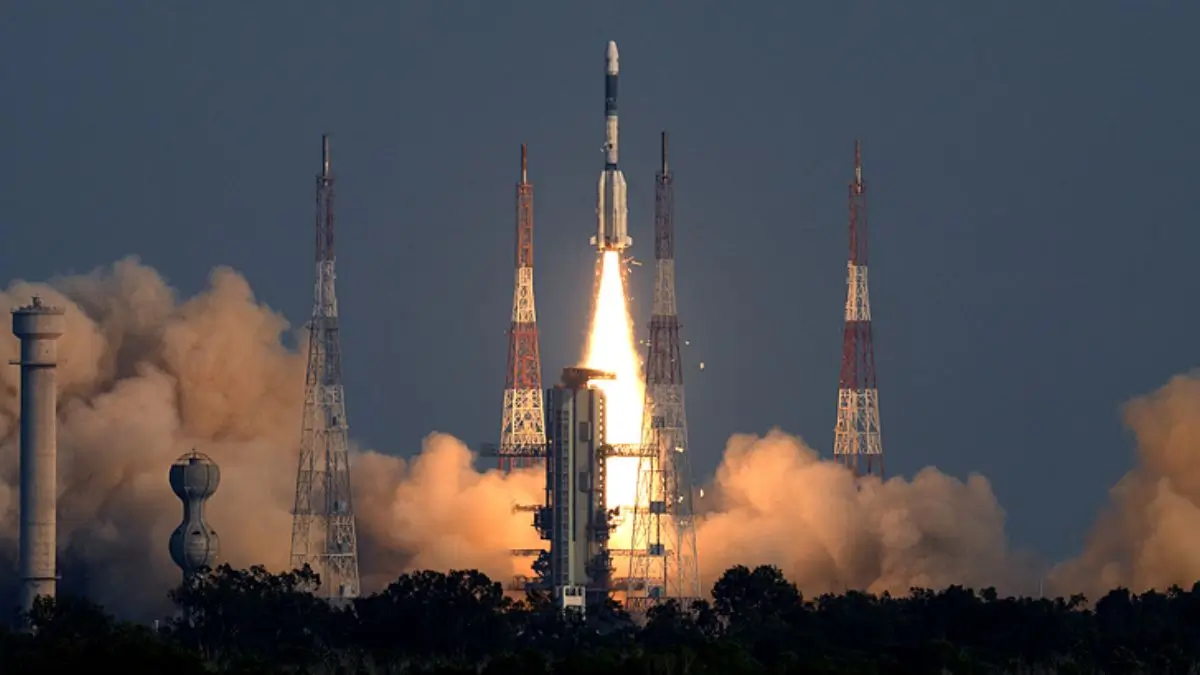
Chairman V. Narayanan said that ISRO intends to upgrade the number of operational launch pads in the country up to four by 2029. As per the roadmap, a separate SSLV launch facility of 2,000 acres is being planned in Kulasekarapattinam, Tamil Nadu. There will also be an increased involvement of private space agencies in the process. The move is expected to cater to the increasing requirement for launching satellites. Besides, the preparation work for the Gaganyaan Human Spaceflight Mission and Chandrayaan-5 lunar mission was also reviewed.

Four Operational Launch Pads by 2029

V. Narayanan, Chairman of ISRO, stated that the objective of the development of four operational launch pads is set by 2029 to enhance India’s capabilities of satellite launches and carry out commercial space operations. This decision is justified by the growing need for small-satellite launches, as well as the ability to conduct scientific, communication, navigation, and other space missions.

Nevertheless, the four operational launch pads should be separated from the officially documented infrastructure. As of March 2026, the Department of Space reported two operational launch pads at Satish Dhawan Space Centre (SDSC SHAR) in Sriharikota. The third launch pad has been approved by the government for construction in the 2029-2030 period and another SSLV launch pad will be constructed at Kulasekarapattinam.

Kulasekarapattinam SSLV Launch Complex in Tamil Nadu

The new SSLV launch complex will be built at Kulasekarapattinam in the Tuticorin district of Tamil Nadu. It was chosen because it would allow launches in polar orbit and help decongest the facilities already available at Sriharikota.

The Union government has laid the foundation stone for the complex on February 28, 2024. Construction activities began in March 2025, and the launch pad foundation was laid in August 2025.

The complex is expected to accommodate SSLV launches and other launches made by non-government organizations in space.

Characteristics of SSLV Complex

  • Location: Kulasekarapattinam, Thoothukudi district, In the State of Tamil Nadu.
  • Size: Roughly 2,000 acres, based on the announcement.
  • Main function: Launches of the small satellites, especially into polar orbit.
  • Facilities: Vehicle integration building, stages preparation building, launch pad, rail track facilities, telemetry, telecommand, and tracking.
  • Commercial function: Assistance in to conducting the launch services by ISRO and eligible non-governmental organizations.
  • Launch vehicle: Small Satellite Launch Vehicle (SSLV).

What Is the Small Satellite Launch Vehicle (SSLV)?

The Small Satellite Launch Vehicle is a three-stage, all-solid-propellant launch vehicle being developed by ISRO for the small satellite class. This launch vehicle is designed for rapid turnaround, reduced cost, and on-demand launching capabilities, which is a perfect solution for growing small satellite launches.

The Small Satellite Launch Vehicle is designed to launch satellites weighing up to 500 kg into LEO (Low Earth Orbit). The dedicated launch complex for this vehicle at Kulasekarapattinam is going to increase launch flexibility, especially to polar orbits such as Sun-synchronous orbits.

Chandrayaan-5: India-Japan Moon Mission Initiative

Narayanan further described the plan for Chandrayaan-5, an initiative in which the ISRO will collaborate with the Japanese space agency, JAXA.

As per the news release, the mission will involve the use of a 350 kg rover that will perform experiments on the lunar surface for about 100 days. This project is indicative of the growing cooperation between India and other nations regarding moon explorations.

Cyclone Arnab 2026: Landfall Forecast for Andhra Pradesh on October 28

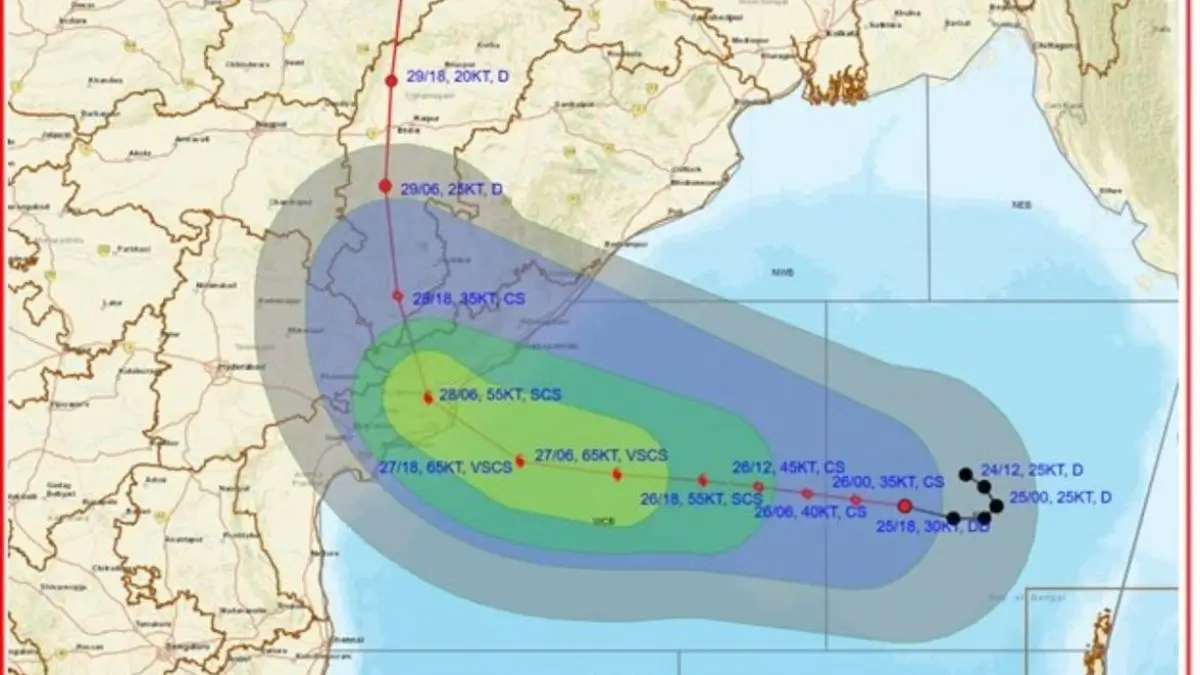
Cyclone Arnab has grown strong in the east-central and adjoining west-central Bay of Bengal and expected to make landfall along the coasts of Andhra Pradesh and Yanam on October 28, 2026. As per the Indian Meteorological Department (IMD), the storm would develop into a very severe cyclonic storm having sustained winds of 115–125 kmph and gusts of up to 140 kmph. The forecast indicates that the coastal area extending from Bapatla to Visakhapatnam could be the probable landfall area. Both Andhra Pradesh and Odisha are now ready for minimizing their risks from winds, rains, and flooding.

Cyclone Arnab’s Current Position and Forecast Path

As per the IMD’s latest bulletin, which was released on October 26th 2026, Cyclone Arnab was located at the coordinates between 15.4°N and 88.9°E in the east-central and adjoining west-central Bay of Bengal. It had moved to the west at around 15 kmph over the last six hours.

At 5:30 am IST, the cyclonic storm was about 650 km east-southeast of Visakhapatnam, 730 km southeast of Kakinada and 910 km east of Bapatla.

Landfall and Maximum Wind Speed

IMD’s forecast is as follows,

  • October 26: Becoming a severe cyclonic storm over the west-central Bay of Bengal.
  • October 27: Strengthening further into very severe cyclonic storm.
  • October 28: Expected to make landfall along Andhra Pradesh and Yanam coast, between Bapatla and Visakhapatnam, in forenoon.

The forecast wind speed at the time of landfall is 115-125 kmph, with gusts up to 140 kmph. This is forecast wind speed at landfall.

Risks from Rainfall, Storm Surge, and Inundations

There are dangers of rainfall, strong winds, high waves and coastal inundation because of the cyclone.

The Indian Meteorological Department (IMD) has said there is danger of storm surge of 1.0 – 1.5 meters above astronomical tide which may inundate coastal low-lying areas of Andhra Pradesh.

The maximum storm surge is expected near Kakinada in East Godavari district and Yanam in Union Territory of Puducherry.

Fishermen are advised not to venture into sea areas affected. Warning signals have also been hoisted by port authorities in certain areas of Andhra Pradesh and Odisha coast.

Preparations for Cyclones in Andhra Pradesh and Odisha

In view of the impending very severe cyclonic storm, the chief minister of Andhra Pradesh, N. Chandrababu Naidu has issued instructions to all government departments and district administrations to remain alert and make necessary arrangements. There are instructions to set up control rooms and disseminate necessary information to people.

Similarly, the chief minister of Odisha, Mohan Charan Majhi has reviewed the possible impact of the cyclone and allocated tasks to concerned departments. The efforts in this regard are being made for the safety of the people.

Very Severe Cyclonic Storm: What is It?

The IMD follows certain categories of tropical cyclonic systems prevailing over the North Indian Ocean on the basis of the maximum sustained wind speeds.

Cyclone category  Maximum sustained wind speed
Cyclonic Storm 62–88 kmph
Severe Cyclonic Storm 89–117 kmph
Very Severe Cyclonic Storm 118–166 kmph
Extremely Severe Cyclonic Storm 167–221 kmph
Super Cyclonic Storm 222 kmph or more

The predicted wind speed of Arnab falls just at the lower edge of Very Severe Cyclonic Storm category.

Brazil Election 2026: Lula Wins Fourth Presidential Term Amid Political Division

President of Brazil Luiz Inácio Lula da Silva wins a re-election by securing a win against right-wing opponent Flávio Bolsonaro in Brazil’s presidential runoff election held on 25 October 2026. Lula gets 51.79% of all valid votes compared to 48.21% obtained by Bolsonaro. Lula’s win gives him a fourth term as president in his political life. This is a clear indication that the presidential race was extremely tough and competitive due to differences within Brazil. Lula’s next term starts on 5 January 2027 and faces many difficulties in Congress, economic policy, environmental protection, and foreign affairs.

Brazil Presidential Election 2026: Key Points

This election was conducted as a second round because no candidate has won the majority of the votes in the first round which was held on 4th of October. Flávio Bolsonaro was leading in the first round, but Lula turned the tide in the runoff.

Aspect Information
Winner of the presidential election Luiz Inácio Lula da Silva
Party Labor Party (PT)
Top challenger Flávio Bolsonaro
Opponent’s political party Liberal Party (PL)
Date of the elections 25 October 2026
Percentage of votes that Lula received 51.79%
Vote percentage for Bolsonaro 48.21%
Number of votes received Over 128.2 million votes
Inauguration of new term 5 January 2027
Organizing body Superior Electoral Court (TSE)

The final count by TSE showed that Lula received 64,256,232 votes, while Bolsonaro received 59,826,041 votes.

Who is Luiz Inácio Lula da Silva?

Luiz Inácio Lula da Silva is a Brazilian politician and an important personality within Brazil’s Workers’ Party. Prior to entering politics, he was a metal worker and labor union activist.

His first presidential tenure began in January 2003. He has been president twice consecutively till December 2010, returned to the presidency in January 2023, and again managed to become president due to his success in the 2026 elections; he will now start his second term in January 2027.

Why is the Result of the Elections Important?

1. The political divide in Brazil continues to exist

  • Lula and Bolsonaro obtained 51.79% and 48.21% of valid votes, respectively, which reflects that there still exist divisions among Brazilian voters. Bolsonaro has rejected the results and is asking for the cancellation of elections, citing the extension of voting time in some stations.
  • Lula was declared the winner of the elections by the TSE. Both the teams had asked to keep polling booths open due to problems with transportation and adverse weather conditions.

2. Congress ruled by conservative political parties

  • It will be difficult for the president-elect to pass his proposed laws in Congress due to the presence of conservative and right-wing political parties in the Brazilian Congress.
  • For example, the Liberal Party related to the Bolsonaro political ideology has gained some ground in the elections.
  • Therefore, Lula may find himself in a difficult position in terms of passing his proposals in parliament such as social programs, economic reforms, and environmental policies.

3. Environmental conservation and the Amazon Rainforest

  • The Amazon rainforest is located in Brazil. This part of the Amazon rainforest is very crucial in global biodiversity and the climate system.
  • Lula’s win has been embraced by many environmentalists concerned about the forests. It is expected that environmental conservation, deforestation, agriculture, and mining will continue to be important during his upcoming tenure.

4. Relations with the US and China

  • The foreign policy of Brazil will still play a vital part in the dealings between great powers of the world. While the US is keen on having close alignments with its western neighbors, China continues to be an essential economic ally of Brazil.
  • Lula has stressed the independent role that Brazil must play in international relations. It will be necessary for his government to balance their economic and diplomatic dealings with both these nations.

Ahmedabad to Host 2029 World Weightlifting Championships for the First Time in India

Ahmedabad, a city in the state of Gujarat, is set to host the 2029 World Weightlifting Championships and will be the first time the country will do so for the international competition. The International Weightlifting Federation made the announcement after the Executive Board Meeting held in Ningbo, China, on 25 October 2026. In addition to the hosting of the world competition, this is good news for the state of Gujarat which is going to host the Commonwealth Games in 2030 in Ahmedabad. The weightlifters from India have collected 18 medals in World Championships.

IWF Announces Hosts for World Championships Through 2030

The International Weightlifting Federation made announcements regarding four host cities for the international championships after holding its Executive Board Meeting in Ningbo, China, on 25 October 2026. Ahmedabad will host the World Senior Championships in 2029.

Year Championship  Host city and country
2027 Senior World Championships Yerevan, Armenia
2028 World Youth Championships Prishtina, Kosovo
2028 World Junior Championships Caracas, Venezuela
2029 Senior World Championships Ahmedabad, India
2030 Senior World Championships Moscow, Russia

Growth of Ahmedabad as an International Sports Destination

This step will enhance the hosting reputation of the state as a destination for hosting sporting events. Gandhinagar hosted the 2026 Asian Weightlifting Championships, and Ahmedabad will host the Commonwealth Games in 2030.

The 2029 World Championships would help in bringing together international weight lifters, authorities, and teams to India, while providing Indian spectators with the chance to see international-level sporting events at home. This event could also help India in its quest to become the host of such sporting events.

History of the World Weightlifting Championships

The World Weightlifting Championships are organized by the International Weightlifting Federation.

  • 1891 – First World Weightlifting Championships took place
  • 1987 – Women’s World Championships started
  • 1991 – First men and women championship took place
  • 2025 – World championships were held in the Førde, Norway
  • 2026 – Ningbo, China will host the world championship from 27th October to 8th of November

Medal History of India in World Championships

The Indian weightlifters have collected 18 medals in World Weightlifting Championships so far, including three golds, 10 silvers and five bronzes, the sources reporting the selection of Ahmedabad as host for 2029 championships say.

Indian weightlifter and it’s Achievements

  • Kunjarani Devi: Collected silver in the women’s 44 kg event in 1989, being the first Indian winning a medal in the championships
  • Lalita Polley: Collected a bronze medal in 1989 championships
  • Karnam Malleswari: Bagged successive world titles in the women’s 54 kg event in 1994 and 1995
  • Mirabai Chanu: Bagged the world title in the women’s 48 kg event in 2017

This is quite an interesting history of India in international weightlifting. The hosting of 2029 championships will be an occasion for Indian athletes to perform at home at the top level of the sport.

Jogen Chowdhury Dies at 87: Renowned Indian Modern Artist and Former Rajya Sabha MP

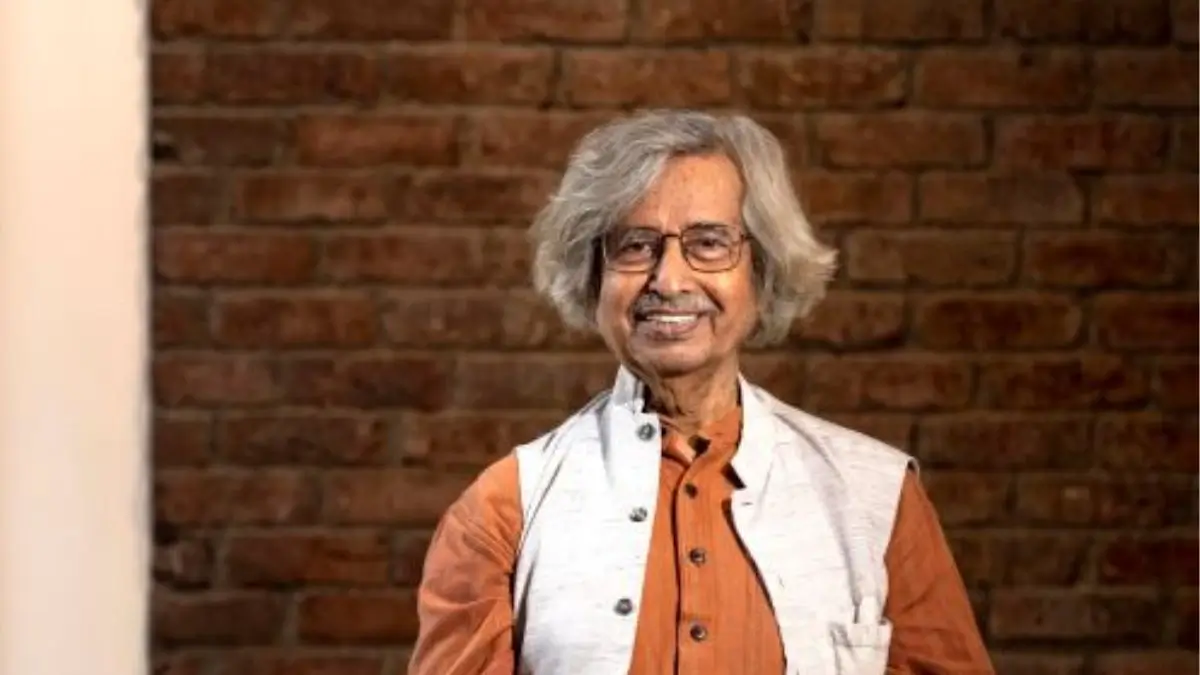
Celebrated Indian painter Jogen Chowdhury passed away in Kolkata on 25th October 2026, when he was 87 years old, as stated in reports published on 26th October 2026. He is celebrated for his fusion of traditional Indian imagery and modernist techniques of artistry. Through his unique line drawings and the cross-hatching technique, he rose to prominence as a great artist of modern Indian art. Other than being an artist, he held other positions including that of Keeper of Art at Rashtrapati Bhavan, teaching at Santiniketan and representing West Bengal in Rajya Sabha from 2014 to 2020.

Who Was Jogen Chowdhury?

Jogen Chowdhury was one of the greatest modern Indian artists whose works were characterized by unique drawing, painting, and depiction of human figures. He fused the elements of traditional Bengal painting and contemporary politics and social life into his artistic creations.

In his artistic language, he borrowed a lot from the Kalighat paintings and painters such as Jamini Roy, while cross-hatching was what gave his paintings a unique texture, depth and expressiveness. Some of the paintings that were notable because of his distinctive style include Tiger in Moonlight.

He also supported young artists.

Education and Career as an Artist

Period Notable Information
1955-1960 Attended the Government College of Art and Craft, Kolkata
1965-1967 Furthered education in painting and printmaking at École Nationale Supérieure des Beaux-Arts, Paris
1972-1987 Worked as Keeper of Art at Rashtrapati Bhavan
Post-Rashtrapati Bhavan Period Later went on to become an academician and teach in Santiniketan
2014-2020 Trinamool Congress member of Rajya Sabha
25th October 2026 Died in Kolkata aged 87 years

Contributions and Artistic Style

1. Combining traditional and modern art

  • Chowdhury managed to fuse traditional Indian art forms with modern-day art styles. He was able to combine India’s rich artistic background with the present realities of society.

2. Unique cross hatching style

  • Cross-hatching involves the drawing of intersecting sets of lines to produce shading, texture, and depth. This was unique to Chowdhury’s art style.

3. Paintings and Portraits

  • He has produced paintings and portraits of distinguished personalities. Besides this, he painted the portraits of various parliamentarians, including former Prime Minister Manmohan Singh, Sitaram Yechury, and Union Minister Ghulam Nabi Azad.

4. Contribution towards preservation of art

  • In his capacity as Keeper of Art at Rashtrapati Bhavan between 1972 and 1987, he assisted in curating and managing the huge art collection as well as its preservation.

5. Guidance and assistance to artists

  • Chowdhury was encouraging to young artists as well as appreciative of other forms of artistic expression. Artists and curators have fondly remembered him for his humility and generosity.

Political Life of Jogen Chowdhury

Chowdhury has not only contributed to the field of arts but has also served the country in a very respectable position. He became a Rajya Sabha MP in the Trinamool Congress from 2014 to 2020.

He has put forward some matters in Parliament regarding the artistic community, such as taxation on works of art. His life is an example of the involvement of artists and civil society in the Indian Parliament.

PM Modi Inaugurates RBI Data Centre and Cybersecurity Training Institute in Odisha

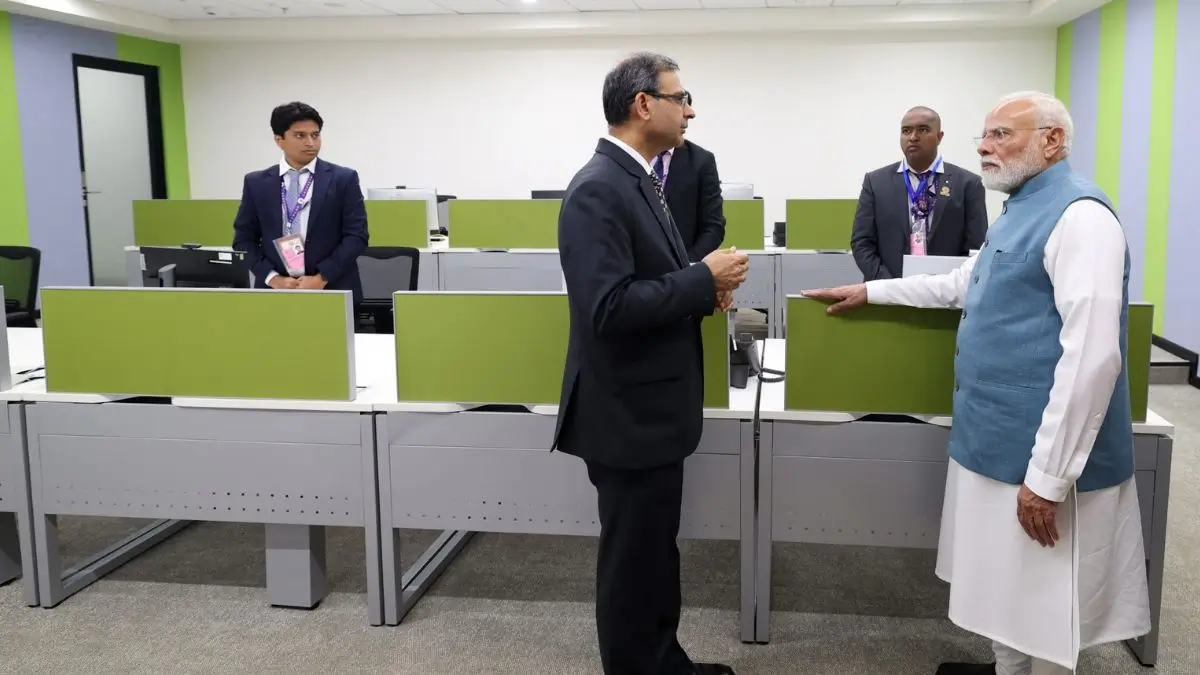
PM Narendra Modi launched RBI Data Centre and Cyber Security Training Institute in Bhubaneswar, Odisha on 25 October 2026. Both these institutes are meant for improving India’s digital financial infrastructure as well as critical payment systems along with specialising in cybersecurity. The data centre will contain mission-critical applications such as RTGS (Real Time Gross Settlement) and NEFT (National Electronic Funds Transfer). The cyber security training institute will have a special emphasis on cyber security, artificial intelligence (AI), and other latest technologies.

Functions and Significance of the RBI Data Centre

The new data center will serve the RBI in terms of its crucial technological infrastructure that includes various important payment systems for performing financial transactions in India.

Main functions of the data center are,

  • Facilitating digital payments: Infrastructure support for the payment systems like RTGS and NEFT.
  • Increasing reliability: Support for the reliability and continuity of essential banking services.
  • Better data management: Infrastructure support for the management and processing of vital financial system data.
  • Resilience: Infrastructure support to increase resilience against disruptions.

Functions of RBI Data Centre

The new data center would help in providing RBI’s technological infrastructure that will be required for supporting vital technological infrastructure of India’s payment systems, which can be used for facilitating financial transactions in India.

The primary functions of the RBI Data Center includes,

  • Support to the digital payments: Infrastructure for the India’s payment systems like RTGS and NEFT.
  • Reliability: Continuity and reliability of essential banking services.
  • Data management: Handling critical data in the Indian financial system.
  • Resilience: Supporting India’s technological infrastructure against disruption and risk factors.

The data center comes under the broader initiative to improve the efficiency, reliability, and security of India’s financial system with the growth of digital banking.

Cybersecurity Training Institute: Why It is important?

The Cybersecurity Training Institute will have the capability to tackle new threats to India’s financial infrastructure. The areas of training will include cybersecurity, AI, and emerging technologies.

The importance of the Cybersecurity Training Initiative lies in the increasing dependency of financial institutions on digital systems that are interconnected. Such cyber attacks can disrupt payment systems and threaten the sensitive data and create distrust of digital banking systems among people.

The Cybersecurity Training Institute will enhance professional skills of individuals and help RBI in their mission to develop technological capabilities in the financial sector.

Key Cybersecurity Priorities

  • Threat detection: Identifying the any suspicious activities and cybersecurity threats.
  • Incident Response: Enhancing the capacity to respond to the cybersecurity threats.
  • Emerging Rechnologies: Gaining skills in AI and other digital technologies.
  • Financial system resilience: Strengthening the capability of providing essential banking services during the time of disruption.

Differences between RTGS and NEFT

The new data centre is going to contain both these payment systems. The key differences in them are essential from the point of view of banking and competitive exams.

Feature RTGS NEFT
Full Form Real Time Gross Settlement National Electronic Funds Transfer
Settlement method On transactional basis in real time In batches after fixed intervals
Type of settlement Gross settlement Net deferred settlement
Minimum limit of transaction ₹2 lakh None specified by RBI
Maximum limit of transaction None specified by RBI None specified by RBI
Timing 24 hours daily 24 hours daily
Main usage Large value payments needing real time settlement Electronic fund transfer for any value

Both RTGS and NEFT are operated by the RBI and constitute an integral part of the electronic payments system in India. Banks may set their own rules for specific modes.

Ladakh Becomes India’s First Fully Organic Union Territory

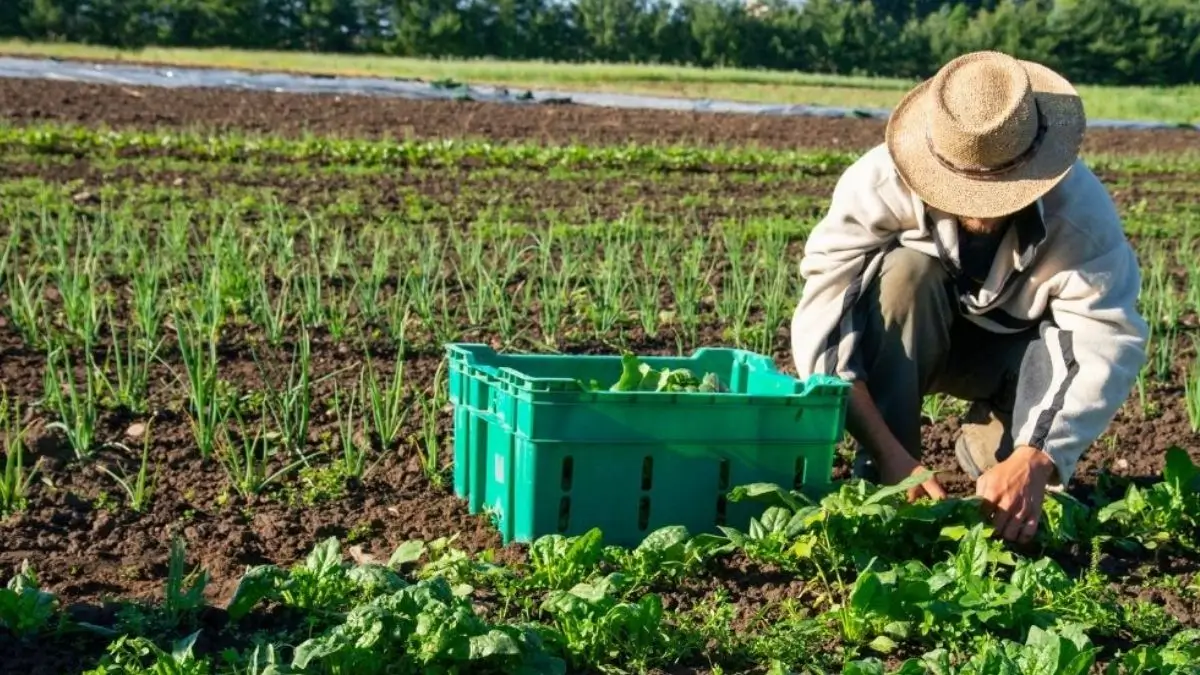
Vinai Kumar Saxena, the Lieutenant Governor of India’s newly established organic Union Territory Ladakh, said that the state is India’s first complete organic Union Territory as of October 25, 2026. This is a result of the ban imposed by the government on the sale and usage of chemical fertilisers since June as well as the ongoing efforts of making all agricultural practices organic in the state. By Mission Organic Development Initiative (MODI), launched in 2020, all 666 villages of Ladakh would be converted into organic cultivation zones.

Ladakh’s Organic Farming Scheme

Organic farming scheme is part of Ladakh’s efforts to decrease dependency on chemicals and practice sustainable agriculture in its cold-desert area.

According to the MODI scheme which was implemented in 2020, the government plans to make all the 666 villages in Ladakh to practice certified organic farming. According to information prior to 2026 October, 207 revenue villages have been made to practice certified organic farming.

The scheme has an alleged budget of ₹500 crore for undertaking various activities such as production of bio-fertilizers, seed supply, protected cultivation of organic products and their marketing.

Why is Organic Farming Important for Ladakh?

Ladakh is situated in the Trans Himalayan region which has an alpine and cold desert type of climate.

Through organic farming, there can be decreased use of fertilizers that may contribute towards better soil and environmental conservation in the area.

Agricultural produce from Ladakh consists of,

  • Crops: Barley, wheat, peas, buckwheat, foxtail millet and mustard.
  • Fruits and other crops: Apricots and sea buckthorn.
  • Vegetables: Potato, cabbage, cauliflower, tomato, onion, carrot, radish, turnip and leafy vegetables.

The government wants better prices and good market reach through organic certification, better branding and value addition to increase the value of the produce and the incomes of farmers. But the problem of price and markets is a big one.

Organic Farming in India: Background

The success of Ladakh is quite significant in the backdrop of the organic farming movement in India as a whole.

Sikkim became the first fully organic state of India back in 2016. The declaration by Ladakh in 2026 represents another important step at the Union Territory level. Ladakh had previously entered into an agreement with the Sikkim State Organic Certification Agency in July 2021.

In India, the National Programme for Organic Production (NPOP) is responsible for setting standards of organic production and accreditation of certification agencies. This program is run by the Agricultural and Processed Food Products Export Development Authority (APEDA).

_12.1
October 2026
M T W T F S S
 1234
567891011
12131415161718
19202122232425
262728293031