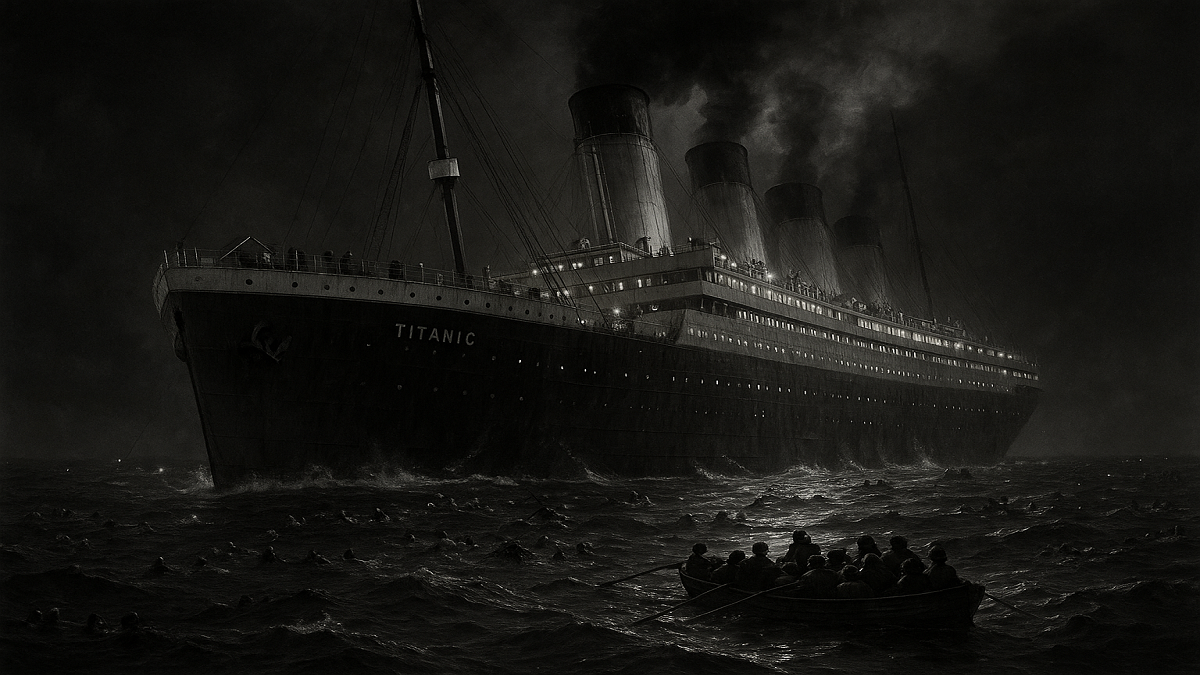
The tragic sinking of the RMS Titanic in April 1912 remains one of the most infamous maritime disasters in history. Often described as “a disaster of Titanic proportions”, the phrase has since become a metaphor for any large-scale tragedy. For government exam aspirants and general readers, understanding this event is important not only as a historical fact but also as a case study in human error, technological overconfidence, and crisis management.
Background of the Titanic
The Titanic was the largest passenger ship of its time, built by the White Star Line. Launched in 1911, it was considered unsinkable due to its advanced engineering and watertight compartments. The ship set sail on its maiden voyage from Southampton (England) to New York (USA) on 10 April 1912. On board were more than 2,200 passengers and crew, including some of the wealthiest people of the era as well as emigrants seeking a new life in America.
The Disaster Unfolds
On the night of 14 April 1912, the Titanic struck an iceberg in the North Atlantic Ocean. Within less than three hours, the ship sank, leading to the deaths of over 1,500 people. The tragedy was worsened by several factors:
- Insufficient lifeboats: The ship carried only 20 lifeboats, enough for about half the passengers.
- Delayed response: Distress signals were not received in time by nearby ships.
- Overconfidence: Belief in the Titanic’s “unsinkable” reputation led to neglect of safety measures.
Aftermath and Global Impact
The Titanic disaster shocked the world. It exposed the flaws in maritime safety regulations and highlighted how technological progress, when mixed with human arrogance, can result in catastrophe. As a result:
- The International Convention for the Safety of Life at Sea (SOLAS) was established in 1914.
- Strict rules regarding lifeboats, radio communication, and safety drills were enforced on ships.
- The tragedy entered literature, cinema, and common language as a symbol of human vulnerability.
Lessons from the Titanic
The Titanic is not just a historical event but a reminder that:
- Technology is not infallible – human judgment and preparedness are equally important.
- Disaster preparedness saves lives – safety drills, proper equipment, and alertness are crucial.
- Inequality during crises – many third-class passengers were trapped due to unfair evacuation practices, showing how social divisions affect survival.
Modern Usage of “Titanic Proportions”
Today, the expression “a disaster of Titanic proportions” is used to describe any large-scale tragedy—whether natural disasters, industrial accidents, or economic collapses. It emphasizes the scale of loss, preventability, and long-lasting impact.


 What is National Investigation Agency? C...
 Which State is the Largest Petroleum Pro...
 Largest Crude Oil Supplier Countries to ...