
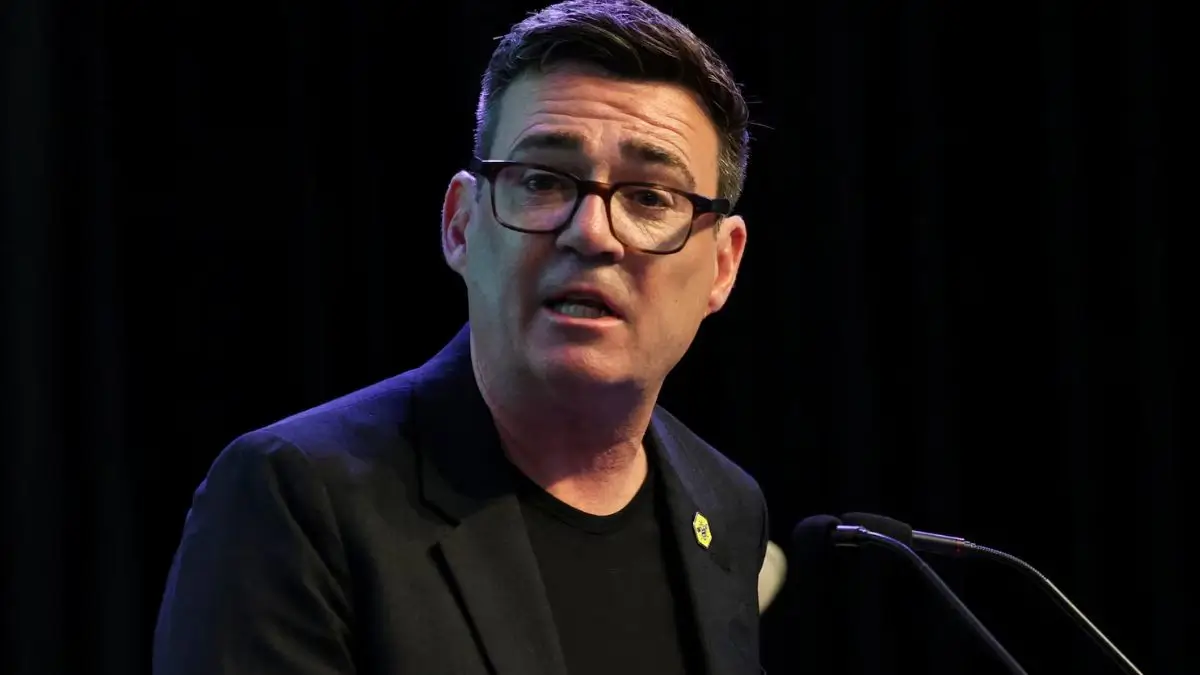
Andy Burnham elected as the leader of the Labour Party. Consequently, he will assume the charge of the Prime Minster’s office by Monday on 20th July, 2026. Mr. Burnham takes over the position from Sir Keir Starmer who resigned form the party last month. Mr. Burnham’s elevation represents a huge milestone in British politics, making him the seventh Prime Minister during the past decade. During the inaugural speech, Mr. Burnham assured the public of the reinstatement of trust in the government and implementation of policies stressing public service, regional development and economic recovery.
Andy Burnham has been named Leader of the Labour Party.
Shabana Mahmood made the announcement during a meeting of the Labour National Executive Committee in London.
Burnham became the only option for the post after former Prime Minister Keir Starmer stepped down in June 2026. Burnham was therefore acclaimed as the new head of the party without any opposition.
He may be appointed Prime Minister of the United Kingdom on Monday, thus starting a new era for the Labour government.
Burnham’s Background and Career
Burnham has been active in Labour politics for over 20 years alongside his work as a journalist before entering politics, having first entered the House of Commons in 2001.
He has a long experience of politics as an MP, having served as a minister in Labour governments before assuming influential positions in his party.
Burnham has gained national prominence as a regional politician facilitating local governance with a great deal of success.
Political Significance of Burnham’s Ascendancy
Burnham’s promotion comes when it can be described as politically important for the UK.
He will be the seventh British prime minister in 10 years, pulling through an era of political upheaval.
Experts believe that it might lead the Labour party to new avenues in terms of governance by putting more emphasis on:
- The development of economy in regions.
- Increased independence of local governments.
- The improvement of public services.
- The economy that ensues inclusiveness.
- The decrease of political divisions.
His background in local government could also shape future developments in governance reform.








 WWF Living Planet Report 2026: Monitored...
 India Joins US and 13 Economies in Joint...
 Russia Suspected Plague Case: Nearly 200...










