
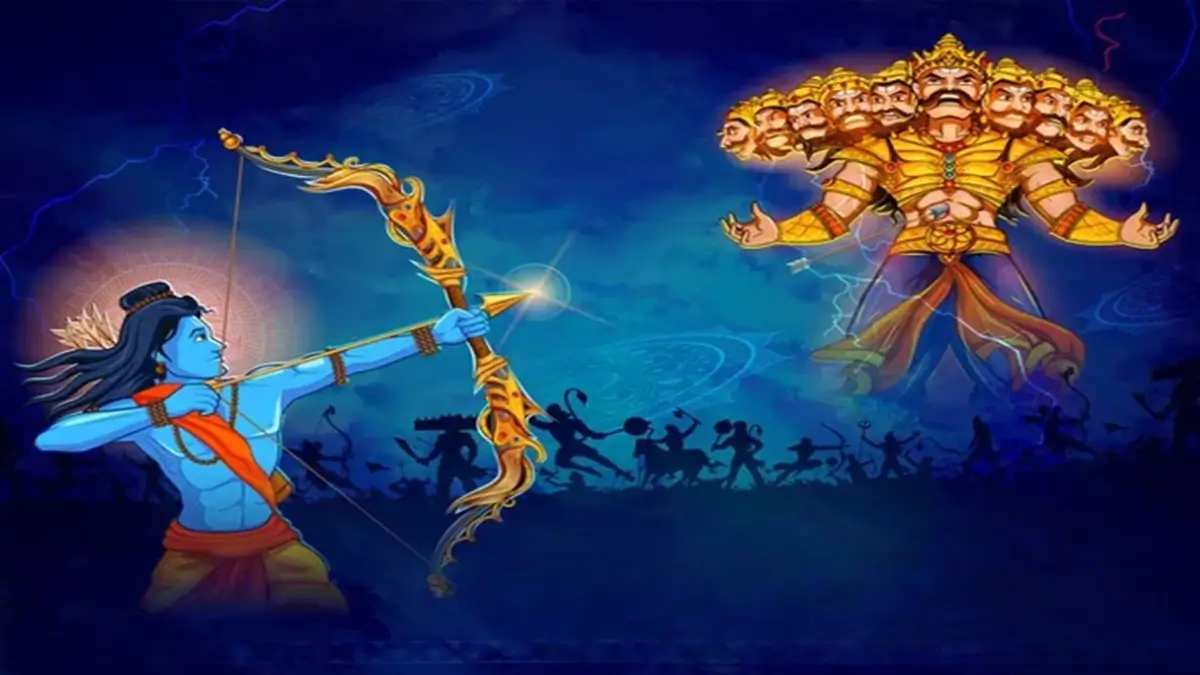
Dussehra, also known as Vijayadashami, is one of the grandest Hindu festivals celebrated with great joy across India. It marks the end of Navratri and symbolizes the victory of good over evil. The festival is closely linked to the Ramayana, where Lord Rama defeated the demon king Ravana. In 2025, Dussehra will be observed on 2nd October, reminding us of the timeless triumph of truth and righteousness.
When is Dussehra 2025?
In 2025, Dussehra will be celebrated on Thursday, 2nd October. The festival comes right after the nine days of Navratri and is observed on the tenth day of the Hindu lunar month of Ashwin. Each region in India celebrates this occasion in its own way, but the central message remains the same—the victory of good over evil.
The Story of Rama and Ravana
The most well-known story behind Dussehra comes from the Ramayana. According to the epic, the demon king Ravana kidnapped Sita, the wife of Lord Rama. To bring her back, Rama, along with his brother Lakshmana and the devoted Hanuman, marched to Lanka with an army of monkeys.
After a fierce battle, Lord Rama killed Ravana on this very day, ending his tyranny and freeing Sita. This story teaches us that no matter how powerful evil may appear, it always falls before truth, justice, and righteousness.
Goddess Durga and Mahishasura
In some parts of India, especially in West Bengal and eastern states, Dussehra is connected with Goddess Durga’s victory over Mahishasura, the buffalo demon. According to the legend, Durga fought a fierce battle for nine days and nights. On the tenth day, she defeated Mahishasura, symbolizing the strength of good over destructive forces. This day is celebrated as Vijayadashami, meaning the day of victory.
Significance of Dussehra
Dussehra is more than just a festival—it carries deep cultural and moral values.
- Moral Victory: It reminds us that truth, honesty, and righteousness always win, even if the struggle is long.
- Cultural Joy: Across India, people enjoy Ramlila plays, processions, and the burning of giant effigies of Ravana, Meghnad, and Kumbhakarna, representing the destruction of evil.
- New Beginnings: Many people see Dussehra as an auspicious day to buy new things, start businesses, or make important decisions, as it is believed to bring prosperity and success.


 Which is the Most Consumed Beverage in t...
 Which is the Only Continent with No Tree...
 Which River is known as the National Riv...











