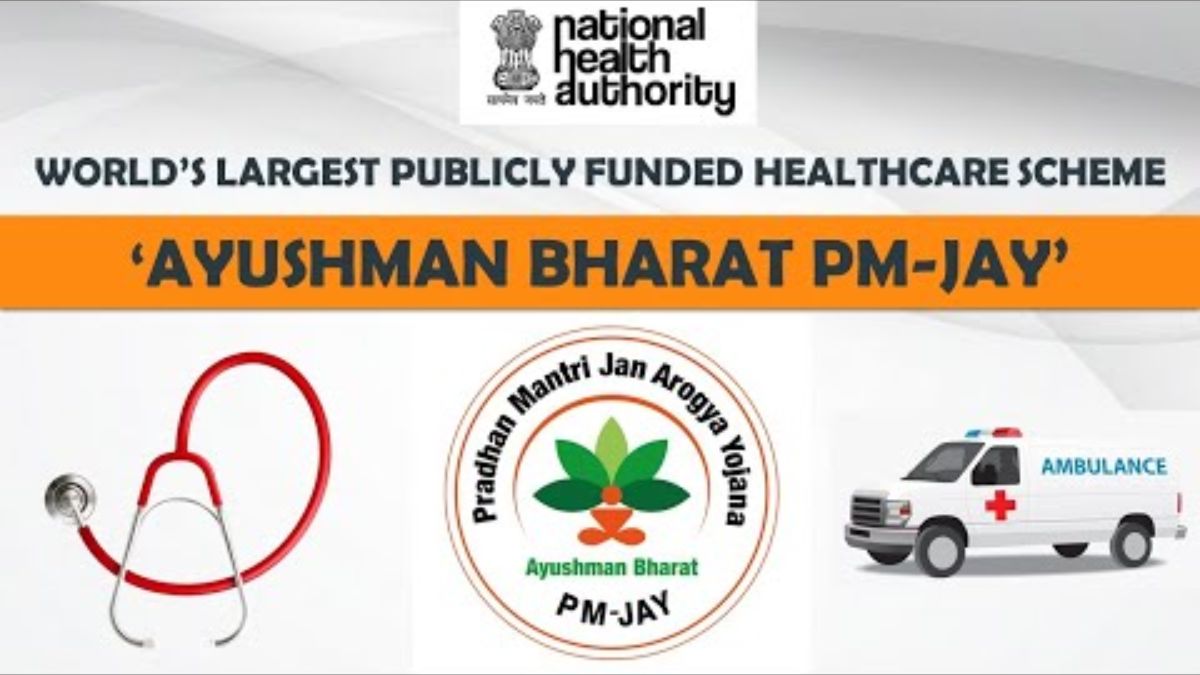
India’s flagship health insurance scheme — Ayushman Bharat–Pradhan Mantri Jan Arogya Yojana (AB-PMJAY) — has officially become the world’s largest public healthcare programme. Launched on 23 September 2018, AB-PMJAY now provides cashless health insurance coverage of ₹5 lakh per family per year for over 12 crore low-income families, reshaping India’s approach to universal health coverage. As of October 28, 2025, the scheme has issued over 42 crore Ayushman cards, with 86 lakh senior citizens enrolled, making it a landmark in public health administration.
Key Features of AB-PMJAY
AB-PMJAY offers cashless access to secondary and tertiary healthcare in both government and private hospitals empanelled under the scheme. Its objectives are clear,
- Prevent financial distress due to medical expenses
- Ensure access to quality treatment regardless of income
- Promote universal health inclusion
With more than 33,000 hospitals empanelled — 17,685 public and 15,380 private — beneficiaries can access a wide range of critical treatments free of charge.
Real Impact: Financial and Health Security
- According to the Economic Survey 2024–25, Ayushman Bharat has saved beneficiaries over ₹1.52 lakh crore in out-of-pocket healthcare costs.
- The sheer scale of these savings underscores the programme’s role in reducing poverty-linked health shocks.
- The Union Budget 2025–26 allocated ₹9,406 crore for AB-PMJAY — the highest annual allocation since the scheme’s inception.
Joint Centre–State Initiative
- AB-PMJAY is co-funded by the central and state governments, reinforcing India’s federal commitment to universal health coverage.
- Between 2022–23 and 2024–25, states and union territories spent over ₹5,000 crore on developing and operationalising Ayushman Arogya Mandirs.
- This collaboration ensures that both rural and urban populations benefit from equal access to healthcare services.
The Broader Ayushman Bharat Ecosystem
AB-PMJAY is just one part of the comprehensive Ayushman Bharat framework, which includes three other critical pillars.
1. Ayushman Arogya Mandirs (AAM)
Formerly Health and Wellness Centres, AAMs expand access to primary healthcare, especially in rural areas. They provide,
- Non-communicable disease care
- Basic ENT, dental and vision services
- Emergency and palliative care
As of September 2025, these centres have conducted over 39 crore teleconsultations, increasing accessibility to doctors even in remote regions.
2. Ayushman Bharat Digital Mission (ABDM)
This mission is building a pan-India digital health ecosystem. Key features,
- Each citizen receives a unique Ayushman Bharat Health Account (ABHA) ID
- Health records are digitally linked and portable
- As of now, 80 crore ABHA IDs have been created
- Over 6.7 crore health records have already been securely linked
3. PM–Ayushman Bharat Health Infrastructure Mission (PM-ABHIM)
Launched on 25 October 2021, this ₹64,180 crore mission aims to,
- Strengthen infrastructure in hospitals and labs
- Create emergency response capacities
- Promote medical research and public health institutions
Out of the total budget,
- ₹54,205 crore is allocated for state-level initiatives
- ₹9,340 crore is designated for central government programmes
Static Facts
- Scheme Name: Ayushman Bharat–PM Jan Arogya Yojana (AB-PMJAY)
- Launch Date: 23 September 2018
- Coverage: ₹5 lakh per family per year
- Eligible Families: Over 12 crore
- Hospitals Empanelled: 33,065 (17,685 public + 15,380 private)
- Ayushman Cards Issued: 42 crore+


 PM Mudra Yojana Marks 11 Years of Suppor...
 Ministry of Textiles Extends RoSCTL Sche...
 Delhi Government Launches the Lakhpati B...