
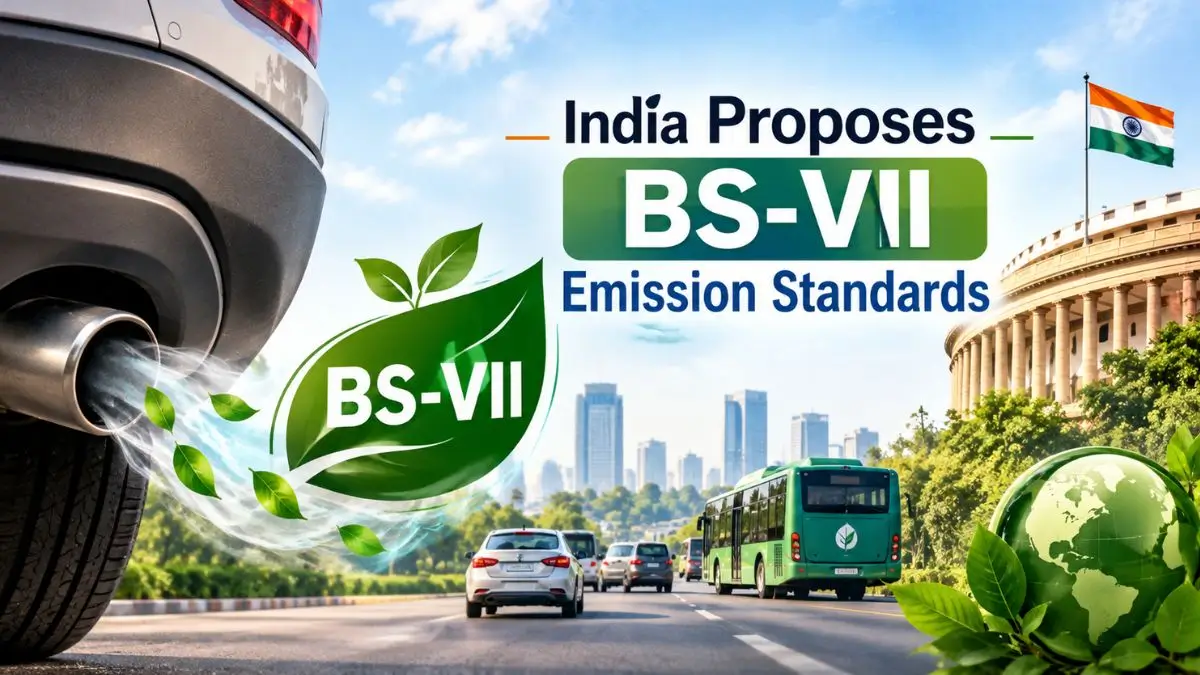
The Ministry of Road Transport and Highways (MoRTH) has proposed the introduction of tougher Bharat Stage VII (BS-VII) emission standards for vehicles through the notification dated 12 October 2026. Introduction of new emission standards is proposed to be done in three phases starting from 1 April 2029 up to April 2035. Introduction of the new standard is supposed to result in tougher restrictions for hazardous emissions by vehicles, including nitrogen oxides, hydrocarbons, and particulate matter. It goes after introduction of BS-VI standards in India in April 2020.
BS-VII Emission Standards: Proposed Implementation Timeline
According to the draft notification, India plans to introduce BS-VII standards in three phases over the next six years. Introduction of the standards in three phases is aimed at giving some time to vehicle producers to get ready to the new requirements.
| Phase | Proposed implementation date |
| Phase 1 | 1 April 2029 |
| Phase 2 | 1 April 2031 |
| Phase 3 | 1 April 2035 |
Introduction of the standards is proposed to be done in order to introduce tighter emission requirements for covered vehicles. As the notification is only in draft form, requirements and arrangements for its introduction are yet to be decided by the government.
Definition of Bharat Stage Emission Standards
The Bharat Stage (BS) Emission Standards refer to the standards established by the Government of India to check the level of pollutants emitted by motor vehicles. These standards lay down the emission limits allowed in various types of motor vehicles.
Some of the pollutants controlled under the BS emission standards include carbon monoxide (CO), nitrogen oxides (NOx), hydrocarbons (HC) and particulate matter (PM).
Each new stage involves a change in emission standards and technology for the vehicles. The Indian emission standards are consistent with European emission standards although the requirements vary as per India’s regulations.
Characteristics of the Proposed BS-VII Standards
1. More Stringent Emission Limits
The proposed BS-VII standards attempt to impose more stringent emission limits for emissions like Nitrogen oxides, Hydrocarbons and Particulate matter, which cause damage to air quality and pose hazards for public health.
The actual limits and conditions of meeting them will depend on the provisions provided in the final rules.
2. Proposed Application to New Cars and SUVS
As per the supplied report, the new cars and SUVS are targeted for implementation in April 2029.
Actual regulatory provisions might differ based on the vehicle type and final provisions of the rules.
3. Gradual Introduction of the Requirements
Implementation dates suggested in the proposal – 2029, 2031 and 2035 will allow the gradual introduction of the new requirements.
Such gradual introduction can provide enough time for manufacturers to adjust the vehicle technology in order to comply with the requirements.
4. Current Cars
According to the supplied report, the implementation of the proposal will not affect current cars in any way and will not reduce their lifespan as a result of that.
The final notification and applicable vehicle rules will clarify all the legal requirements.
Difference Between BS-VI and BS-VII
| Criteria | BS-VI | Proposed BS-VII |
| Status | Valid since April 2020 in India | Proposed up to October 2026 |
| Primary purpose | To regulate vehicle emissions via certain limits | To have stricter emission controls |
| Emissions | Include CO, NOx, HC and PM, etc. | Suggested more stringent emission limits for emissions like NOx, HC and PM |
| Implementation | Complete transition in India starting April 2020 | Implementation proposed from April 2029 to April 2035 |
| Approach to adopt | BS-VI as the national standard | Three phases proposed |
Current vehicles Subject to applicable regulations Noted proposal does not necessarily terminate the service life of current vehicles
Why Did India Bypass BS-V?
While most other countries have gone through BS-I through BS-V to BS-VI, India skipped BS-V and went straight to BS-VI in April 2020. The skipping of BS-V was meant to introduce stricter emission regulations.
The transition to BS-VI also saw the introduction of low-sulfur fuel, since sulfur could affect emission control technologies in vehicles.
The proposed introduction of BS-VII regulations would see the further tightening of emission regulations as technology improves.
Why Are Tighter Vehicle Emission Standards Important?
Road transport is one of the causes of air pollution through vehicle exhausts. Tighter vehicle emission standards could promote innovation in engines, advanced exhaust treatment and improved emissions control technologies.
The proposed BS-VII emissions standard could also affect vehicle manufacturers in terms of research, development and compliance planning. But the effects would be determined by the specifications.
There are other factors for air quality improvement such as fuels, public transportation, maintenance and use of low-emission transport among others.






 Train Ticket Insurance from October 27, ...
 Cabinet Approves ₹2,009.61 Crore Produ...
 Cabinet Approves Continuation of Nationa...