
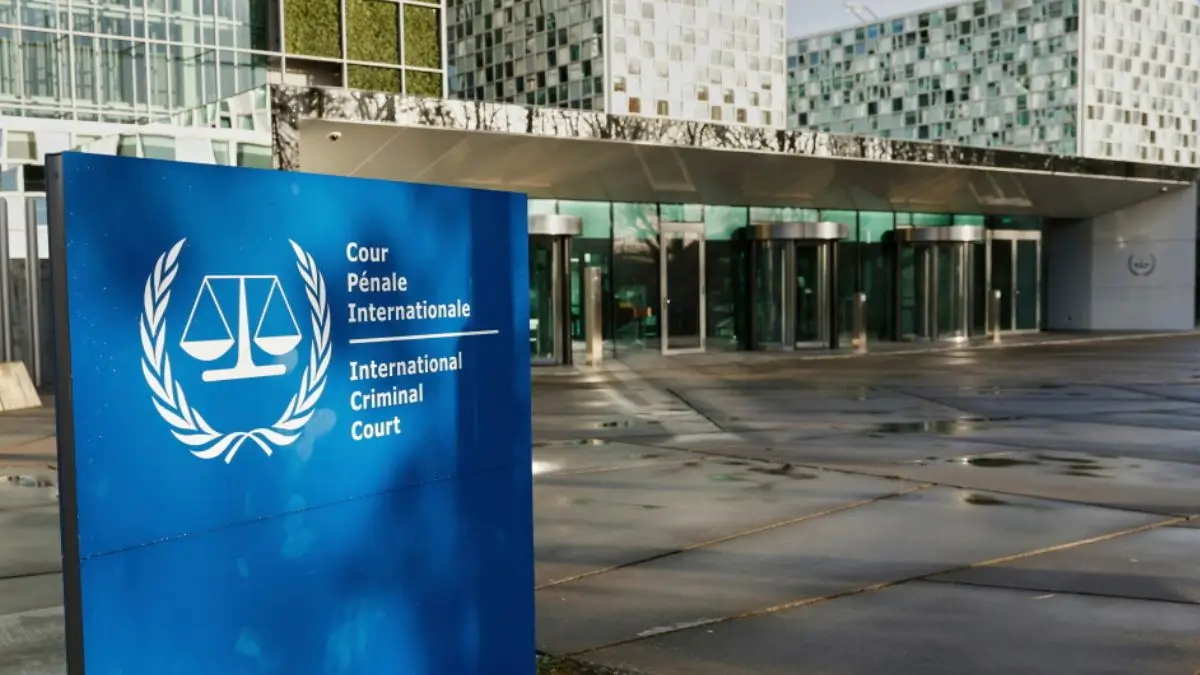
Recently, the US government has slapped sanctions on the President of the International Criminal Court (ICC), Tomoko Akane of Japan, and the Senior Trial Lawyer of the ICC, Abdoulaye Seye of Senegal, signaling an important phase in the US-ICC diplomatic affair.
The sanctions were imposed on August 18, 2026, through a presidential executive order by the US Secretary of State, Marco Rubio. They arise against a backdrop of diplomatic tension between the US and ICC in relation to the jurisdiction of the ICC and its investigations of persons from non-state parties of the Rome Statute. Here is the everything you need to know about the International Criminal Court.
What Is the International Criminal Court (ICC)?
- The International Criminal Court (ICC) is the first and only permanent international criminal court in the world. It was established according to the Rome Statute of 1998 and started its work on July 1, 2002.
- It is situated in The Hague, the Netherlands, and it investigates and, when necessary, prosecutes individuals accused of committing the most serious crimes which are a concern for the international community.
- The most common core crimes of the ICC are: genocide, crimes against humanity, war crimes, and crime of aggression.
- In contrast to courts dealing with disputes between states, the ICC concentrates on the individual criminal responsibility.
What Crimes Does the ICC Prosecute?
According to the Rome Statute of 1998, the ICC has the right to investigate and prosecute individuals accused of committing four main types of crimes.
Genocide
- Genocide means acts committed with the intention of destroying, partially or completely, a national, ethnic, racial or religious group.
Crimes Against Humanity
- These are attacks against civilians which are widespread or systematic in nature and can include murder, deportation, imprisonment and persecution.
War Crimes
- War crimes include grave breaches of international humanitarian law during armed conflicts.
Crime of Aggression
- Another type of crime is the crime of aggression which includes certain activities connected with the planning, preparation, initiation or execution of an act of aggression by the highest political and military officials.
How Does ICC Jurisdiction Function?
- It is imperative to note that ICC does not have jurisdiction over all alleged international crimes.
- Normally, the court will have jurisdiction over a crime if the state where the crime is committed is a signatory to the Rome Statute, or the accused person’s country is a party to the Rome Statute.
- The jurisdiction of the court applies to crimes committed after the entry into force of the Rome Statute on July 1, 2002.
- The ICC may acquire cases through various channels. The State Parties can refer a situation to the Prosecutor, the Prosecutor can start an investigation based on the law, and the United Nations Security Council can refer situations to the ICC.
ICC Acts as a Court of Last Resort
- An important feature of the ICC is complementarity.
- The ICC is supposed to operate when the state’s national legal system is unwilling or unable to prosecute or investigate crimes.
- Consequently, the ICC does not replace the national courts. The national courts bear the main burden of prosecuting crimes, whereas the ICC acts as a court of last resort.
ICC vs International Court of Justice
- Although ICC often seems to be mistaken for the International Court of Justice (ICJ), the role of these institutions differs significantly.
- First of all, the ICC tries persons suspected of genocide, crimes against humanity, war crimes, and aggression.
- The International Court of Justice, in turn, resolves disputes between states and gives advisory opinions on issues of international law.
- Therefore, the ICC tries individuals, while the ICJ solves cases related to disputes between states.
How Does ICC Work?
- The ICC includes 18 judges. Each of them is elected out of candidates from different member states. Judges can serve for a non-renewable period of nine years.
- Presidency of the court is composed of three judges – the President and two Vice-Presidents. This institution represents the court in foreign relations and coordinates the work of the judges of the court.
- Office of the Prosecutor (OTP) is another important element of the ICC. It receives referrals and information regarding crimes falling under the jurisdiction of the ICC, examines it, conducts investigations, and tries individuals before the ICC.
- The Registry assists with the activities of the ICC’s Chambers and the Office of the Prosecutor.
ICC Member Countries
- As per the details presented, there are 125 member states in the ICC.
- There are some prominent countries that do not form part of the Rome Statute. The list includes the United States, India, China, Israel, and Russia.
- The difference is critical for analysing the international discourse on the jurisdiction and powers of the court.
- The ICC is mainly financed through the contributions of its States Parties. Apart from these contributions, the ICC can obtain voluntary contributions from the government bodies, international agencies, individuals, and companies.








 UNESCO World Heritage Sites of India - D...
 Jamnagar Refinery: Why India's Oil Hub M...
 UNESCO World Heritage Sites of India - D...










