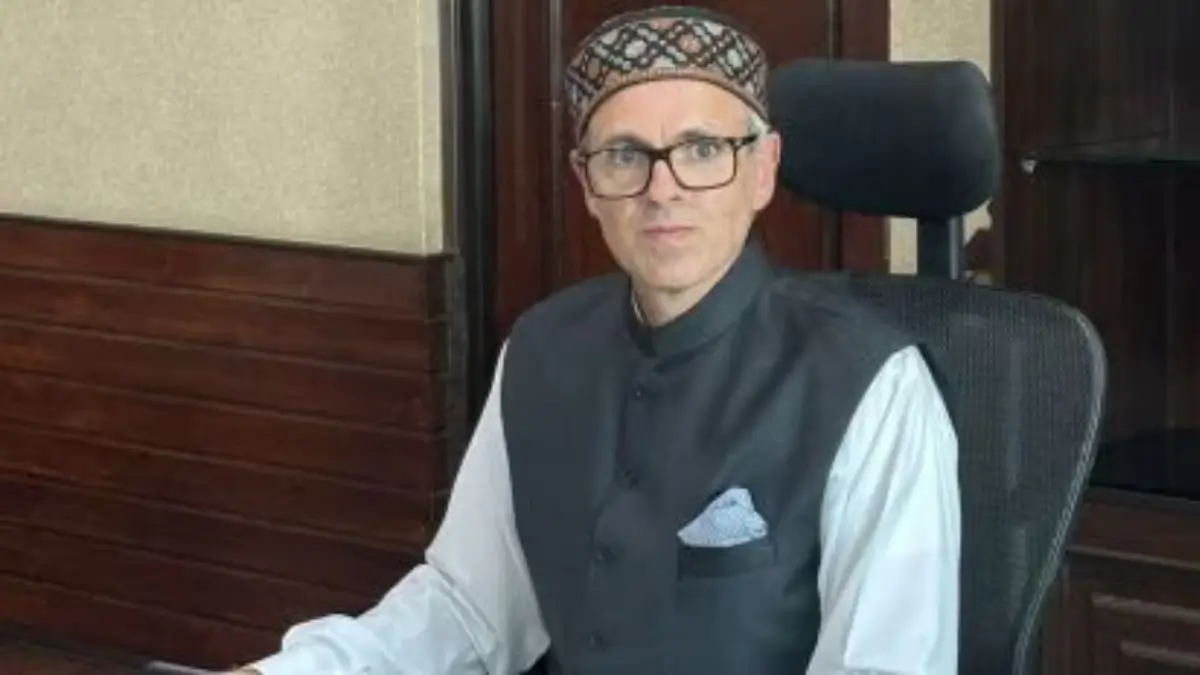
The Darbar Move, one of India’s oldest administrative traditions, has officially been revived in Jammu and Kashmir after being scrapped four years ago. Chief Minister Omar Abdullah announced the restoration of this century-old practice, fulfilling a key government promise. The decision marks the return of an important part of the Union Territory’s history, culture, and governance.
What is the Darbar Move?
The Darbar Move is a biannual tradition where the Jammu and Kashmir government shifts its offices between Srinagar and Jammu with the changing seasons.
- Srinagar serves as the summer capital, while
- Jammu becomes the winter capital.
The practice began in 1872, when Maharaja Gulab Singh, the first Dogra ruler, started moving the royal court to Jammu during winters to ensure that governance remained accessible to citizens despite harsh weather conditions in the Kashmir Valley.
Resumption After Four Years
The practice, which was suspended in 2021 due to high operational costs and modernization of digital governance, will resume in winter 2025.
According to a new order issued by Commissioner Secretary M. Raju, all government offices in Srinagar will close after working hours on October 31, 2025, and reopen in Jammu on November 3, 2025.
This means that for the winter session, the Civil Secretariat, Chief Minister’s Office, and 38 major departments such as Revenue, Forest, Transport, and Technical Education will shift completely to Jammu.
Meanwhile, 47 departments will operate from temporary camp offices in Jammu.
Why was It Stopped Earlier?
The Darbar Move was paused in 2021 as part of cost-cutting and modernization efforts.
- The government estimated the annual expense of this tradition at nearly ₹200 crore.
- It involved shifting thousands of employees, tons of official files, and transportation arrangements twice a year.
In 2020, the Jammu and Kashmir High Court observed that the practice lacked any legal or constitutional requirement, calling it financially unviable in the modern digital era.
Impact on Jammu’s Economy
When the Darbar Move was stopped in 2021, businesses in Jammu suffered heavily. Traders, hotel owners, and transport operators saw a sharp decline in income as government staff and their families stopped relocating twice a year.
- The Jammu Chamber of Commerce and Industries (JCCI) had launched campaigns and even held strikes demanding the restoration of the Darbar Move.
- Many local groups said ending the practice had hurt livelihoods and weakened economic activity during the winter months.
With its revival, local businesses are hopeful of an economic boost once again.
Symbol of Unity and Coexistence
Beyond economics, the Darbar Move is viewed by many as a symbol of unity and harmony in Jammu and Kashmir. The tradition represented the connection between the two regions—Jammu and the Kashmir Valley—encouraging cooperation and cultural exchange.
Political leaders and social groups believe that its restoration will help strengthen ties and restore a sense of balance between the two regions.
Distance and Duration of the Move
The distance between Jammu and Srinagar is about 270 km, and the move typically takes a few days to complete.
Modern transportation and digital systems have made the process smoother compared to earlier times when travel was slow and communication limited.


 Weekly Current Affairs One Liners (30th ...
 ECINet KYC Feature Explained: How Voters...
 BIRAC-BioNEST Incubation Centre Inaugura...