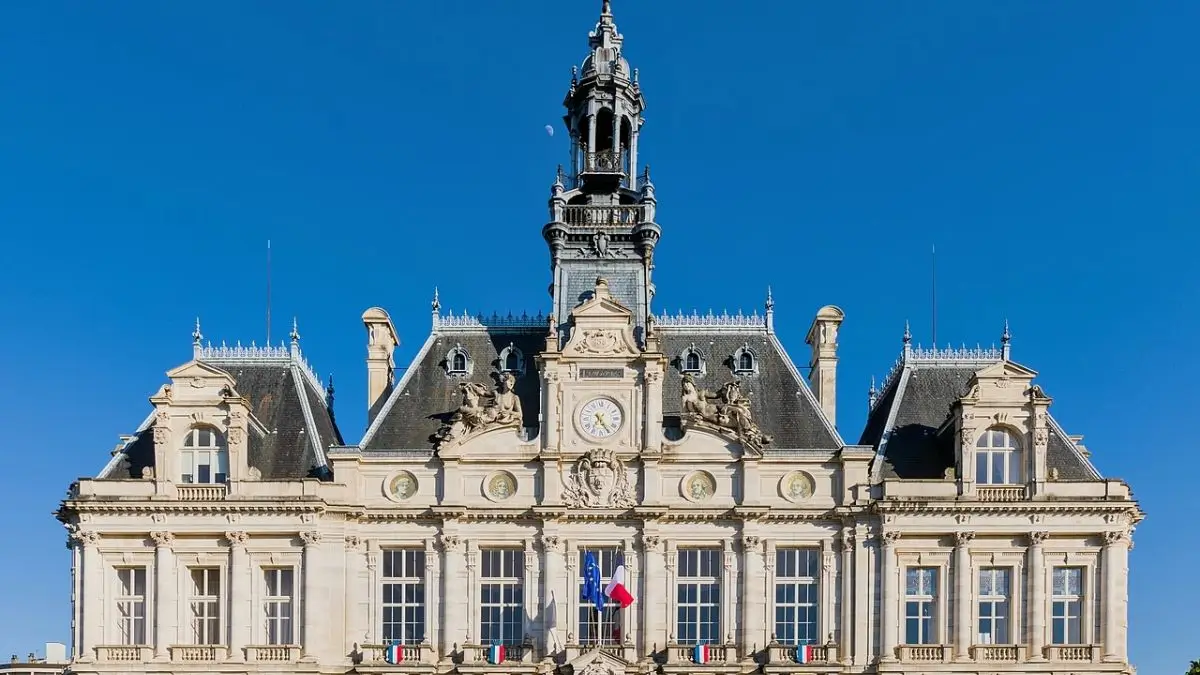
On the 17th of October 2026, the old town hall of Limoges caught fire in the midst of the riots taking place throughout France. According to the local authorities, this incident was a premeditated one and it resulted in to the major damage being inflicted on the roof and the main building. The famous clock tower of this landmark came down, but it appears that parts of the building were spared, including the west wing of the structure. Further investigations into the damages caused need to be made.
The riots broke out across France owing to the high cost of living, public services, and education. While most protests were peaceful, there have been violent outbreaks in other towns, and public buildings became the targets of such actions.
History of the Limoges Town Hall
The Hôtel de Ville de Limoges, otherwise known as the Limoges Town Hall, is an historical civic building located in Limoges, in the Haute-Vienne department of southwestern France.
The construction of the building began in 1879 and was opened to the public on 14th July 1883.
The town engaged renowned architect Charles-Alfred Leclerc, who won the Grand Prix de Rome and was formerly the chief architect at the Palace of Versailles for designing the building. This project took place shortly after the demise of a local resident, Alfred Fournier, who bequeathed his wealth to the city in 1875.
This civic building is supposed to symbolize the civic pride and prosperity of the town. Its architectural designs were inspired by the Hôtel de Ville in Paris, thus giving the city a magnificent civic building during the French Third Republic era.
- City: Limoges
- Country: France
- Region: Nouvelle-Aquitaine
- Department: Haute-Vienne
- Major historical association: Porcelain manufacturing
- Municipal landmark: Hôtel de Ville de Limoges
Architectural Features of Limoges Town Hall
Limoges town hall incorporated Neo-Renaissance and Louis XIII architectural styles. The symmetrical façade, decorations, clock tower and roof contributed to making it one of the most significant buildings in the city.
Key architectural elements were,
- Clock tower: The tower and belfry is measured about the 43 meters in the height before the October 2026 fire.
- Sculptural medallions: Four medallions also featured important individuals related to the Limoges and French history.
- Pediment sculptures: Sculptures of craftsmen practicing goldsmithing and enamelling art were present.
- Decoration of the interior: The building had a reception hall, a staircase, marble flooring and historical paintings.
- Fountain: A stone fountain created by Charles Genuys was placed at the entrance of the building in 1893.
The decoration of the building expressed the centuries-long tradition of Limoges porcelain and enamel.
Why is Limoges Town Hall Historically Significant?
The town hall building functioned as a place of administration and was also a symbol of the local community’s pride for more than 140 years. The building also played host to several events in the history of France and Europe.
In April 1871, the town hall saw a revolution where the masses occupied the building demanding the creation of a commune in Limoges amidst the general turmoil that happened due to the Paris Commune.
In May 1940, during the Second World War, Limoges Mayor Léon Betoulle received Belgian Prime Minister Hubert Pierlot and the members of the Belgian government-in-exile in the town hall.
The building gained the status of an important historical monument in 1975, making its destruction in October 2026 an important loss for more than just an ordinary municipal structure.








 Why Is Limoges Famous? Porcelain, Kaolin...
 Ramsar Sites in India 2026: State-Wise L...
 Who Is Navi Pillay? Nobel Peace Prize 20...