
NASA’s PUFFINS mission (Polarimetry in the Ultraviolet to Find Features in INterStellar dust) plans to explore small dust particles present between the stars and their contribution in the creation of stars and planets. The initiative led by Indian-origin scientist Dr. Ramya Manjunath Anche from the University of Arizona’s Steward Observatory has been awarded $20 million grant by NASA through its Astrophysics Pioneers initiative. Scheduled to be launched in 2030, the PUFFINS will explore dust around about 70 stars through observations of ultraviolet and polarimetry.
PUFFINS Mission Objectives Explained
PUFFINS is an innovative small satellite mission project developed in collaboration with NASA, which aims to study the interstellar dust properties by analyzing the effect on the ultraviolet light of distant stars as it travels through dust clouds.
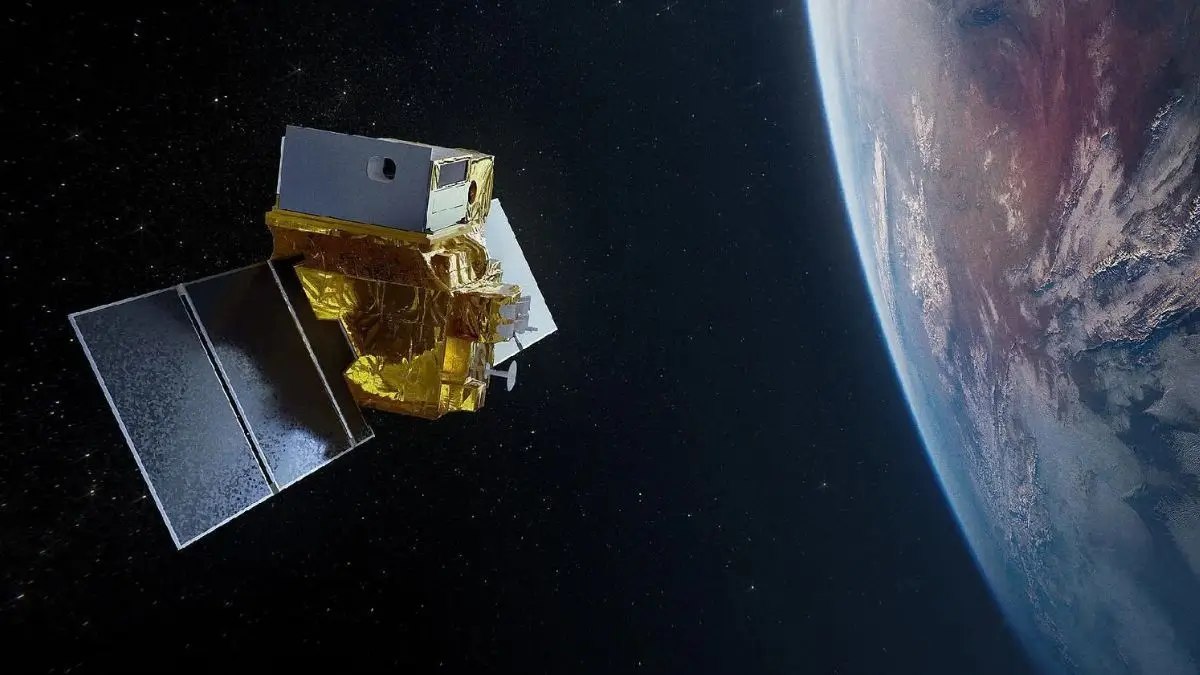
Visual illustration of a small space science satellite, but NOT necessarily depicting the PUFFINS spacecraft.
- Full name: Polarimetry in the Ultraviolet to Find Features in INterStellar dust
- Scientist: Dr Ramya Manjunath Anche
- Affiliation: Steward Observatory, University of Arizona
- NASA program: Astrophysics Pioneers
- Award reported: US$20 million
- Type of satellite: Small Satellite (SmallSat)
- Size of telescope: 10 inches
- Number of observations: Ultraviolet light from 70 stars
- Target Launch: Date not certain; targeted for 2030 by the mission team
- Main purpose: Study small interstellar dust grains and their influence on star and planet formation
The official description of NASA’s programme proves that PUFFINS’ primary goal is to explore the influence of the interstellar dust on the ultraviolet starlight. The target launch date of this project was stated differently by NASA programme page and the mission team
Who Is Dr. Ramya Manjunath Anche?
Dr. Ramya Manjunath Anche is an Indian-born astrophysicist, born close to the city of Bengaluru, and works as an assistant research professor at the Steward Observatory of the University of Arizona. She has been chosen as the PI for PUFFINS, which means she heads the scientific investigations of the mission.
Her research interests involve the study of interstellar dust and the interaction of the dust with light. The mission will combine space instrumentation with astrophysics research to explore dust grains that cannot be analyzed using conventional visible light observation.
Importance of Interstellar Dust
Interstellar dust is the term used to describe small solid particles that are found within the space that exists between stars. Interstellar dust along with gas plays an important role in the making of stars and planets.
- Star formation: Denser regions of gas and dust could lead to the collapse due to gravity, hence helping in the formation of stars.
- Planet formation: Dust particles in the disc surrounding the stars could collide and stick together to form bigger bodies and possibly planets.
- Chemical components: Dust particles could act as sites for chemical reactions and contain elements and compounds that are necessary for planets.
- Astronomical observation: Dust particles could absorb, scatter and polarise light that affect astronomical observations.
The study of interstellar dust does not prove that life could exist elsewhere in space. It could assist in understanding the process of formation of planets where life could form.
How Does UV Polarimetry Work?
In its mission, PUFFINS would make use of ultraviolet observation combined with polarimetry, which is the measurement of polarisation of light.
1. Observing distant stars
The telescope on the spacecraft would observe ultraviolet light from about 70 stars including light that has traveled past interstellar dust.
2. Measuring the polarisation of light
Special instruments measure the angle and degree of polarisation of light waves. Dust particles can influence the polarisation of light coming from the stars as it moves through space.
3. Understanding the nature of the dust
From the polarisation that depends on the wavelength, scientists can study the size, composition, orientation and distribution of dust particles.
Observations using ultraviolet light are especially important when dealing with tiny dust particles.





 ISRO Successfully Completes Crew Moduleâ...
 Elon Musk Shows Tesla Roadster Performin...
 TRISHNA Satellite Mission 2027: ISRO-Fra...