
The United Nations Mission for the Referendum in Western Sahara (MINURSO) has reportedly entered its liquidation phase after 35 years of operations, following the failure of the United Nations Security Council (UNSC) to renew its mandate.
According to the reported developments in November 2026, a diplomatic standoff between the United States and Russia prevented agreement on extending the mission. The disagreement centred on competing approaches to resolving the long-standing territorial dispute between Morocco and the Polisario Front.
MINURSO was established in April 1991 under UNSC Resolution 690 to monitor a ceasefire and organise a referendum allowing the people of Western Sahara to determine their political future.
The reported closure of the mission represents a significant development in UN peacekeeping, although it does not resolve Western Sahara’s disputed international status or eliminate the Sahrawi people’s right to self-determination.
Key Highlights
| Particular | Details |
|---|---|
| Mission | MINURSO |
| Full Form | United Nations Mission for the Referendum in Western Sahara |
| Established | April 1991 |
| UNSC Resolution | 690 (1991) |
| Region | Western Sahara, North-West Africa |
| Original Purpose | Ceasefire monitoring and referendum on self-determination |
| Reported Development | Entry into liquidation phase |
| Duration | Approximately 35 years |
| Major Dispute | Morocco vs Polisario Front |
| Diplomatic Standoff | United States and Russia |
| Ceasefire Breakdown | November 2020 |
What Is MINURSO?
MINURSO is a United Nations peacekeeping mission established in April 1991 through UN Security Council Resolution 690.
It was created to implement a UN-brokered settlement plan between Morocco and the Polisario Front, which have competing claims over Western Sahara.
The mission originally had two principal objectives:
-
Monitor the ceasefire between Morocco and the Polisario Front.
-
Organise a referendum on self-determination for the people of Western Sahara.
The proposed referendum was intended to allow eligible voters to choose between independence and integration with Morocco.
However, disagreements over voter eligibility prevented the referendum from taking place.
Why Did MINURSO’s Mission Reportedly End?
The reported termination followed a diplomatic disagreement between the United States and Russia at the UN Security Council.
US-Backed Resolution
The United States reportedly supported a draft resolution that favoured Morocco’s autonomy proposal for Western Sahara.
The proposal also sought to rename the peacekeeping operation as the United Nations Mission in Western Sahara (MINUSO).
Russia vetoed the US-backed draft resolution.
Russian Resolution
Russia subsequently proposed extending MINURSO’s mandate until October 2027.
However, the Russian-backed proposal reportedly failed to secure the required votes in the Security Council.
As neither resolution was adopted, the mission was left without a renewed mandate, leading to its reported liquidation.
Western Sahara Conflict: Historical Background
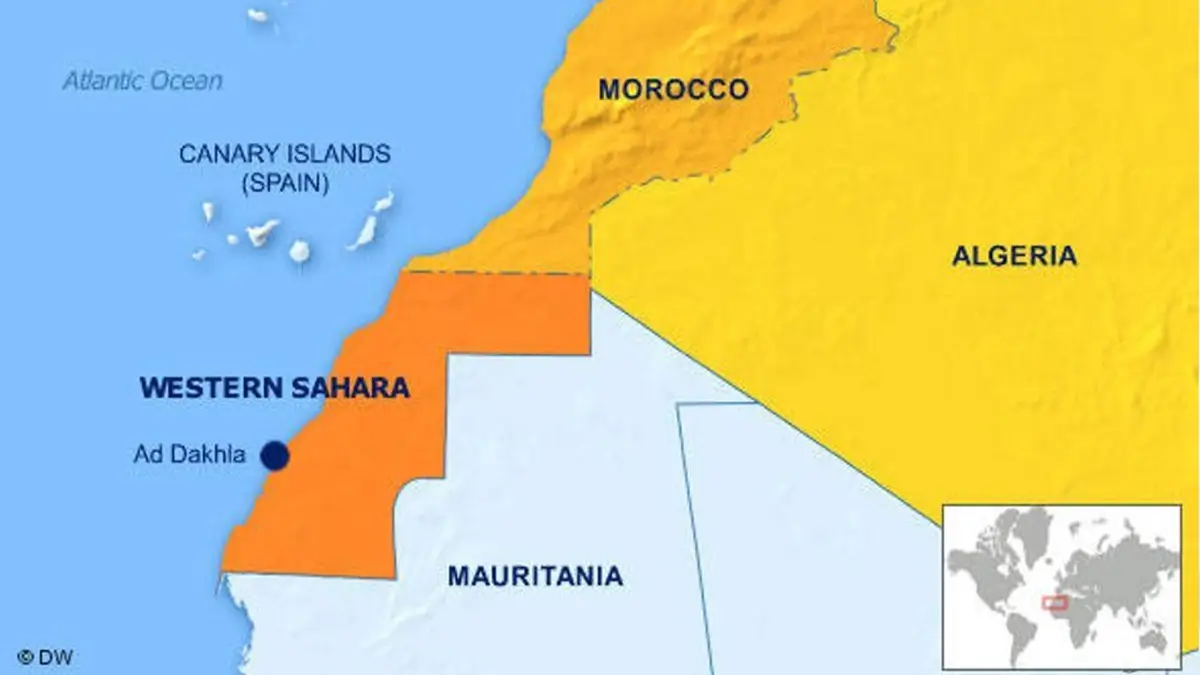
Western Sahara is a disputed territory in north-western Africa along the Atlantic Ocean.
It borders Morocco, Algeria and Mauritania.
The territory was formerly administered by Spain. In 1975, Morocco organised the Green March, during which large numbers of Moroccan civilians entered Western Sahara to support Morocco’s territorial claims.
Spain formally withdrew from the territory in 1976.
Following Spain’s withdrawal, the dispute continued between Morocco and the Polisario Front, a movement seeking independence for the Sahrawi people.
Morocco’s Position on Western Sahara
Morocco claims sovereignty over Western Sahara and administers most of the territory.
In 2007, Morocco proposed an autonomy plan that would provide Western Sahara with a degree of self-government while retaining Moroccan sovereignty.
Morocco considers this approach a practical political solution to the territorial dispute.
Polisario Front’s Position
The Polisario Front is a pro-independence movement that seeks the establishment of an independent Sahrawi state.
It is supported by Algeria and operates from refugee camps near Tindouf in south-western Algeria.
The movement maintains that the Sahrawi people should be allowed to exercise their right to self-determination through a referendum.
Breakdown of the Ceasefire in 2020
A UN-brokered ceasefire between Morocco and the Polisario Front had been in place since 1991.
However, hostilities resumed in November 2020, weakening the ceasefire arrangement.
Despite the renewed tensions, MINURSO continued monitoring the security situation and encouraging a cessation of hostilities.
International Status of Western Sahara
Western Sahara remains a disputed territory under international law.
It is listed by the United Nations as a Non-Self-Governing Territory.
The African Union recognises the Sahrawi Arab Democratic Republic (SADR), which was proclaimed by the Polisario Front.
The reported end of MINURSO’s mandate does not determine sovereignty over Western Sahara.
The Sahrawi people’s right to self-determination remains an important principle in UN discussions concerning the territory.
Significance of MINURSO’s Reported Closure
The development has several implications for international relations and UN peacekeeping.
UN peacekeeping challenges: It highlights how disagreements among permanent members of the Security Council can affect peacekeeping operations.
Regional stability: The absence of a peacekeeping mission could create additional uncertainty in the disputed territory.
Self-determination: The Sahrawi people’s right to determine their political future remains unresolved.
Diplomatic negotiations: UN-led political efforts may continue even without a peacekeeping mission.
International law: The territorial dispute demonstrates the complexity of decolonisation and sovereignty claims.





 Bahamas Joins International Solar Allian...
 India Extends $500 Million Line of Credi...
 Greenland Approves Trilateral Security A...