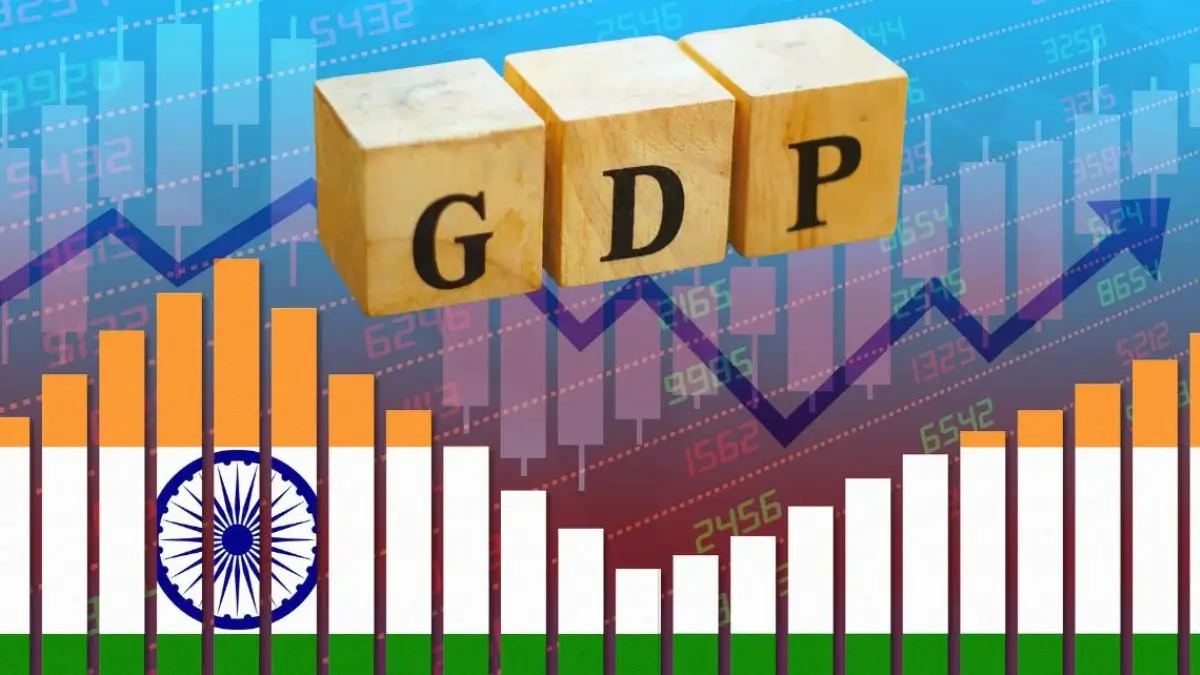
The National Statistics Office (NSO) under the Ministry of Statistics and Program Implementation (MoSPI) has released the final Uniform Guideline for the Compilation of District Domestic Product (DDP) Estimates with Base Year 2022-23. This guidelines aims to establish the standardized methodology for measuring the economic performance at the district level across the country.
MoSPI Released Final Guidelines for District Domestic Product Estimates
The National Statistics Office (NSO) had earlier published the draft version of the guideline on 7th of April 2026 and it invited the comments from States, Union Territories, academic institutions, researchers and other stakeholders.
Following the detailed review of suggestions received during the consultation process, the finalized guideline has now been officially released and it was uploaded on the Ministry’s website.
The framework provides the common methodology for all States and Union Territories to compile the district-level economic estimates under the revised Base Year 2022-23.
What is District Domestic Product (DDP)?
District Domestic Product (DDP) is an important economic indicator that measures the total value of the goods and services produced within the district during a specific period.
It helps to assess the economic performance of the individual districts and serves as the valuable tool for regional planning and development.
The guideline covers the estimation of the,
- Gross District Domestic Product (GDDP)
- Net District Domestic Product (NDDP)
- Per Capita Income (PCI) at the district level
These indicators provides the detailed understanding of the economic activity and living standards across different regions.
Why Was a Uniform Guideline Needed?
Until now, States and Union Territories in India followed the different approaches for preparing district-level economic estimates. Also the variations in methodologies often created the challenges to comparing economic performance across districts and states.
The newly released guideline also seeks to address these issues by introducing the,
- Uniform concepts and definitions
- Standardized estimation procedures
- Common data sources
- Consistent methodologies
- Comparable district-level statistics
Focus on Bottom Up Approach for Better Accuracy
One of the important features of the guideline is its strong emphasis on the bottom-up approach for estimating the District Domestic Product.
Under this approach, economic estimates are compiled directly using the data available at the district level. This method provides the more accurate and realistic estimates of local economic activity.
Where district-specific data is unavailable or inadequate, the guideline recommends using carefully designed top-down approaches supported by appropriate allocation indicators to derive district-level estimates.
This balanced methodology ensures consistency while maintaining statistical reliability.
Current Status of DDP Compilation in India
At present, total 26 States and Union Territories are already compiling the District Domestic Product estimates.
However, not all the States and UTs currently produces the DDP statistics by using a common framework. MoSPI has been working continuously to encourage the wider adoption of district-level economic accounting.
The new guideline is also expected to facilitate the onboarding of remaining States and UTs and creates the harmonized national system for district economic statistics.
Importance for the Policy Making and Regional Development
The reliable district-level economic data is becoming increasingly important as the governance and development initiatives focus more on to the localized planning.
The availability of standardized DDP estimates will help the governments identify as the regional disparities, track economic growth, and design targeted interventions.
Major Benefits
- Supports decentralized planning
- Enables evidence-based policymaking
- Helps to identify the backward and high-growth districts
- Will strengthens the regional development strategies
- Improves resource allocation decisions
- Facilitates monitoring of development program
- Enhances economic research and analysis
The guideline is also expected to become the crucial tool for district administrations, state governments, and national policymakers.
Understanding GDDP, NDDP and Per Capita Income
Gross District Domestic Product (GDDP)
GDDP measures the total value of the all goods and services produced within a district before it accounting for the depreciation.
Net District Domestic Product (NDDP)
NDDP is obtained after deducting the depreciation from GDDP and reflects the net economic output of a district.
Per Capita Income (PCI)
Per Capita Income represents the average income which is earned per person in the district and is calculated by dividing NDDP by the district population.








 India’s Seafood Exports Hit Record ₹...
 Industrial Output Grows 4.9% in April 20...
 GST Revenue Hits ₹1.94 Lakh Crore in M...