
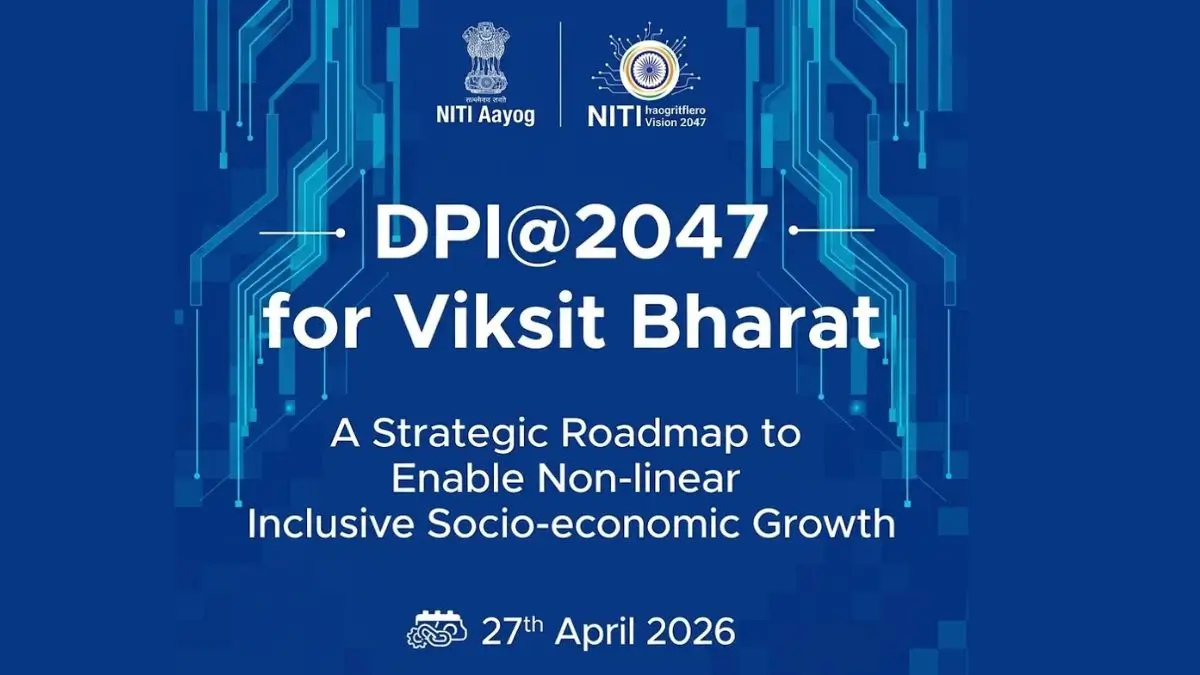
India started to preparing the massive economic transformation as the NITI Aayog has introduced the new two-phase strategy for the Digital Public Infrastructure (DPI). This new DPI phase will aims to turn the country into the $30 trillion economy by the year 2047. This roadmap is titled at the ‘DPI@2047: The Roadmap to Prosperity’ outlines how the digital systems will drive the inclusive growth, innovation and the productivity across sectors. The vision will also targets the per capita income of the $18,000 and signals to the large economic empowerment.
DPI 2.0 and DPI 3.0: The Two Phases Explained
DPI 2.0 (2025–2035): Building Capable Citizens
The first phase of the DPI 2.0 is focuses on to the strengthening the foundation of the digital empowerment. The goal is to create the broad base of skilled and capable citizens who can actively participate into the digital economy.
This phase will also expand access the different digital tools, improve service delivery and it will also ensure that more people and specially from lower and middle-income groups who can benefit from economic opportunities.
DPI 3.0 (2035–2047): Driving Innovation and Prosperity
The second phase of the DPI 3.0 aims to unlock the long-term prosperity by promoting the grassroots innovation and high-value economic growth.
It envisions the system where the local businesses and communities will actively contribute to global value chains.
This stage will focus on to the innovation-led growth and it moving beyond the incremental progress to productivity-driven development.
From Aadhaar to UPI: The Foundation of DPI 1.0
India’s digital journey began with the DPI 1.0 which have laid the groundwork for transformation. Also the several platforms like Aadhaar and Unified Payments Interface (UPI) have already have revolutionized digital identity and payments.
These systems have enabled the,
- Digital identity for over the 1.3 billion people.
- Also conducted the seamless and instant financial transactions.
- And the expansion of financial inclusion across the country.
Building on this success the new roadmap is aims to extend the digital infrastructure into deeper economic sectors.
Focus on MSMEs, Agriculture and Job Creation
The report also highlights the key sectoral transformations which will drive inclusive growth.
For the MSMEs this strategy is aims to expand market access through digital platforms and it will connect businesses with local talent using the low-cost job fulfilment systems.
In the agriculture sector the focus is also increasing to the farmer incomes by providing the digital advisory services, better market linkages and also access to global value chains.
This approach will be expected to address challenges like poverty, unemployment and food security.
Strengthening Education and Healthcare Systems
The roadmap will also places the strong emphasis on human development.
It calls for,
- Learner-centric education in to the different local languages.
- Also the improved access to digital learning platforms.
- Expansion of the central’s universal healthcare coverage.
The Bigger Vision: Viksit Bharat 2047
This roadmap of NITI Aayog aligns with the India’s broader goal of becoming the ‘Viksit Bharat’ (Developed India) by 2047 which is marking the 100 years of independence.
It will highlights the need for the coordinated efforts across government, industry, academia and civil society.
Trust, data security, interoperability and innovation will be also the critical pillars to achieving this vision.








 RJ Mitte Dies at 34: Breaking Bad Actorâ...
 NPCI Defers 0.4% MDR on Select UPI Trans...
 PM GatiShakti Completes Five Years: Obje...










