
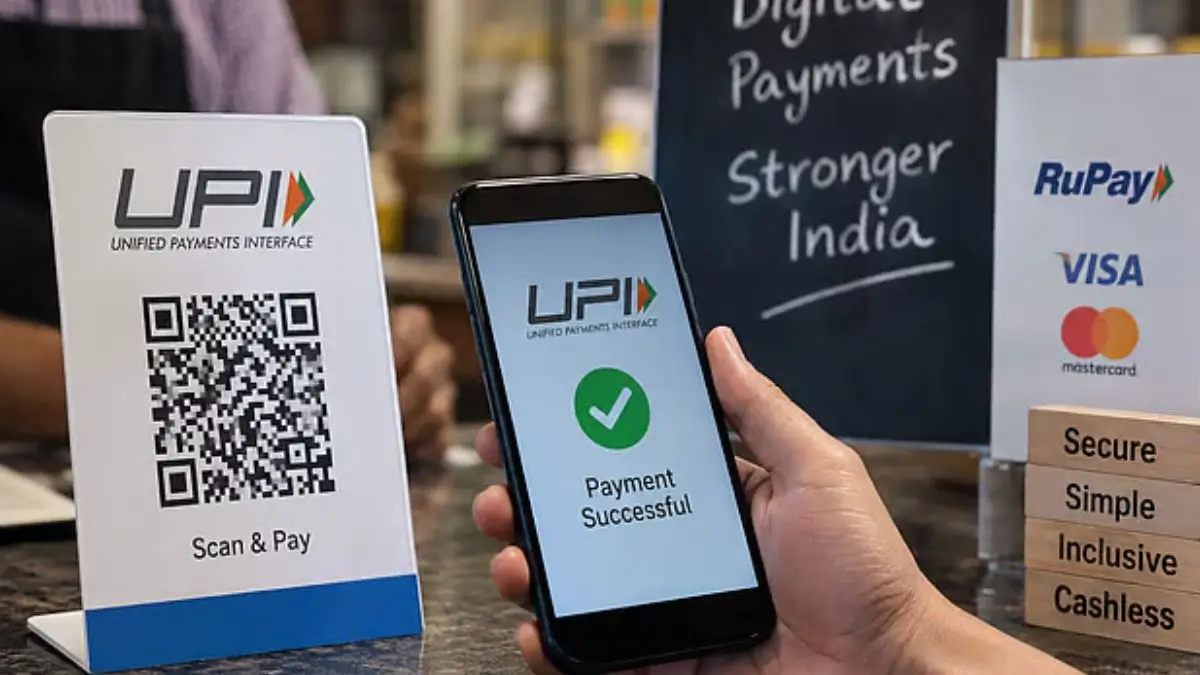
NPCI has decided to put hold on the implementation of the MDR of 0.4% for the certain Unified Payment Interface (UPI) transactions exceeding ₹2,000 till after Diwali. The MDRs were supposed to have come into effect on October 15, 2026; however, according to the UPI & Services Steering Committee, the MDR will now be implemented straight away after Diwali.
What is the Merchant Discount Rate (MDR)?
The Merchant Discount Rate (MDR) refers to a fee that is incurred by a merchant while making an electronic payment.
Generally, this fee is charged to the merchant in connection with the acceptance of a payment via the electronic payment system. It is not automatically deducted from the customer.
As per the proposed scheme of the UPI system, the MDR is applicable to certain P2M transactions in the UPI scheme. The MDR is required to meet the requirements of banks and other entities operating in the digital payment ecosystem.
UPI Transactions Subject To MDR
Transactions involving specified P2M exceeding ₹2,000 shall be subject to a MDR of 0.4%. This shall be shared amongst the participants in the payment ecosystem such as banks and other UPI applications.
Where the value of the transaction is ₹75,000 or above, the MDR will be capped at ₹300 per transaction.
| Transaction type | MDR applicable |
| P2P transactions | MDR Not Applicable |
| P2M transactions up to ₹2,000 | MDR Not Applicable |
| Specified P2M transactions exceeding ₹2,000 | MDR of 0.4% |
| Transactions ₹75,000 or above | MDR capped at ₹300 |
| Essential sectors above ₹2,000 | MDR of ₹5 per transaction |
| Capital market transactions | MDR of 0.02%, |
UPI MDR to Be Paid by Who?
In this case, MDR will be paid by merchants and not consumers. It is important to note that the MDR is a charge levied against the processing of payments by a merchant.
This delay has been prompted by the objection by the opposition parties who have termed the levy as being a tax and potentially affecting consumers. However, NPCI’s suggested framework implies that the MDR burden falls squarely on the merchants.
The CAIT welcomed the move for the delay citing that more transaction costs may hurt the traders and MSMEs who work on thin margins especially at this time of the year.
What Caused NPCI to Delay the Implementation of MDR?
As per NPCI’s UPI and Services Steering Committee, the festive season was the main reason behind the delay in implementing MDR. Festive season includes both Diwali and wedding season, during which retail stores, traders, and MSMEs rely heavily on high-volume transactions.
This decision is also based on consultations conducted with trade stakeholders. CAIT reported that a delegation consisting of 20 trade stakeholders had a discussion with the Finance Minister, Nirmala Sitharaman, on September 30, 2026, about the effects of the suggested MDR on transactions beyond ₹2,000.
It provides merchants some extra time before the charges come into action.
Why Was This New Framework for UPI Introduced?
This framework has been introduced based on the provisions in the Payment and Settlement Systems Act, 2007, after discussions of the UPI Steering Committee on MDR rates, operational processes and consumer protection issues.
It has been said that the aim of this new framework is to ensure sustainability in the case of UPI and to keep the cost of individual transactions at nil and protect the small merchants from any extra burden. The income generated through selected merchant transactions will benefit all payment stakeholders.






 SEBI Credit Risk-o-Meter for Bonds: Six ...
 RBI Raises Daily CRR Maintenance Require...
 HDFC Bank’s Anup Bagchi Set to Become ...